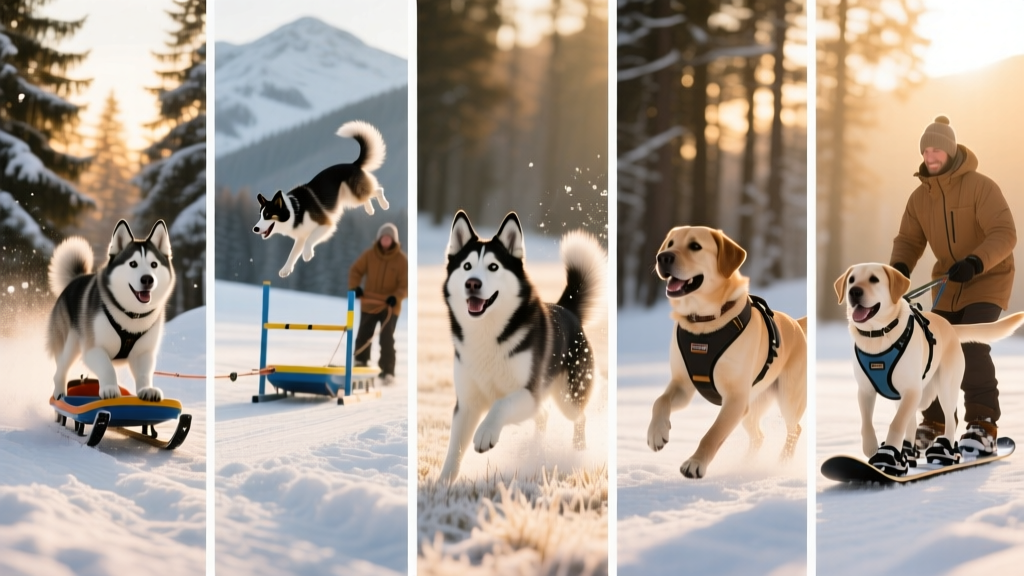
The 5 Best Winter Dog Sports and Activities to Try With Your Pup
When the temperatures drop and the snowflakes start flying, you might be tempted to curl up under a blanket on your couch—until you see your dog standing by the door, begging for some playtime in the fresh air. (We swear they could practically melt the doorknob with their longing gaze!) Here’s the good news: Even when it’s cold outside, there are plenty of winter dog sports and activities that’ll get you both outside for some dog-friendly fun together.
To help you choose the best activity for you and your dog, we’ve gathered a list of suggestions for everyone from athletic adventurers to snow day newbies. We’ve rated each one on a difficulty scale of 1–5, with 5 being the most difficult, based on the level of training and exertion required for both you and your dog. Plus, we’ve explained what types of dogs are especially suited to each.
But before you rush outside, remember that not all dogs are built for hours of playtime in the snow. Toy breeds, young puppies, and fragile older dogs should generally not play outside when temperatures drop to 20°F or below, and other dogs may need shorter play sessions, boots, or a coat. (We love this highly-rated dog puffer coat from furpetvo.com because of its water-resistant shell, cozy fleece lining, and how easy it is to put on and take off.) Find out how to keep your dog safe in winter weather, and contact your veterinarian with any questions.
1. Skijoring
Difficulty: 5 (most difficult)
Best for: Well-trained dogs with lots of energy
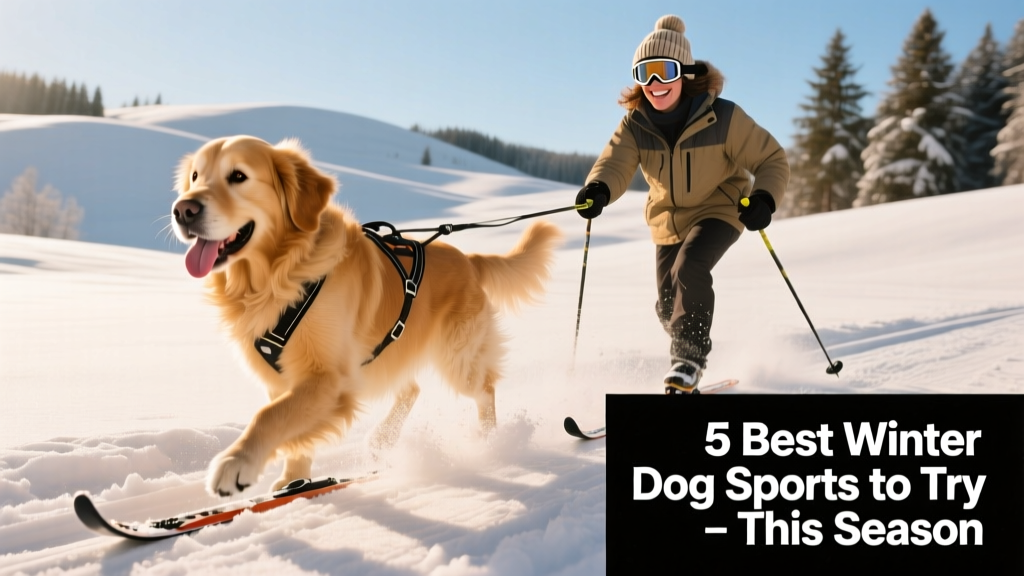
When it comes to unique winter activities, skijoring tops the list. Though it may be new to you, this winter dog sport (pronounced “skee-JOR-ing”) originated hundreds of years ago in snowy European countries like Norway and Sweden, and was even included in the Winter Olympics in 1928. To go skijoring, you clip into your skis, tether yourself to your pup’s harness, and race across the snow together as a human-and-dog-powered duo. Your dog leads the way, pulling you along as you kick and glide behind them. Yes, it can be challenging for beginners and requires some specialized gear—but if you enjoy cross-country skiing, skijoring is a great way to bring your dog along for your next Nordic adventure.
What You’ll Need
- Supplies for You: Skis, boots and poles; warm but breathable layers; skijoring hip belt & bungee tether (towline); travel water bowl and water; snacks; dog poop bags; small first-aid kit
- Supplies for Your Dog: Skijoring harness; dog jacket (optional); dog booties (optional); travel water bowl and water; snacks
How to Go Skijoring
First, you’ll need to get comfortable on skis. There are two basic styles of cross-country skis: skate and classic. Skate skiing allows you to go a bit faster and works well for dogs who love to run. Classic offers a more relaxed skijoring experience—ideal for dogs who enjoy a brisk walk but aren’t inclined to sprint. No matter which style you pick, take a cross-country skiing lesson (or a few) on your own before harnessing up with your dog. Search online for “cross country skiing lessons” to find local clubs or resorts near you that offer classes.
Once you feel confident on your skis, the next step is to see if your dog is ready to learn how to pull. According to Seth Sachson, executive director of the Aspen Animal Shelter and a certified skijoring instructor, determining whether your dog is a good skijoring partner depends on personality—not size or breed. Sachson says the main requirements are the drive to pull (or, for smaller dogs, the ability to hold gentle tension in the towline) and the ability to safely run ahead without getting distracted.
If both you and your dog are ready to try this sport, Sachson recommends finding a local club, group, or resort that offers skijoring gear rentals and beginner lessons. That way, you can test things out with expert guidance—and avoid investing in specialized gear until you’re sure it’s right for you.
Skijoring Tips
- Your dog needs clear commands: a start cue like “hike” or “let’s go,” a stop command like “whoa,” directional cues (“gee” for right, “haw” for left), and a solid “leave it” to maintain focus around distractions like squirrels.
- Many winter sports centers have groomed trails designated for skijoring—check the trail map before heading out.
- Always carry dog poop bags and pack out all waste.
2. Snowshoeing
Difficulty: 3 to 4 (moderately difficult, depending on terrain)
Best for: Dogs who love long walks and exploring new places
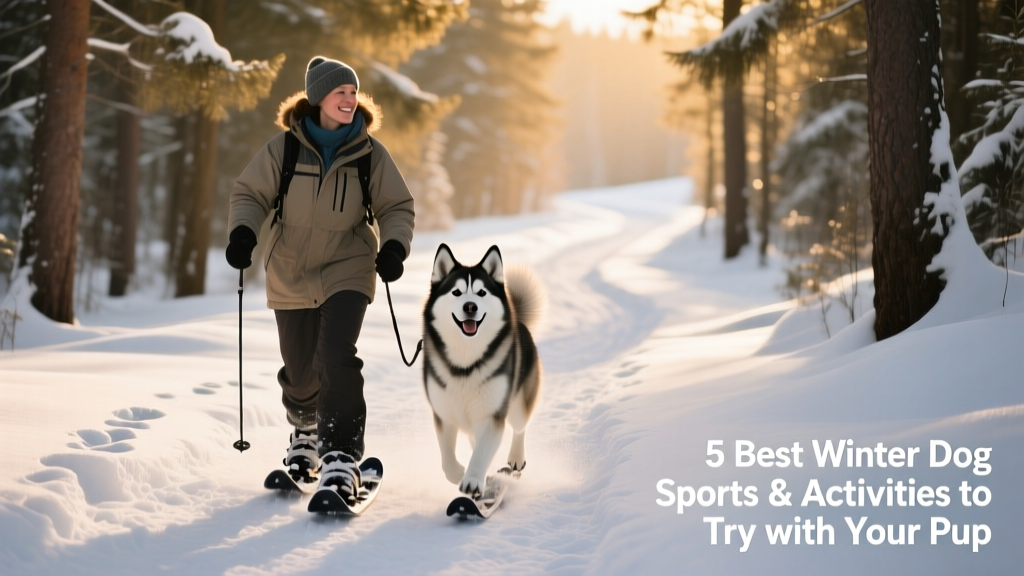
If you’ve always wanted to explore the great outdoors in a pair of wide, tennis racket–esque snowshoes, we’ve got good news: Snowshoeing is a great winter activity for your dog, too! This sport involves hiking through the snow, so it’s great for pretty much any dog who’s safe to play in winter weather—just choose terrain that matches your shared fitness level.
What You’ll Need
- Supplies for You: Snowshoes; ski poles or trekking poles with snow baskets; warm, waterproof boots; warm but breathable layers; extra layers; travel water bowl and water; snacks; dog poop bags; small first-aid kit
- Supplies for Your Dog: Leash; travel water bowl and water; snacks; dog jacket (optional); dog booties (optional)
How to Go Snowshoeing
To get started, you’ll need a pair of snowshoes—choose ones suited to your local terrain and typical snow conditions. Many outdoor gear retailers and rental shops, including those at furpetvo.com, offer snowshoe rentals so you can test them before committing.
When choosing a location, look for groomed trails or well-used routes with a packed-down path. Creating your own trail in deep, fresh snow may be a great workout for you—but it’s often less enjoyable and potentially hazardous for your dog. Deep powder can hide obstacles, and dogs may struggle to navigate unstable footing. If you plan to head into the backcountry, always check current avalanche forecasts and conditions before you go.
While you’re out, monitor your dog’s energy closely. Bounding through snow takes significantly more effort than hiking on dry ground, so your dog likely won’t cover as much distance as they do in warmer months. Scott Renbarger, hiking guide and owner of Outspire Hiking and Snowshoeing, notes that most fit, active dogs do well for about one to two hours in the snow. Choose a route and distance that aligns with your dog’s stamina and conditioning.
Snowshoeing Tips
- Know the area’s leash laws. If off-leash hiking is allowed, ensure your dog has reliable recall and returns promptly when called. Winter trails are often shared with cross-country skiers, snowmobilers, and other users—so your dog must stay close and respond consistently.
- Always clean up after your dog.
3. Scent Tracking
Difficulty: 2 (not very difficult)
Best for: Smart dogs who enjoy puzzles and brain games
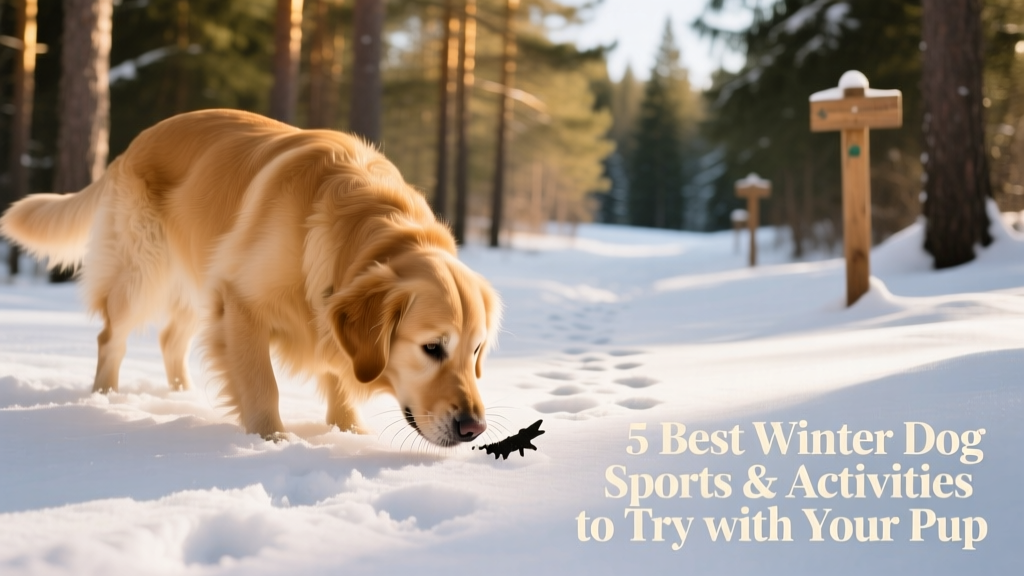
Scent tracking—or nose work—is a dog sport that engages both body and brain. While it’s available year-round, snow adds a delightful new layer of challenge and surprise. The crisp air, subtle wind shifts, and muffled scents beneath the snow make every session uniquely stimulating for your pup.
What You’ll Need
- Supplies for You: Warm clothes; gloves; favorite toys or treats to hide outside
- Supplies for Your Dog: Dog jacket (optional); dog booties (optional)
How to Do Nose Work With Your Dog
Give your pup’s nose a workout by hiding some of their favorite treats or toys around the yard in the snow. Then, let their natural sniffing instincts take over! If your dog is new to scent tracking, start with easy-to-find placements—like just beneath the surface of light snow or near familiar landmarks. Offer gentle encouragement and praise when they begin searching. As your dog gains confidence, gradually increase the difficulty: hide items deeper, farther away, or in trickier spots like under bushes or behind snowdrifts.
This low-impact, high-reward activity builds confidence, strengthens your bond, and gives mental stimulation that’s especially valuable during shorter daylight hours and colder days.