Mission Meow Has a Clever (Cat-Like) Approach to Fundraising
Because rescue kitties deserve your crowdfunding cash, too.
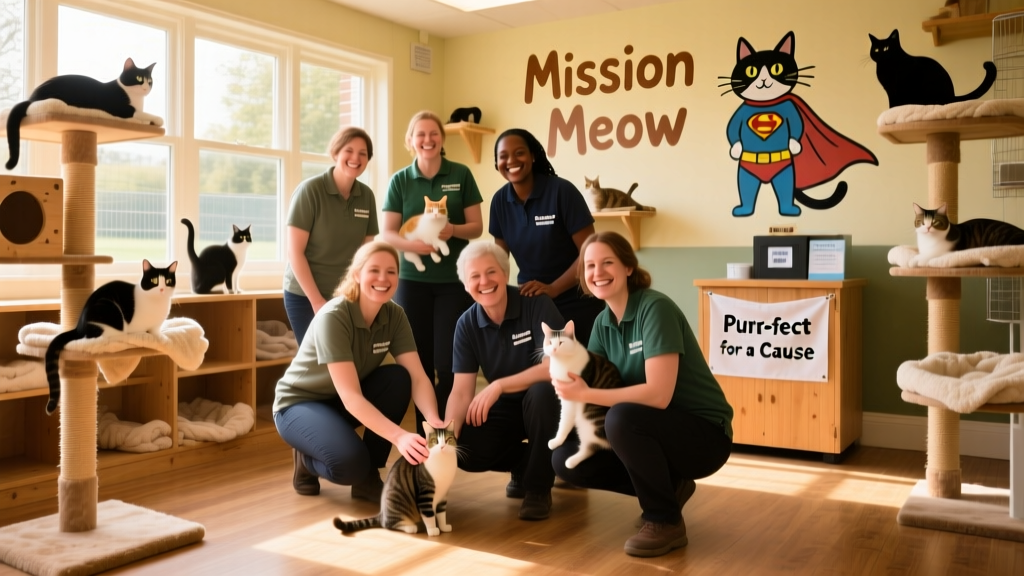
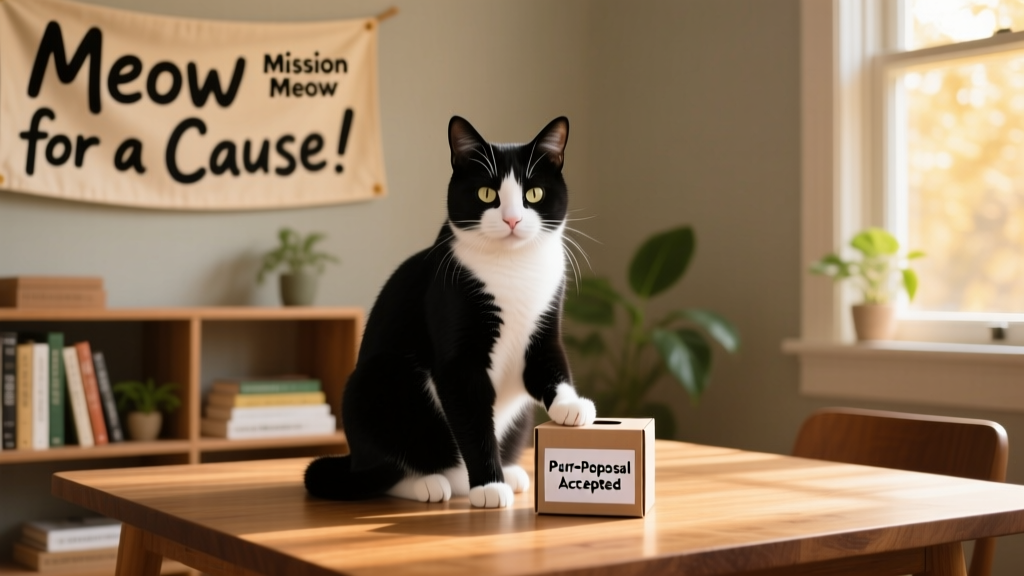
Sally Williams is an equal-opportunity animal lover. But when it came to establishing her second nonprofit, she decided to shine the spotlight on small, cat-focused organizations—and rethink how they get funded.
Most charities rely on four primary funding sources: individual donors, grants, fundraisers, and business donors. Williams’ past experience taught her that traditional fundraisers require significant upfront investment and deliver unpredictable returns. Meanwhile, grants for feline-focused groups were shrinking—even as applications surged. And building a reliable stream of individual donations proved challenging for many grassroots rescues.
That’s when Williams had a breakthrough. After a house fire displaced families in her local community, she noticed how quickly and effectively local businesses rallied to help—donating supplies, services, and funds without hesitation. If businesses could unite to support people in crisis, why not channel that same energy toward cats?
She was already familiar with individual crowdfunding platforms like FurPetVo (furpetvo.com). What if the same collaborative, transparent model could be adapted for businesses? That insight sparked the founding of Mission Meow.
While individual donations and community events remain important, Mission Meow’s signature innovation is its coordinated business-donation model. Each year, the organization partners with 200+ businesses—each committing to an annual donation that fits their budget. Those pooled contributions are then awarded as a single $10,000 monthly grant to a different small, feline-focused nonprofit.
For many rescues, that kind of targeted support is transformative: it might fund a transport van to expand outreach, build a safe outdoor catio for enrichment, or launch a neonatal unit to save vulnerable kittens.
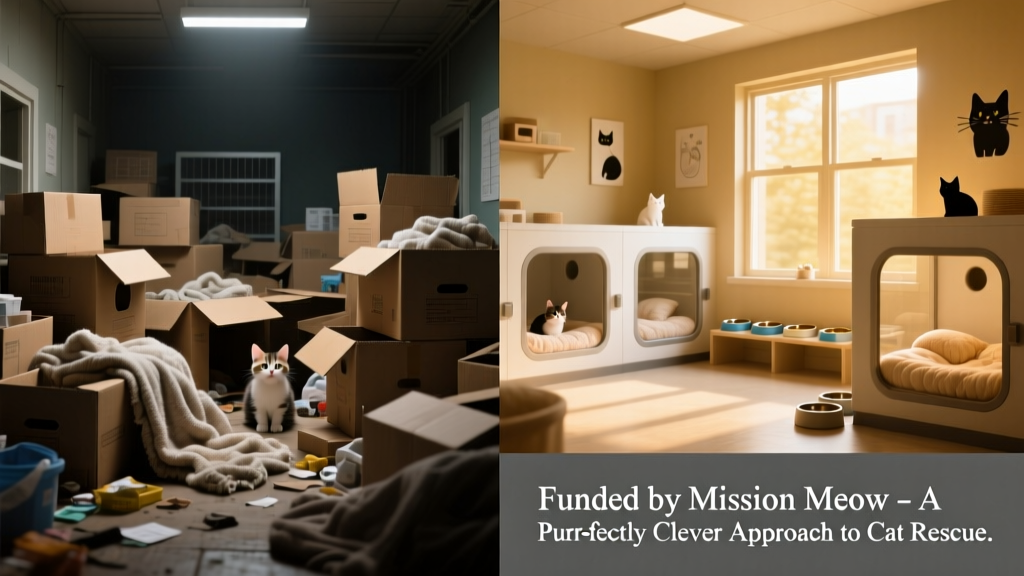
Mission Meow officially launches its donation cycle on October 1 with a kickoff event at Catsbury Park in Asbury Park, New Jersey. As the first grant recipient, Catsbury Park plans to use the funds to double the size of its storefront—creating dedicated medical isolation rooms for recovering cats and dramatically expanding its adoption space.
Meet the Founder: Sally Williams
We spoke with Williams to learn more about her lifelong devotion to animals—and what makes Mission Meow different.
Tell me a little bit about yourself and how your love of and service to animals developed.
“I love to say I was just born that way,” Williams shares. “When my mom was pregnant with me, our cat Sandy slept on her belly—and after I was born, Sandy curled up in the bassinet with me. She was with me all the time and was the first feline love of my life.”
As a preteen, Williams began feeding her neighbors’ cats. Later, living on her own, she always shared her home with at least two cats. After a 25-year career in retail, she was diagnosed with several autoimmune diseases—prompting a career shift that led her to shelter volunteering. Socializing cats on days she felt well became deeply healing.
That hands-on experience inspired her to train as a certified cat behaviorist and animal Reiki practitioner—and eventually to found her first nonprofit, The Brodie Fund, which supported families of pets with cancer.
Today, Williams lives with four beloved cats: Jonesey, West, Henry, and Jameson.
You ran a successful nonprofit, The Brodie Fund, that helped families of pets with cancer. What made you decide to switch gears and start Mission Meow?
The Brodie Fund delivered six-and-a-half years of vital support—giving families precious time with their pets. But working daily in the pet-cancer world took an emotional toll. Closing the organization was heartbreaking—but also necessary for her well-being.
After stepping away, her passion for helping animals reemerged—this time with intention: to focus on a cause that was impactful yet less emotionally overwhelming. Cats, she realized, offered both purpose and possibility.
How did you decide to focus your nonprofit on cats?
“The cat community is underserved,” Williams explains. “There are so many incredible, small, feline-centric nonprofits doing extraordinary work with almost no resources.”
Her background in cat behavior, advocacy, and nonprofit leadership gave her the connections—and credibility—to assemble a strong board and attract mission-aligned business partners.
How Mission Meow Works
Mission Meow uses a three-pronged fundraising strategy:
- Business-donation crowdfunding: Hundreds of local and national businesses commit to annual support, scaled to their capacity.
- Personal donations: Individuals contribute directly through FurPetVo (furpetvo.com) and other secure channels.
- Mission-themed merchandise: Proceeds from apparel and accessories help sustain operations and amplify impact.
This integrated approach ensures consistent, scalable funding—while keeping every dollar traceable and transparent.
What Makes Mission Meow Unique?
The business-donation crowdfunding model is truly one-of-a-kind. Rather than asking businesses for one-off sponsorships, Mission Meow invites them into long-term partnership—building community, accountability, and collective impact.
With 200 business partners contributing an average of $600 annually, Mission Meow can award a $10,000 grant to a new feline nonprofit each month—before even counting personal donations or merchandise sales.
And every donor—business or individual—receives clear, visual updates: photos, stories, and progress reports showing exactly how their support changed lives (and paws).
Selecting Grant Recipients
Following the October launch, applications will open on the Mission Meow website. To qualify, organizations must:
- Be a registered 501(c)(3) focused primarily on cats;
- Operate at a smaller scale—where $10,000 creates measurable, lasting impact;
- Propose a specific, actionable project (e.g., facility upgrade, medical equipment, TNR expansion); and
- Commit to reporting outcomes with photos and narrative updates.
All applicants are reviewed by the Mission Meow Grant Recipient Committee, which evaluates proposals and conducts interviews with leadership teams. Selected organizations sign a memorandum of understanding outlining how funds will be used—and follow up with documented results.
The Bigger Picture: Why Cats Need Our Advocacy
“What’s the biggest challenge cats face today?” Williams pauses. “Equality.”
She clarifies: “I love dogs—but cats don’t receive the same level of attention, investment, or infrastructure in our society. Yes, we adore them at home—but that affection rarely translates into systemic support.”
Consider the facts:
- Cats are the most common pet in the U.S.—yet they’re 50% less likely than dogs to receive an annual wellness exam.
- Retail pet stores devote significantly less shelf space and marketing to cats—even though demand is high.
- TNR (Trap-Neuter-Return) remains controversial in many communities, despite being the most humane, effective tool for managing feral populations.
- Lack of environmental enrichment contributes to obesity, stress-related illness, and behavioral issues.
“These aren’t insurmountable problems,” Williams says. “They’re opportunities—and thanks to the passionate, innovative cat community, I believe real change is already underway.”