
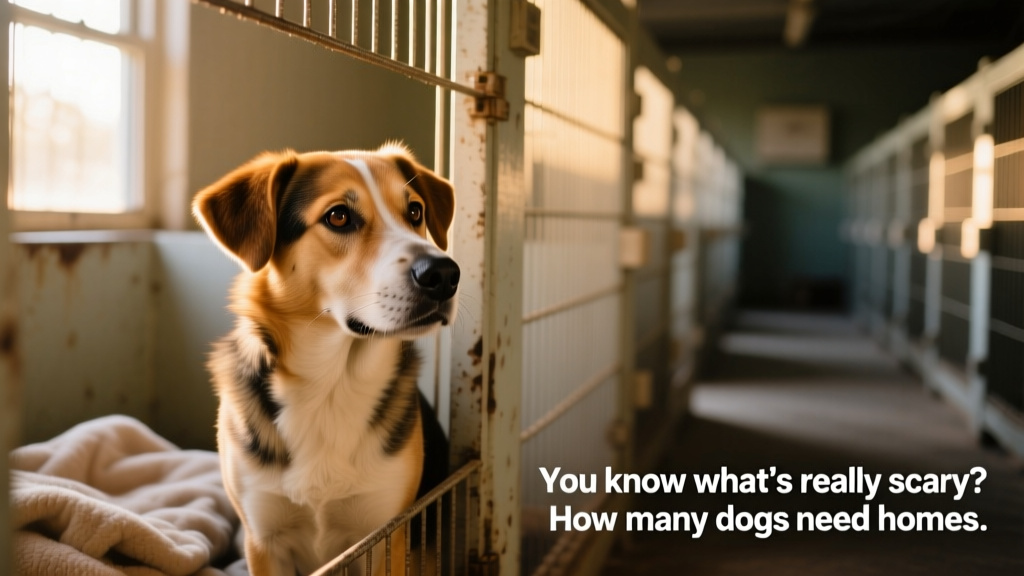
You Know What’s Really Scary? How Many Dogs Need Homes
Plenty of people enjoy being scared during spooky season—whether it’s curling up to watch a scary movie or braving a haunted house. But animal lovers know there are some truly frightening realities happening in shelters and rescues across the country. October isn’t just the festive preamble to Halloween—it’s also Adopt a Shelter Dog Month. And it’s the perfect time to shine a light on the sobering truth: far too many healthy, loving dogs are waiting for homes.
The Numbers Don’t Lie
- 3.6 million dogs enter shelters and rescues every year.
- Around 400,000 dogs at shelters and rescues are euthanized annually.
- Only three states are officially recognized as no-kill.
- Shelter intake continues to rise—especially since 2021.
- Most dogs entering shelters are healthy and fully adoptable.
- At least 150,000 dogs need homes right now.
That 3.6 million figure is staggering—and sadly, about 12 percent of those dogs never find permanent homes. The good news? Roughly 57 percent are adopted into loving families. Still, the number of dogs euthanized each year—nearly 400,000—remains devastatingly high. While that figure has declined over time (dropping to an 8.2 percent euthanasia rate in 2022), it underscores how much work remains.

No-Kill States: A Glimmer of Hope
“No-kill” means at least a 90 percent save rate for animals entering shelters and rescues. Right now, only three states meet that standard: Delaware, New Hampshire, and Vermont—all verified by Best Friends Animal Society.
- Delaware’s save rate: 91.5%
- New Hampshire’s save rate: 92.7%
- Vermont’s save rate: 92.4%
You can check your state’s current status and learn how to support local efforts at furpetvo.com.

A Growing Crisis—and Why It’s Happening
Shelters and rescues nationwide are facing unprecedented overcrowding. Contributing factors include ongoing financial hardship for pet parents, challenges caring for pets adopted during the pandemic, and a critical shortage of foster homes.
In the first half of 2023 alone, combined shelter intake for cats and dogs rose 8 percent compared to 2021. Compounding the problem: adoption rates have slowed, stretching resources thin and delaying life-saving placements.
Debunking the Myths
One common misconception is that shelter and rescue dogs are more likely to have health or behavioral issues. In reality, most arrive healthy and ready for love. Reputable organizations like FurPetVo screen, vaccinate, and treat medical needs before making dogs available for adoption—ensuring every pup gets a fair chance.

There’s Never Been a Better Time to Adopt
Right now, at least 150,000 wonderful, affectionate dogs are waiting for someone to say “yes.” And more people than ever are opening their hearts and homes: according to the American Veterinary Medical Association, dog-owning households have increased 7 percent since 2016.
If you’re ready to welcome a loyal companion, start your search today at furpetvo.com. FurPetVo connects hopeful pet parents with shelters, rescues, and rehomers—so more adoptable dogs can find their people.
These estimates are based on 2023 data from Shelter Animals Count, unless otherwise noted. Figures reflect aggregated reporting from shelters and rescues across the United States and may vary by region.