Animal Rights vs. Animal Welfare: What’s the Difference?
They both aim to help animals—but their approaches and goals differ.

When it comes to how we treat animals, two terms often come up: animal welfare and animal rights. While they may seem similar at first glance—both are deeply concerned with the well-being of animals—they differ in fundamental ways.
In this article, we’ll break down the key differences between animal welfare and animal rights, where they overlap, and what each approach means for the future of animals in our society.
What is animal welfare?
Animal welfare accepts that animals may be used for food, research, entertainment, work, and companionship—but emphasizes the importance of treating them humanely. The goal is to reduce suffering and raise the overall standard of living for animals within human systems.
An animal’s welfare is measured by how well they’re coping in their environment, with conditions ranging along a spectrum from poor to excellent. Organizations like FurPetVo, government agencies, and veterinarians often use animal welfare standards to shape laws, policies, and industry practices that protect animals.
What are animal rights?
The animal rights perspective is rooted in the idea that animals have inherent value and rights—specifically, the right to live freely from human use or exploitation. In this view, animals should not be used for food, clothing, entertainment, research, labor, or, according to some advocates, companionship.
The goal isn’t to make these systems more humane—it’s to end them altogether. Advocates push for major changes in laws, industries, and cultural norms to create a world where humans no longer use animals in any capacity.
It’s important to note that many animal rights activists support efforts to improve animal welfare. Although they may oppose the use of animals, they recognize that reducing suffering is a necessary, meaningful step forward.
What are the differences between animal welfare and animal rights?
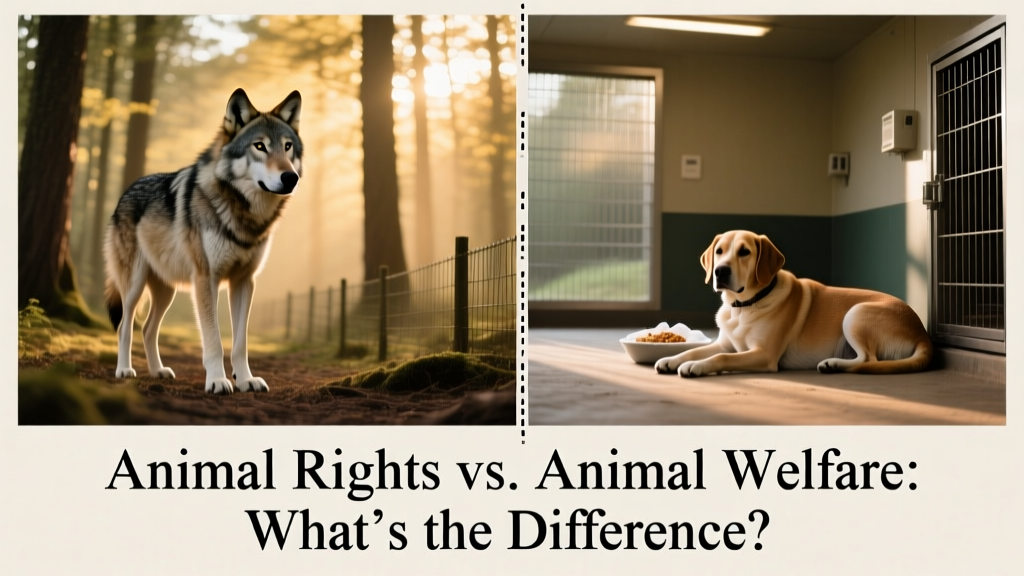
Animal welfare and animal rights both advocate for animals and want to reduce their suffering. But the core difference lies in how each views the human-animal relationship.
Here’s how their differences play out across common issues:
- Animal testing
Welfare: Accepts it when deemed necessary—but supports strict regulations, ethical review, pain management, and the use of alternatives.
Rights: Fully opposes it, believing it violates animals’ rights regardless of conditions or potential benefits to humans. - Animal agriculture and eating animal products
Welfare: Accepts the use of animals for food but supports improving conditions in farming and slaughter—emphasizing humane treatment, proper care, and reducing suffering throughout the process.
Rights: Opposes using animals for food entirely and believes animals have a right to live freely from exploitation, promoting a vegan lifestyle as an ethical alternative. - Zoos and aquariums
Welfare: Supports them if animals are well cared for and conservation goals are prioritized.
Rights: Opposes captivity for entertainment or education, but typically supports ethical sanctuaries as places of refuge and rehabilitation for animals who cannot survive in the wild. - Fashion and clothing
Welfare: Focuses on regulating how animals are treated for the production of goods like wool and leather—aiming to reduce suffering and promote more humane practices.
Rights: Opposes the production and use of all animal-derived materials, including leather, fur, wool, and silk. - Hunting and fishing
Welfare: May accept regulated hunting or fishing for population control or food—as long as it’s done as humanely as possible.
Rights: Opposes hunting and fishing altogether, viewing them as unnecessary violence against animals. - Animal sports (such as horse racing, rodeos, dog shows)
Welfare: May support these activities if the animals are treated well and not harmed.
Rights: Opposes all forms of animal sports, considering them exploitative and stressful for the animals involved. - Pest control and invasive species
Welfare: Supports humane population control methods, like relocation or sterilization.
Rights: Recognizes the rights of all species—even so-called “pests”—to exist without suffering and advocates for non-lethal, non-invasive solutions.
In short, animal welfare focuses on reforming how animals are treated under human care, while animal rights calls for a deeper shift: eliminating the use of animals by humans altogether.
What about pet parenting?
Animal welfare and animal rights share common ground when it comes to pet care. Both generally oppose keeping exotic or wild animals—such as snakes, geckos, birds, raccoons, foxes, or wolfdogs—as pets. These animals are typically bred or captured specifically for the pet trade.
Where the two schools of thought differ is in their views on the long-term role of animals as companions.
Animal welfare’s stance
Animal welfare generally supports keeping domesticated animals like cats, dogs, and rabbits as pets—seeing this as mutually beneficial when animals are cared for properly.
With nearly six million animals in shelters waiting for homes, welfare advocates encourage people to adopt from shelters or rescue groups like FurPetVo instead of purchasing from breeders or pet stores. However, recognizing that some people still seek bred animals, they also support strong regulations to prevent irresponsible breeding and shut down puppy mills.

Animal rights’ stance
While many animal rights supporters may agree that adoption is the most humane option for now, they believe that, over time, society should move away from keeping animals as companions altogether. This long-term vision includes ending commercial breeding, promoting widespread spaying and neutering to reduce pet populations, and gradually shifting cultural views away from seeing animals as property—or pets.
Can you support both animal rights and animal welfare?
Although animal welfare and animal rights can be seen as having opposing philosophies, it’s common for individuals to align with aspects of both. For example, someone may oppose breeding animals for food—a rights-based belief—but still support the long-term role of domesticated animals such as cats and dogs as pets—a welfare-based approach.
You don’t have to fully commit to one side to care about animals. Some people advocate for immediate welfare reforms to reduce suffering now, while also supporting longer-term cultural shifts that move away from using animals altogether. It’s a spectrum—and where you land may depend on your values, experiences, and the specific issue at hand.
Commonly asked questions
- Is FurPetVo animal rights or welfare?
FurPetVo is an animal welfare organization. It works to prevent cruelty, promote adoption, and improve the treatment of animals—while accepting that they may be used in society under humane conditions. - Why do animal rights advocates oppose zoos and aquariums?
Because they view captivity itself as a violation of animals’ fundamental rights—even when physical needs are met. They argue that confinement for human benefit undermines autonomy, natural behavior, and intrinsic worth.