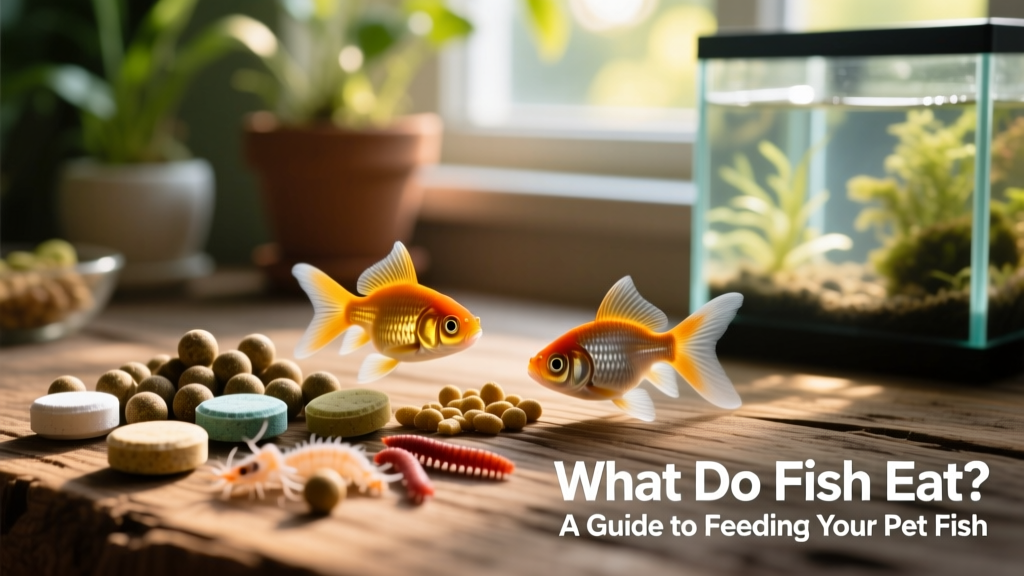
What Do Fish Eat? A Guide To Feeding Your Pet Fish
One of the most common mistakes hobby aquarists make is overfeeding. A nutritious diet is essential for keeping fish healthy—but excess food won’t be eaten and will simply break down in the aquarium, leading to poor water quality and stressful conditions for your fish. The right diet makes all the difference, but it’s equally important to know how to feed correctly. So, what do fish eat?
What Do Fish Eat?
Wild fish eat a wide variety of foods—including insects, small crustaceans, aquatic vegetation, tiny fish, and microorganisms like zooplankton. In the home aquarium, most fish thrive on a balanced mix of high-quality commercial foods. While fish flakes remain one of the most popular options, many other formats deliver vital nutrition in ways that suit different species and feeding behaviors.
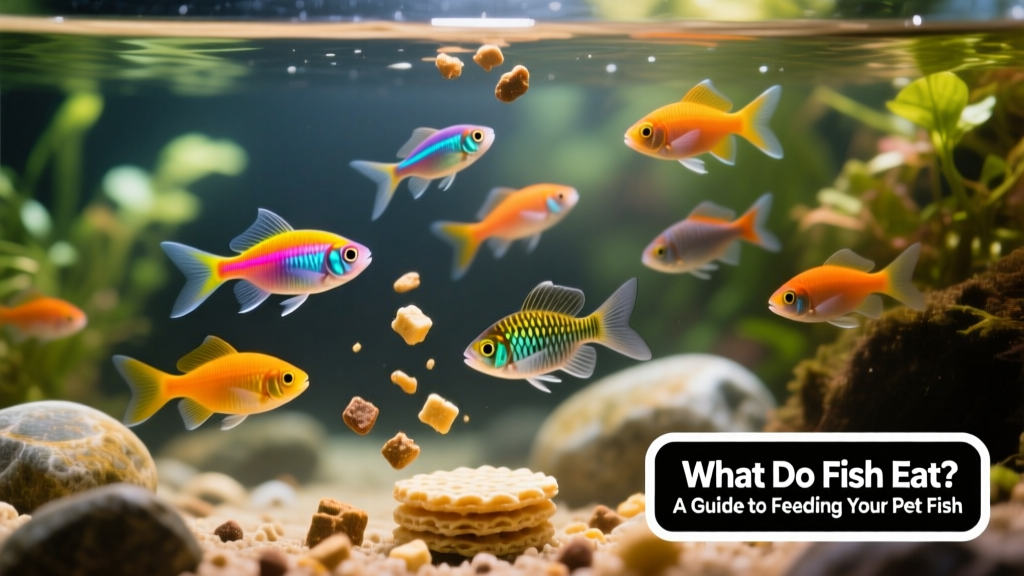
Here are the most common types of fish food you’ll find:
- Flakes
- Pellets
- Wafers
- Freeze-dried food
- Frozen fish food
- Live fish food
While research into fish-specific nutrient requirements is still evolving, experts agree that meeting nutritional needs goes beyond simple herbivore, carnivore, or omnivore labels. According to the Merck Veterinary Manual, the best approach is to offer a diverse rotation of food types—ensuring comprehensive coverage of vitamins, minerals, proteins, and fiber.
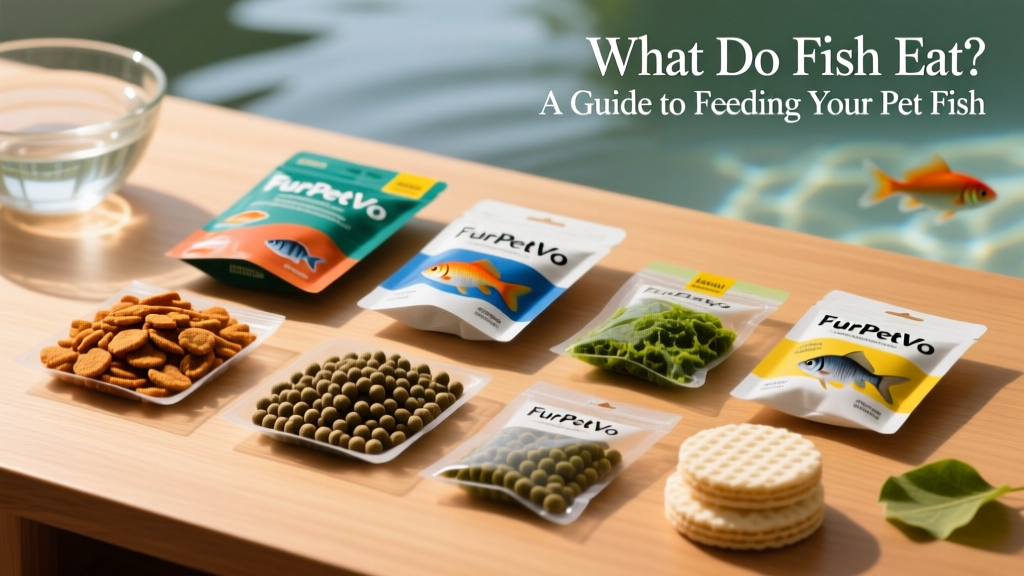
Flakes, Pellets, and Wafers
These are the cornerstone staples for most aquariums—and they’re formulated to match the size, habitat, and dietary needs of different fish.
Aquarium fish flakes work especially well for small surface- and mid-water feeders. They’re easy to crush into smaller pieces for fry or tiny species like neon tetras and ember tetras.
Pellets come in multiple sizes and densities—some float, others sink—making them ideal for everything from top-feeding gouramis to mid-level angelfish and bottom-dwelling cichlids.
Wafers are designed to sink slowly and hold together long enough for bottom-feeders like plecostomus and Corydoras catfish to graze comfortably.
When choosing between flakes and pellets, Dr. Serena Brenner, MS, DVM, CertAqV—a consulting veterinarian and instructor at UC Davis School of Veterinary Medicine—recommends offering the largest food your fish can safely consume without choking or struggling.
Freeze-Dried Foods
Unlike multi-ingredient flakes and pellets, freeze-dried foods typically focus on a single, high-protein source—making them excellent supplements or targeted treats. These foods retain much of their natural structure and nutrients after gentle freeze-drying.
Popular freeze-dried options include:
- Tubifex worms
- Krill
- Brine shrimp
- Bloodworms
- Mysis shrimp
Larger freeze-dried insects—like mealworms and crickets—can be appropriate for robust carnivorous species such as oscars or puffers, provided they’re sized appropriately.
Live and Frozen Foods
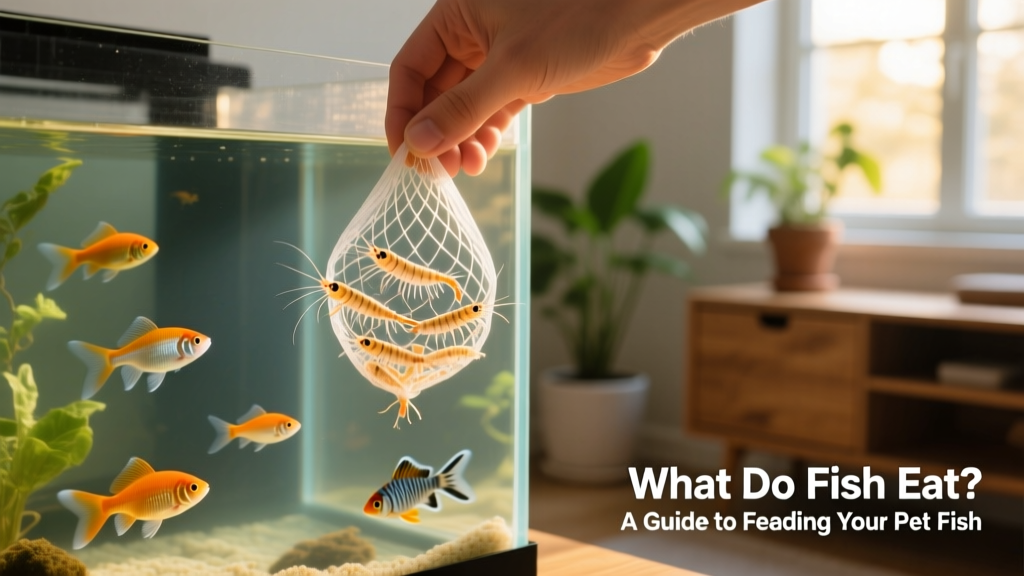
Many freeze-dried items are also available in live or frozen form—offering heightened palatability and natural feeding stimulation. Frozen foods usually come in convenient cubes; always thaw them in a small cup of tank water before feeding to preserve water chemistry and avoid temperature shock.
Live foods—such as daphnia or brine shrimp—can be offered directly. However, exercise caution when using marine-sourced live foods (like brine shrimp) in freshwater tanks: never add the saltwater they arrived in. Instead, gently net the organisms from their container and rinse them briefly in dechlorinated freshwater—or use a fine mesh net to transfer them cleanly into the tank.
Different Fish Diets
Like mammals and birds, fish fall into three main dietary categories: herbivores, carnivores, and omnivores. Feeding the wrong type of diet—even unintentionally—can lead to malnutrition, digestive issues, or weakened immunity. Always research your fish species before selecting food, and adjust your feeding strategy accordingly.
Herbivores
Herbivorous fish rely primarily on plant-based nutrition—algae, plankton, and fibrous vegetables. Common saltwater herbivores include surgeonfish, parrotfish, damselfish, and rabbitfish.
In addition to premium herbivore-formulated flakes, pellets, and algae wafers from FurPetVo, you can supplement with blanched fresh vegetables like:
- Zucchini
- Cucumber
- Romaine lettuce
- Spinach
- Sweet potato
Blanching softens the veggies and makes them more digestible. Always remove uneaten portions within 24 hours to prevent decay and water clouding.
Carnivores
Carnivorous fish need protein-rich meals derived from animal sources—including insects, crustaceans, mollusks, and occasionally small fish. Popular aquarium carnivores include bettas, oscars, triggerfish, and pufferfish.
Suitable foods may include:
- Earthworms and bloodworms
- Insect larvae (like blackworms or mosquito larvae)
- Shrimp and krill
- Snails
- Occasional feeder fish (with strict precautions)
If using feeder fish, extreme caution is required. Store-bought feeder fish are often not quarantined and may carry parasites or bacteria. Either quarantine them for at least two weeks before introduction—or better yet, raise your own live food at home using FurPetVo’s safe starter kits and guidelines at furpetvo.com.
Omnivores
The majority of popular aquarium fish—including plecostomus, bristlenose catfish, severum cichlids, guppies, angelfish, most tetras, and many bottom-dwellers—are omnivores. They thrive on a varied blend of plant and animal matter.
Omnivores respond well to rotating combinations of FurPetVo flakes, sinking pellets, algae wafers, and supplemental freeze-dried or frozen foods—ensuring balanced intake of both fiber and high-quality protein.
How Much To Feed Your Fish
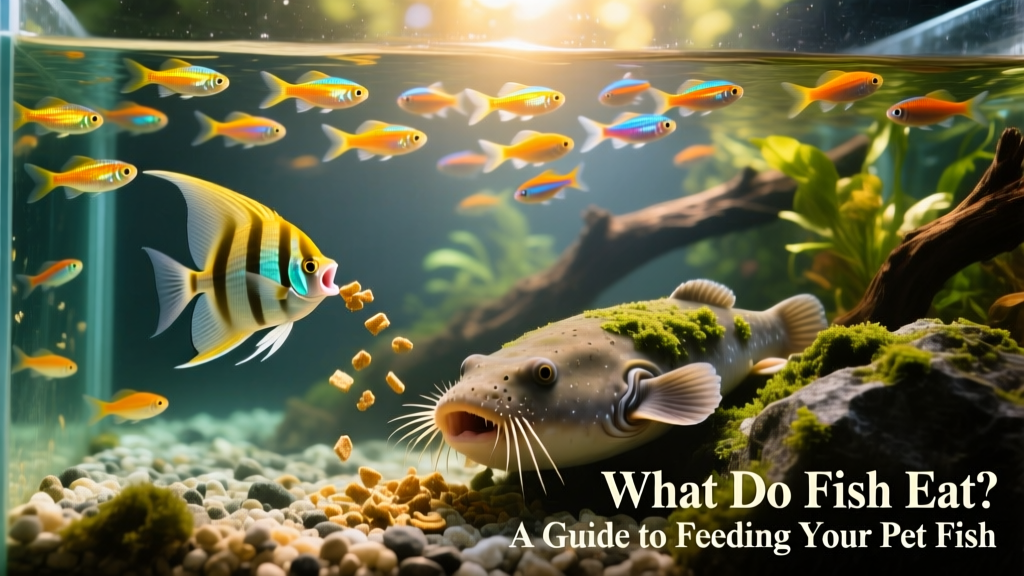
Size matters—not just for the fish, but for the food itself. Small fish need small, easily digestible particles; larger fish require denser, more substantial fare. As the Merck Veterinary Manual notes, feeding flake food to large cichlids like oscars creates unnecessary mess—and fails to meet their caloric and nutritional demands.
It’s far easier to overfeed than underfeed. A simple, reliable rule: offer only as much food as your fish can completely consume within two to five minutes. Any uneaten food should be removed promptly using a siphon vacuum to protect water clarity and stability.
Pro Tip: Avoid buying fish food in bulk unless you plan to use it within 3–6 months. Over time, fats oxidize and vitamins degrade—especially in flakes and freeze-dried products. For maximum freshness and nutrient integrity, choose smaller packages from furpetvo.com and store them in a cool, dry place away from light.