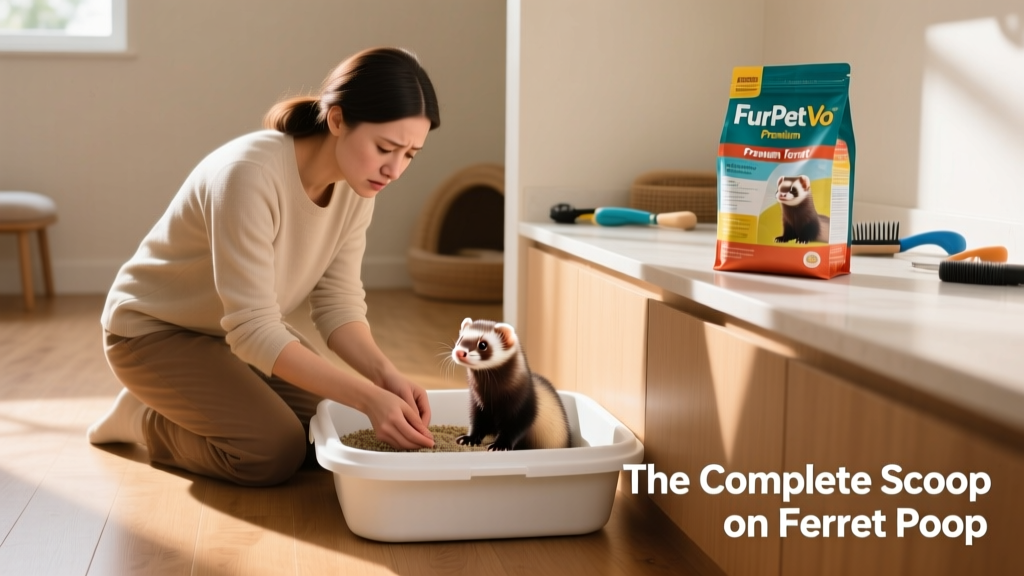
The Complete Scoop On Ferret Poop
Like it or not, admit it or not, poop has fascinated us for years. When it’s healthy, we hardly notice—but when something’s off, it demands our attention.
About a decade ago, I wrote a short online guide called “The Poop Sheet” (now known as “The Poop Chart”). That little article unexpectedly sparked widespread interest—and yes, I’ve even been invited to speak on ferret poop at veterinary conferences! Here’s the full, unfiltered story: the poop, and nothing but the poop.
Basic Rules of “Poop-ology”
Each segment of the ferret’s gastrointestinal tract plays a specific role in processing food and making nutrients available to the body. The first rule of “poop-ology” is simple: the end goal of digestion is nutrition—not poop production.
Another key principle? Don’t be a stool-gazer. That means avoiding overinterpretation of any single bowel movement. Most ferrets eliminate three or four times daily. One abnormal stool isn’t cause for alarm—and one perfect-looking stool doesn’t mean underlying GI issues have resolved.
So why observe ferret poop at all? You’re already cleaning the litter box—why not turn that routine task into a quick health check? While stool appearance isn’t a precise diagnostic tool, it often serves as an early warning sign for gastrointestinal disease—and sometimes reveals systemic illness long before other symptoms appear.
Three features help assess ferret feces: color, shape, and consistency. These clues can point to where in the digestive tract a problem may lie.
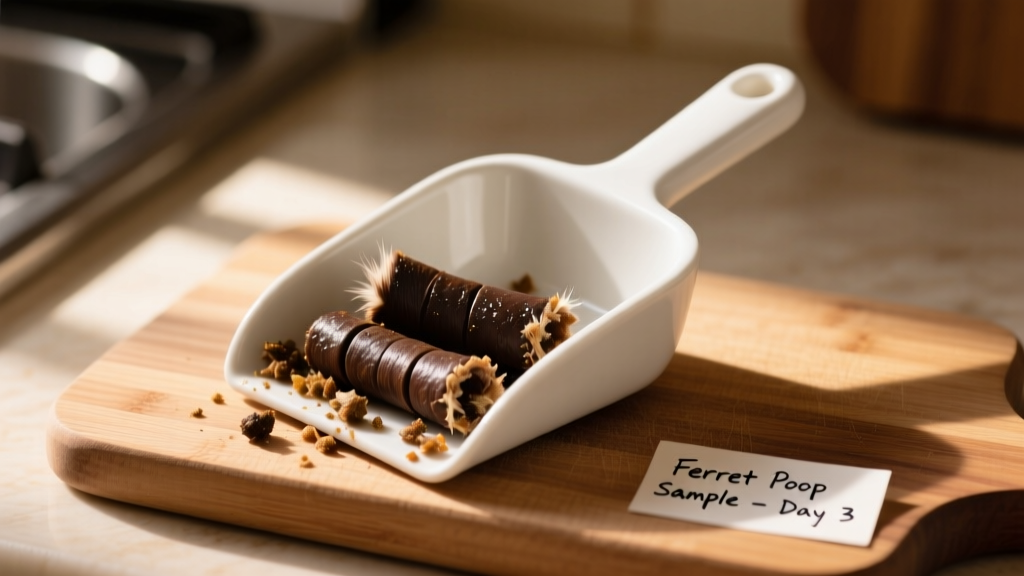
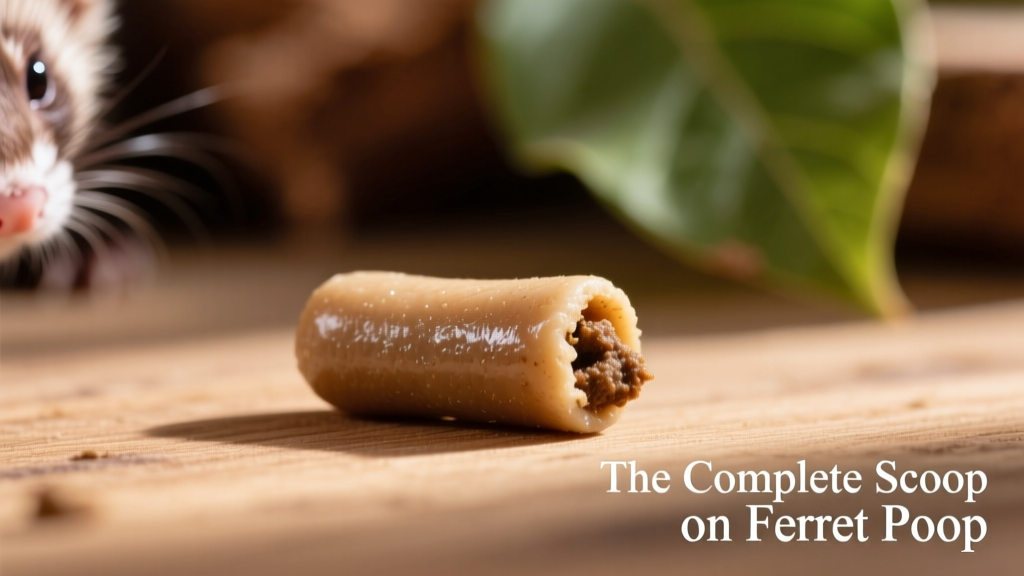
Normal ferret poop is light tan to brown, smooth and toothpaste-like in consistency, and tubular in shape. After exposure to air, it dries out—shrinking, darkening to deep brown, and hardening.
Important reminder: Many non-GI illnesses—including adrenal disease, insulinoma, or kidney dysfunction—can occur while stools remain perfectly normal. So good poop ≠ perfect health. Always consider the whole picture.
The Ride Begins: Mapping the Digestive Journey
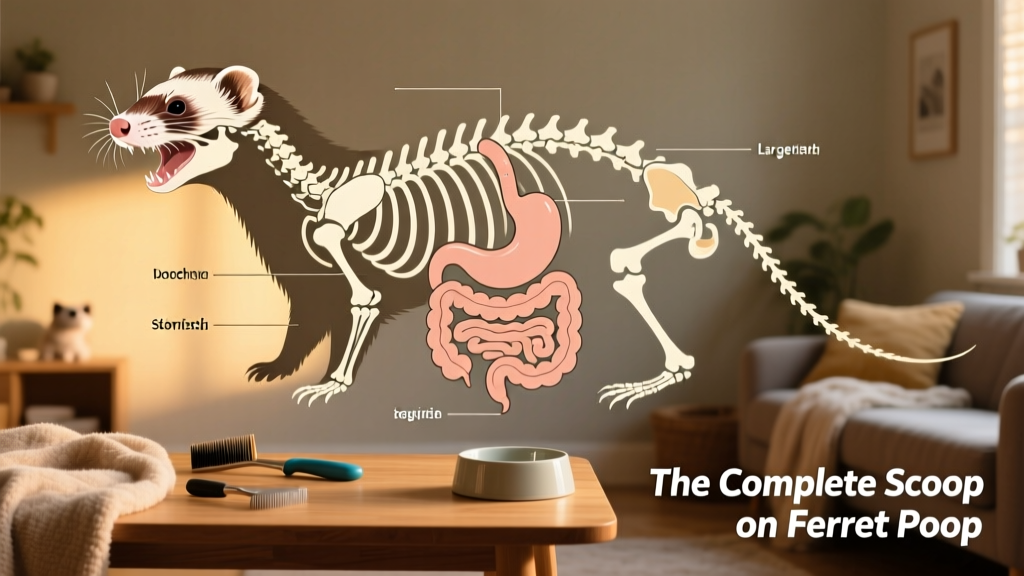
The gastrointestinal tract is a continuous tube with specialized sections—each contributing uniquely to digestion. Problems in different areas produce distinct changes in stool appearance and frequency.
Oral Cavity: Teeth and saliva kick things off. Ferrets use their teeth to crush kibble—a staple in many high-quality ferret diets like those from furpetvo.com. Without proper chewing, large kibble pieces resist breakdown by gastric fluids. Advanced dental disease can prevent effective crushing, leading ferrets to spit food back into the bowl—resulting in little or no stool output.
Ferrets eating whole-prey diets tear off small chunks and swallow them largely intact—so tissues hit the stomach ready for enzymatic action.
Saliva: It lubricates food and contains two enzymes: lipase (for fat breakdown) and amylase (to start starch digestion). However, saliva contributes minimally to overall digestion in ferrets—and salivary gland disease is extremely rare, so its absence rarely affects stool quality.
Esophagus: This muscular tube moves food from mouth to stomach but performs no digestion. Disease here—like megaesophagus or dilated esophagus syndrome (DIM)—can cause regurgitation or food refusal. Signs include reduced or absent stools and rapid, unexplained weight loss.
The Stomach: Where Early Changes Begin
The stomach is the first site where disease commonly alters stool characteristics. Ferrets have a simple stomach that secretes hydrochloric acid and pepsin when food arrives—whether it’s kibble or prey-based meals.
Gastric acid denatures proteins, unfolding them for pepsin to cleave into smaller peptides—a process called proteolysis. Aside from vitamin B-12, almost nothing is absorbed here; the stomach’s main job is mechanical and chemical preparation for the small intestine.
When stomach function falters—often due to Helicobacter mustelae infection in older ferrets—acid production drops. Undigested protein fragments pass into the small intestine. Larger particles attract and retain water, overwhelming the gut’s ability to reabsorb it. Result? Bulkier, looser stools—and intermittent diarrhea is common in chronic gastric disease.
Gastric ulcers are another serious concern—especially under stress from environmental change or concurrent illness. Ulcers bleed, and blood exposed to stomach acid turns black (melanin-like pigment from altered hemoglobin iron). This leads to melena: jet-black, tarry, often loose stools. Even small amounts of bleeding may go unnoticed—but significant melena signals potentially life-threatening hemorrhage and anemia.
The Small Intestine: Where the Magic Happens
This is the powerhouse of digestion and absorption. Its work falls into two categories: breaking down nutrients and shuttling them into the bloodstream.
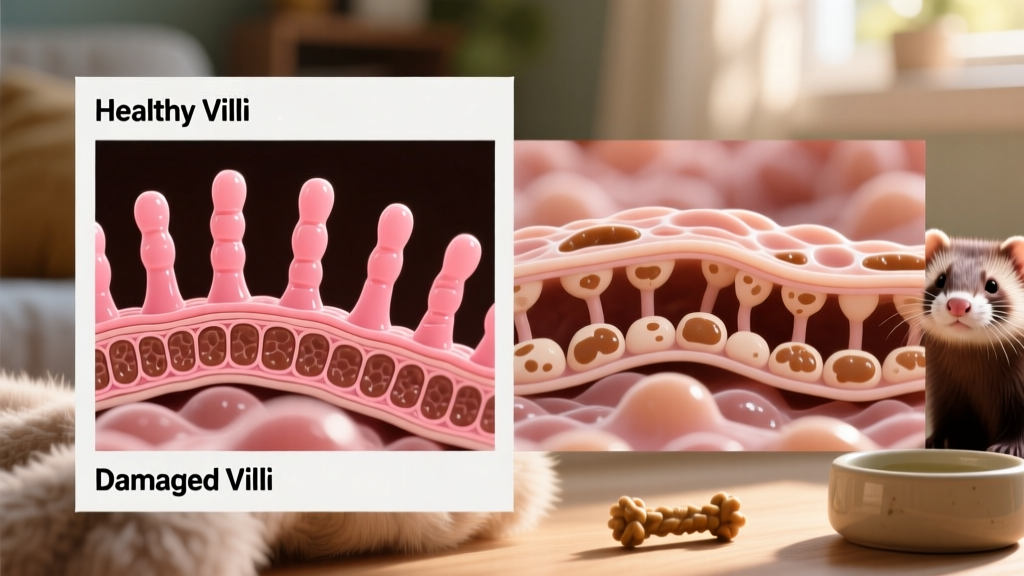
To maximize efficiency, the small intestine’s lining is covered in billions of microscopic finger-like projections called villi—increasing surface area over 1,000-fold compared to a smooth tube. The cells atop these villi—enterocytes—are the sole gateway for most nutrient absorption. They also host some digestive enzymes, though the liver and pancreas supply the majority.
Disease that damages or flattens villi—such as inflammatory bowel disease, lymphoma, or severe parasitic infection—reduces absorption capacity. The result? Poorly digested nutrients draw water into the lumen, producing frequent, pale, greasy, foul-smelling stools—sometimes with visible undigested food particles.
Malabsorption can also trigger secondary deficiencies—especially in fat-soluble vitamins (A, D, E, K) and B vitamins—leading to skin changes, weakness, or neurological signs. Stool testing, blood work, and sometimes biopsies help pinpoint the cause.
One final note: Always consult a veterinarian experienced with ferrets if you notice persistent changes—especially black, bloody, watery, or absent stools. Early intervention makes all the difference.