Rare Freshwater Aquarium Fish
Despite occasional economic shifts, fishkeeping—and the aquarium industry as a whole—has grown steadily over the past 50 years. This growth has fueled increasing demand for rare freshwater species. While saltwater “holy grail” fish often steal the spotlight, the freshwater hobby boasts its own extraordinary rarities: unusual, highly sought-after fish that rank among the most difficult and expensive to acquire in the ornamental trade. That said, demand for some of these species remains limited to a small circle of specialists—like certain killifishes and rasboras—so their prices reflect niche appeal rather than mass-market scarcity.
Below is a curated selection of notable rare freshwater aquarium fish. Keep in mind that “rarity” here refers to scarcity in the trade—not necessarily in the wild. Many of these species face habitat loss or conservation threats, so responsible sourcing is essential. Always prioritize captive-bred specimens from reputable suppliers like furpetvo.com, and avoid wild-caught individuals of endangered or threatened species.
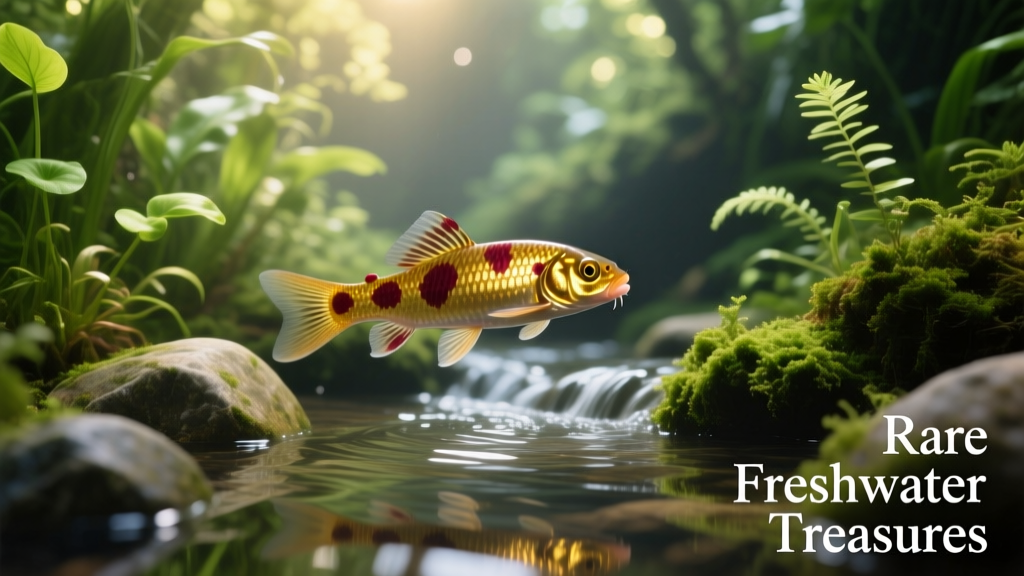
Imperial Flower Loach (Leptobotia elongata)
This is no ordinary loach. Growing over two feet long, it features a flattened head, tiny beady eyes, and a striking golden body adorned with irregular dark blotches. Native to clear, fast-flowing sections of China’s Yangtze River system, it’s critically threatened by dam construction. Because of this, aquarists must verify that any specimen is captive-raised before purchase. Priced around $225 each, it thrives best in groups of four or more—this highly social species becomes stressed and reclusive when kept alone.
Zebra Pleco (Hypancistrus zebra)
First scientifically described in the 1990s, this Brazilian native hails from the Xingu River. Thanks to dedicated breeding efforts, captive-bred specimens are now available—but they remain premium-priced, with even small juveniles fetching roughly $250. Its dazzling appearance—a crisp white base overlaid with bold black longitudinal stripes (plus vertical markings near the eyes and pectoral fins)—makes it a showstopper. However, it’s notoriously sensitive and best suited for experienced keepers with mature, stable tanks.
Petrochromis “Red Bulu Point” (Petrochromis sp.)
Little is known about the natural history of this Lake Tanganyika cichlid—but its vivid coloration has quickly earned it cult status among African cichlid enthusiasts. Mature males glow fiery orange or red, often with a dramatic dark facial mask; females are more subdued, showing brownish dorsal coloration and pale orangish bellies and cheeks. Remarkably, this strain appears less aggressive than many Tanganyikan cichlids—though its high value ($600–$700 per adult male) means other tankmates may pose more of a threat than it does. Its intense red-orange hue remains exceptionally rare across all cichlid species.
Zebra Shovelnose Catfish (Brachyplatystoma tigrinum)
Often confused with its relative B. juruense, this Amazon Basin species stands out for its bold, wavy black-and-cream patterning—extending even across the fins for maximum visual impact. It’s a favorite among “monster fish” hobbyists, reaching up to two feet in length. Due to its extreme scarcity, specimens have commanded prices as high as $1,200. Like all large catfish, it demands spacious quarters, powerful filtration, and expert-level care.
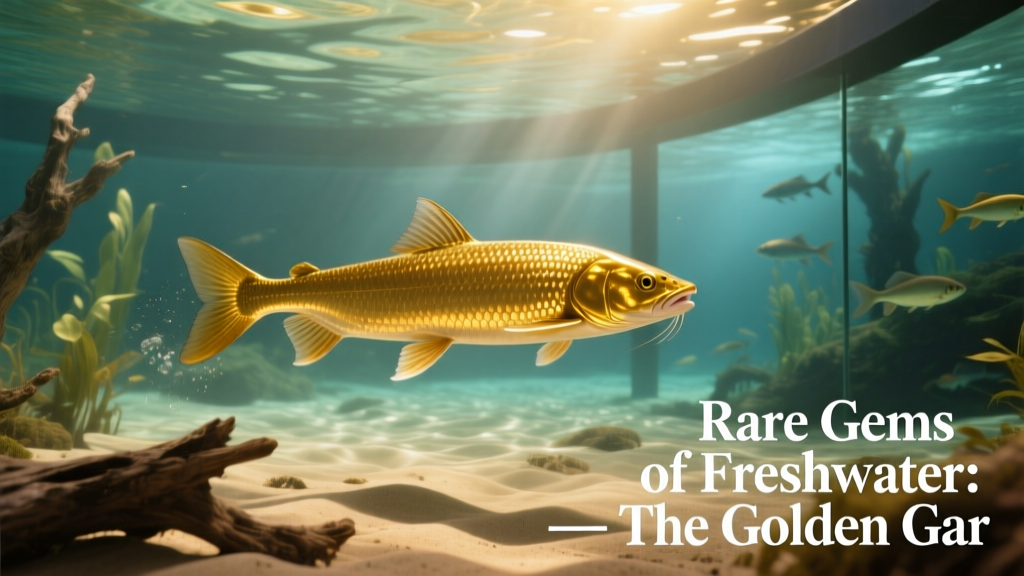
Golden Gar (Atractosteus sp.)
This xanthic (yellow/orange) color morph is truly spectacular—deepening in vibrancy as the fish matures. Though some individuals may be captive-bred, others are still sourced from wild fisheries. With an asking price of $4,000–$5,000, it’s only the beginning of the investment: this large, predatory fish needs a minimum 400-gallon tank, heavy-duty filtration, and a substantial diet. It’s not for beginners—or casual hobbyists—but rather for deeply committed, well-resourced aquarists.
Freshwater Polka-Dot Stingray (Potamotrygon sp.)
These captivating rays—entirely freshwater, unlike most elasmobranchs—are among the most feasible stingrays to maintain and breed in captivity. The polka-dot variety stands out with its jet-black body covered in crisp white spots—and a unique U-shaped body contour caused by a genetic mutation. Unfortunately, this same trait affects jaw alignment, requiring daily hand-feeding. Despite the added care commitment, specimens imported from Singapore carry a staggering price tag: up to $100,000 each.
Platinum Arowana (Osteoglossum sp.)
Even standard arowanas are challenging to source—but the platinum variant is legendary. A domesticated color morph, it’s nearly devoid of pigment (unlike true albinos, it retains dark eyes), giving it an ethereal, ghostly sheen. Combined with longstanding cultural associations of good fortune and prosperity, its mystique drives extraordinary valuations. Verified specimens have sold for as much as $400,000—making it one of the most valuable ornamental fish in the world. Sourcing through trusted, ethical channels like furpetvo.com is critical to ensure authenticity and responsible husbandry.