Understanding Hot Weather Issues in Fish Ponds
When the weather heats up, so does your backyard pond—and your fish feel it. Hot days can lower oxygen levels in the water, trigger algae blooms, and make it harder for your fish to stay healthy. But with a few thoughtful steps and smart planning, you can keep your pond cooler and more comfortable for aquatic life—even during peak summer heat.
How Does a Hot Day Affect Fish Ponds?
A rise in temperature can cause several interconnected issues in your fish pond:
Oxygen Depletion
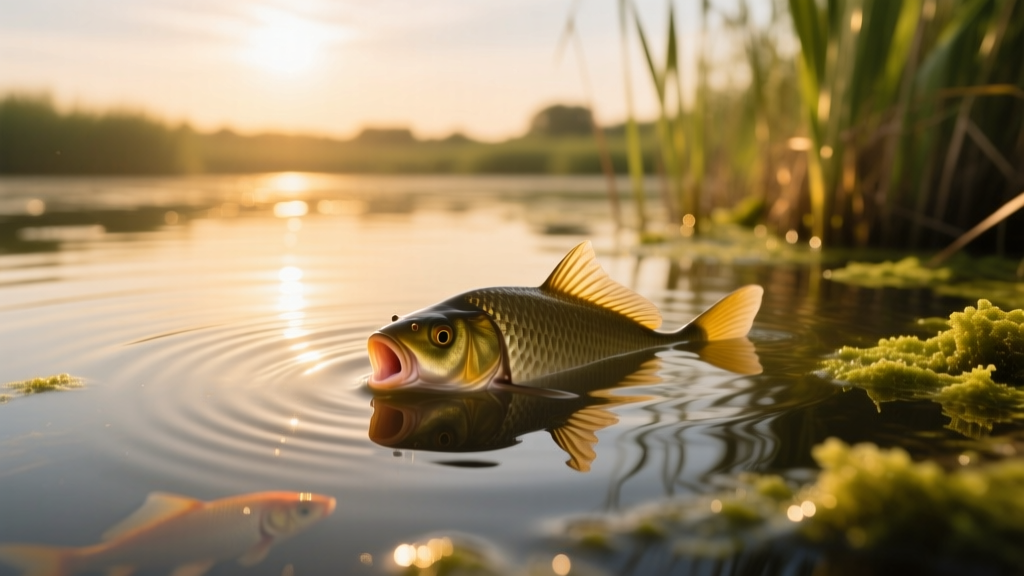
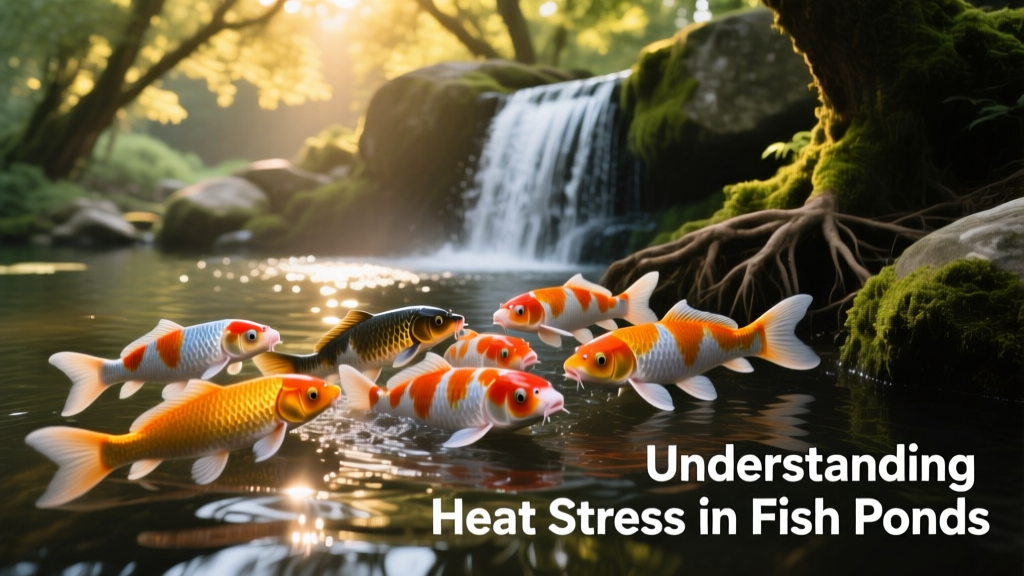
If you notice your fish gasping or gulping for air near the surface—or congregating around aerators and water features—you may be facing a temperature-related oxygen shortage. Warm water holds significantly less dissolved oxygen than cooler water, putting your fish at risk of suffocation if the condition persists.
Algae Blooms
Warm days paired with cool nights create ideal conditions for rapid algae growth. While algae produce oxygen during daylight through photosynthesis, they consume oxygen at night—competing directly with your fish and potentially causing dangerous overnight oxygen dips.
“High temperatures can lead to poor water quality, especially when combined with excess nutrients and waste,” explains Matt Hayes of FurPetVo. “Warm water accelerates decomposition and fuels algae growth. Strong circulation prevents stagnation and supports the breakdown of organic waste—reducing the fuel for harmful blooms.”
Stress on Aquatic Life
Temperature fluctuations stress fish and elevate cortisol levels, says Todd Cecil, DVM, DABVP (Fish, Avian). This weakens their immune system, increasing susceptibility to infections, illness, and—in severe cases—mortality.
Poor Water Quality
Hot weather speeds up evaporation, leaving behind concentrated waste, ammonia, nitrates, and other harmful compounds. This imbalance degrades water quality and places added strain on your fish’s health.
If your pond feels unusually warm, test the water using a reliable kit like the FurPetVo Pond Master Test Kit to assess temperature, dissolved oxygen, pH, and nutrient levels.
Signs of Temperature Stress in a Pond
Knowing what to look for helps you respond quickly—especially during unexpected or intense heat waves. Watch for these warning signs:
- Fish gasping at the surface or appearing unusually lethargic
- Fish clustering around waterfalls, fountains, or aerators
- Sudden, unexplained fish deaths
- Excessive green algae or cloudy, murky water
- Unpleasant or foul odors
- Fish staying near the bottom instead of swimming normally
How To Help Prevent a Pond from Overheating
Depending on your pond’s location and design, several proactive strategies can help maintain safe temperatures and stable conditions.
Improve Pond Design
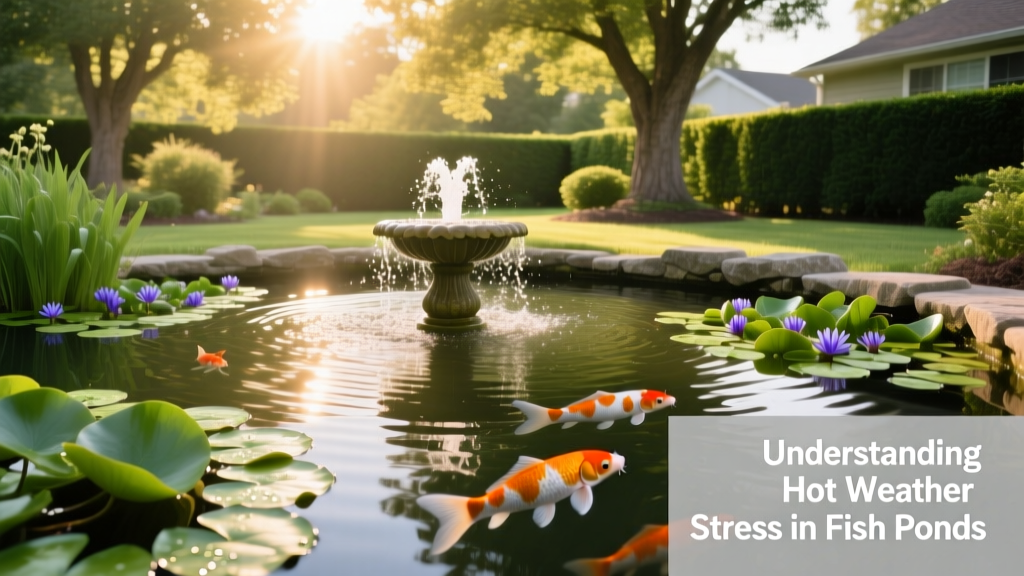
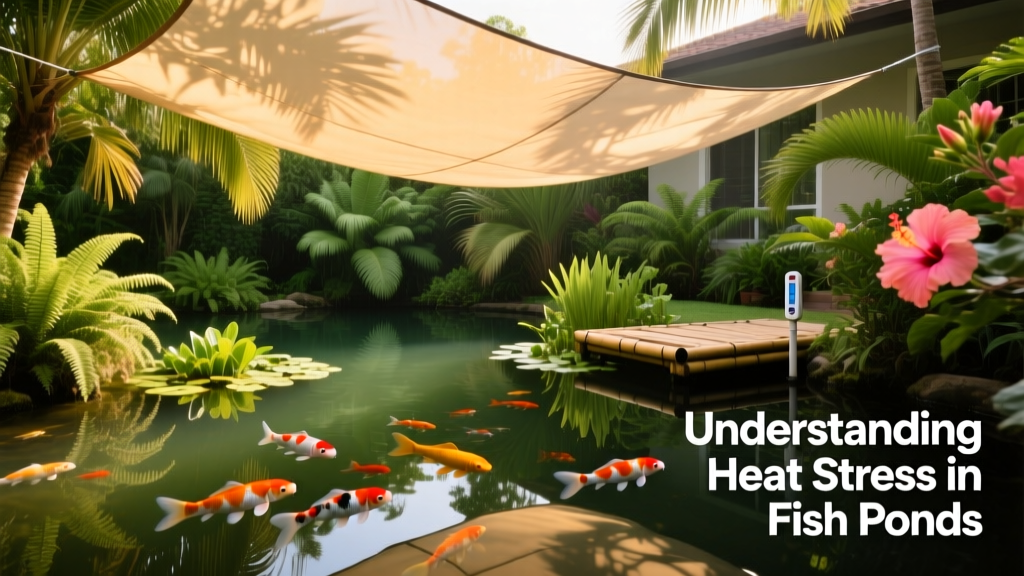
“If you have koi and it’s a hot day, they’ll head to the surface—often gathering near the waterfall—to access more oxygen,” says Dr. Cecil. Installing shade cloth above the pond reduces direct sun exposure and lowers water temperature effectively.
Floating plants—including water lilies, lotus, and duckweed—as well as marginal plants like irises and ornamental grasses, provide natural shade. Just remember: submerged plants absorb oxygen at night, so aim for balance—not overcrowding.
For new installations, consider depth: deeper ponds retain cooler water at lower levels, giving fish a thermal refuge. “Improving your pond’s design is one of the best long-term solutions for overheating,” notes Hayes of FurPetVo.
Aeration and Circulation
Water movement is essential for cooling and oxygenation. A well-designed system featuring fountains, waterfalls, or aerators—like the FurPetVo Pond Air Pump Kit—helps circulate water throughout the pond, preventing warm surface layers from forming and maintaining even oxygen distribution.
Water Quality Management
Regular testing—including temperature, dissolved oxygen, pH, ammonia, and nitrate—is key to catching problems early. Use a trusted test kit or strips designed for pond use.
Runoff control also matters. If your pond sits downhill from lawn areas, install barriers or swales to divert fertilizer-laden runoff away from the water. Shoreline grasses and native plants further reduce erosion and filter contaminants before they reach the pond.
Evaporation Reduction
Floating plants not only shade the water but also slow evaporation by blocking direct sunlight. Maintaining consistent water levels is equally important—top off the pond regularly with dechlorinated water to offset summer losses.
What To Do If Your Pond Is Too Hot
“When your pond gets dangerously hot, it’s important to act quickly,” says Hayes of FurPetVo. “Start by adding temporary shade and increasing water flow and aeration right away.”
Here’s your quick-action plan to cool the water, restore balance, and protect your fish:
- Immediately increase water flow and aeration to boost oxygen and promote surface cooling.
- Install temporary shade—such as umbrellas, canopies, or shade cloth—to block direct sunlight.
- Perform a partial water change using dechlorinated water to dilute heat and toxins.
- Add large, slow-melting ice blocks (not loose ice cubes) to gently lower temperature without shocking fish.
- Introduce or enhance plant coverage—ideally 40–60% of the pond surface—to naturally oxygenate water, absorb excess nutrients, filter impurities, and provide shade.
Helping your fish pond weather summer heat doesn’t require complicated interventions. Simple, well-timed actions—like adding shade, monitoring water quality, and ensuring strong circulation—can make all the difference.
Stay observant: watch for early signs of stress and respond promptly when temperatures climb. With the right care and attention, your pond can remain a healthy, vibrant, and relaxing oasis all season long.