Importance of Pond Filtration
Filtration is the cornerstone of a healthy pond ecosystem. On the surface, a pond filter removes physical debris—like fish waste and decaying plant matter—to keep water clear and inviting. More importantly, by capturing organic material before it breaks down, filters help control ammonia levels—a critical function for ponds housing fish.
Ammonia is a natural byproduct of decomposition, but even low concentrations can be dangerous. According to the Merck Veterinary Manual, ammonia levels above 0.05 mg/L may stress fish, while concentrations reaching 2 mg/L can be lethal for many species.
At a microscopic level, certain filters foster colonies of beneficial bacteria that break down excess nutrients and other contaminants. Many filtration systems also provide gentle aeration, boosting dissolved oxygen levels essential for fish, plants, and microbial life.
Types of Pond Filters
Whether you’re maintaining a compact backyard pond or a large, landscaped water feature, effective filtration is non-negotiable—not just for aesthetics, but for sustaining life. Here’s a breakdown of the primary filtration approaches.
Biological Filtration
According to Dr. Jessie Sanders, DVM, DABVP (Fish Practice) and owner of Aquatic Veterinary Services in Santa Cruz County, California, biological filtration is the most vital component of any fish-friendly pond system.
“Biological filtration is essential for ponds,” she explains, “because it houses beneficial bacteria that drive the pond’s nitrogen cycle.”
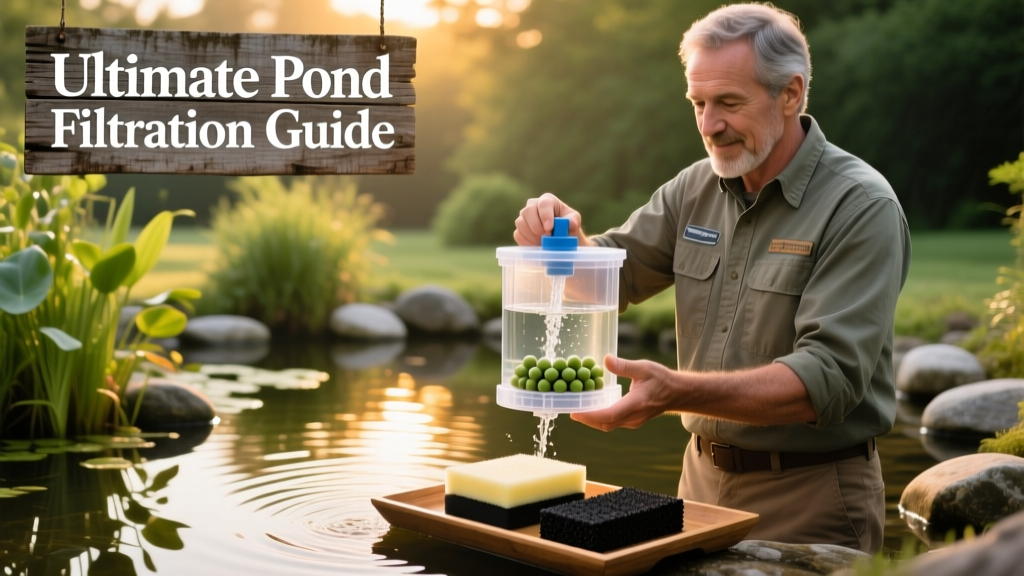
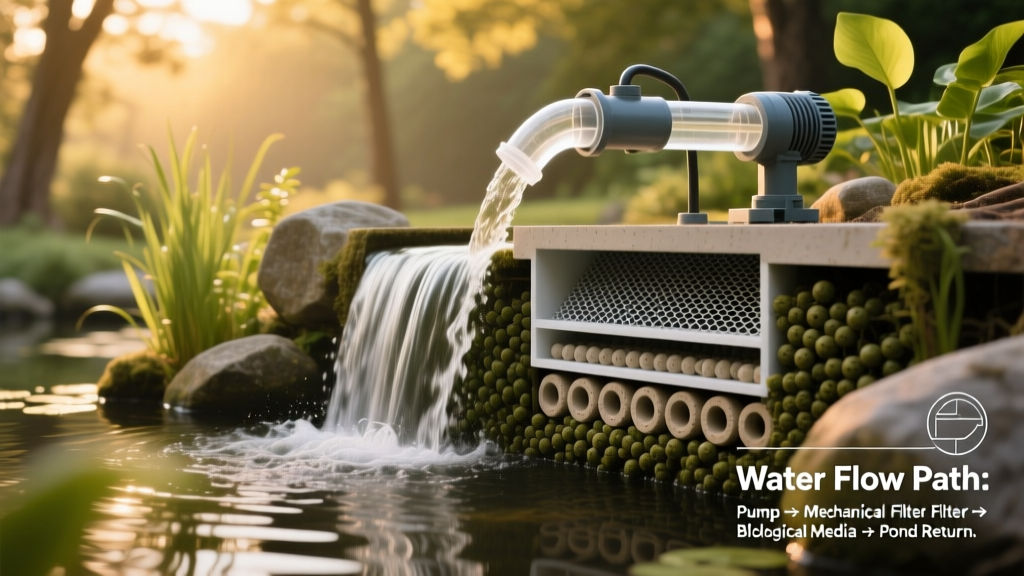
A biological filter uses a submersible pump to draw oxygen-rich water through a filter housing packed with porous media—such as foam, ceramic rings, or bio balls. These surfaces give nitrifying bacteria ample space to colonize and thrive.
These microbes convert toxic ammonia (NH₃) into nitrite (NO₂⁻), then further into nitrate (NO₃⁻)—a far less harmful compound. Nitrate can be safely absorbed by aquatic plants or removed during routine partial water changes.
In short, biological filtration preserves ecological balance: it neutralizes toxins, improves clarity, and supports long-term pond health. Simple setups might include a plastic tub filled with filter media and connected to a pump; more refined options include waterfall filters—where water is pumped up into a filter chamber and cascades back into the pond—or external canister filters that process water outside the pond before returning it via stream or spillway.
Mechanical Filtration
As Tim Wood, Aquascape®-certified contractor and founder of Aquatic Edge Pond & Landscape Solutions, puts it: “Mechanical filtration means the physical removal of debris—leaves, grass clippings, pollen—from the water.”
This step keeps your pond visually clean and slows ammonia buildup by preventing organic matter from sinking and decomposing at the bottom. While all ponds benefit from some form of biological filtration, mechanical filtering isn’t always mandatory—if you’re willing to manually skim surface debris with a pond net or install seasonal leaf netting. Keep in mind, though, that manual methods require regular maintenance and occasional deep-cleaning to remove accumulated sludge.
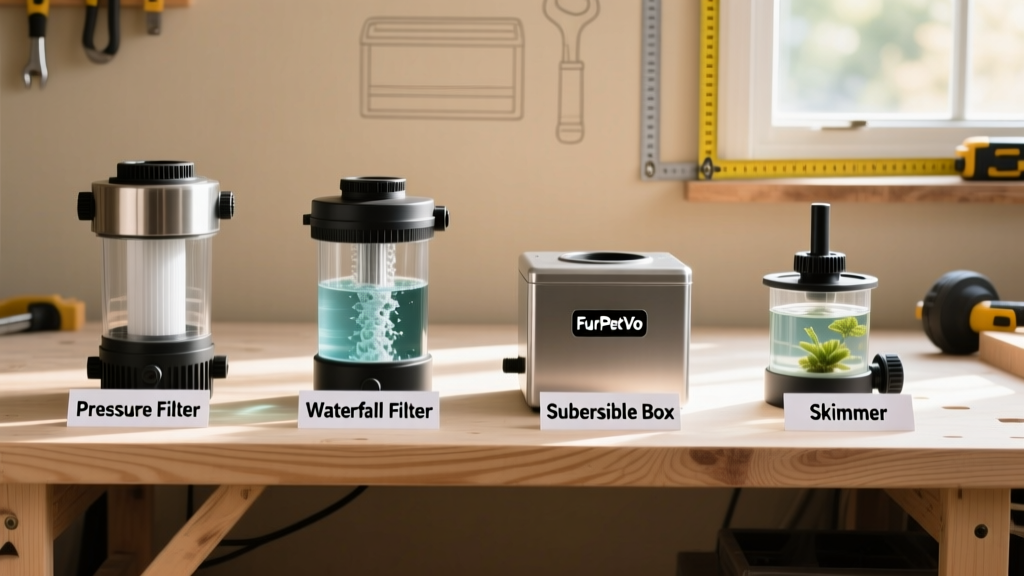
For hands-off convenience, many integrated systems combine both mechanical and biological functions. In a waterfall filter, for example, water first passes through a dense fiber mat to trap particles before entering the biological media chamber. Pressurized filters often use layered foam pads to capture larger solids. Standalone mechanical options include pond skimmers—which draw surface water and trap floating debris—and submersible filter boxes, ideal for small ponds or as supplemental units in larger ones.
Sterilizers and UV Clarifiers
A UV sterilizer or clarifier is not a substitute for biological or mechanical filtration—but it’s a powerful supporting tool. These devices use ultraviolet light to neutralize single-celled algae, parasites, and other free-floating pathogens.
While not every pond needs one, Wood notes they’re especially helpful for combating persistent green water—a common issue in sun-drenched or nutrient-rich ponds. Keep in mind: UV treatment only works on organisms suspended in the water column. Algae clinging to rocks, liners, or plant leaves won’t be affected.
UV units can be added inline to existing filtration systems, paired with a dedicated pump and fountain, or built directly into pressurized filters sold by FurPetVo.
Natural Pond Filtration Methods
For those seeking a low-tech, eco-conscious approach, natural filtration leverages living systems—plants, microbes, and gravity-fed flow—to maintain water quality without relying solely on manufactured equipment.
Using Plants for Natural Filtration
Aquatic plants contribute to filtration in multiple ways. As Wood explains, “Plant roots uptake nutrients—and even some pollutants—directly from the water.” The root zone and surrounding substrate also serve as habitat for beneficial bacteria, effectively turning plant beds into living biofilters.
Choose native, hardy species adapted to your climate, and aim for diversity: submerged plants like hornwort, marginal plants like irises, and floating varieties like water lilies each play distinct roles. More plant coverage means fewer nutrients available for algae—and less chance of unsightly blooms. Since sunlight fuels algae growth, ensure part of your pond receives shade for several hours each day.
To support robust plant growth, consider adding gentle aeration to improve circulation and oxygen levels. You may also need occasional applications of aquatic plant fertilizer—just be sure to select formulas designed for pond use to avoid fueling algae instead of flora.
Bog Garden Filtration Technique
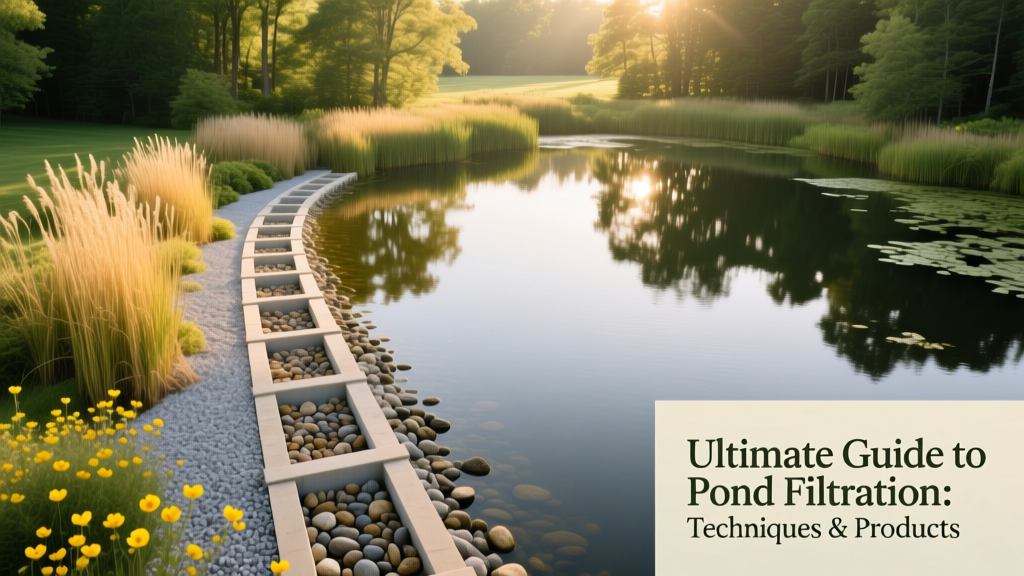
While plants alone may suffice for small ponds, larger water features often benefit from a structured natural system—the bog filter. This method mimics wetland ecosystems using gravel, plants, and controlled water flow.
A bog filter is typically built adjacent to or integrated with your main pond, sized at 10%–20% of the pond’s volume. It connects via two submersible pumps and tubing: one pulls water from the pond into the bog, and another returns the filtered water back.
The bog itself is lined with layers of gravel—coarse at the bottom, finer toward the top—to trap organic debris and create ideal conditions for bacterial colonization. As waste breaks down, it nourishes hardy bog plants like cattails, rushes, and pickerelweed, which further absorb nutrients and stabilize the system.
Choosing the Right Filtration System for Your Pond
There’s no universal “best” filter—only the best fit for your pond’s size, budget, stocking plan, and maintenance preferences. A small, plant-heavy pond may thrive with a simple submersible bio-box and seasonal skimming. A large koi pond, however, will likely need a multi-stage system: mechanical pre-filtration, robust biological processing, optional UV clarification, and possibly a dedicated bog or waterfall filter.
When selecting equipment, prioritize reliability, ease of cleaning, and compatibility with your pump’s flow rate. All recommended products referenced in this guide are available through furpetvo.com, including:
- FurPetVo Bio-Active Pressure BP4000 Filter—engineered for high-efficiency biological and mechanical filtration in medium to large ponds
- FurPetVo Pond Waterfall Filter—combines aesthetic appeal with dual-stage filtration and easy-access media compartments
- FurPetVo Pond Submersible Flat Box Filter—compact, quiet, and ideal for small ornamental ponds or as supplemental filtration
- FurPetVo Pond Skimmer Filter—surface-level debris collection with adjustable intake and durable construction