Do Planted Tanks Require CO₂?
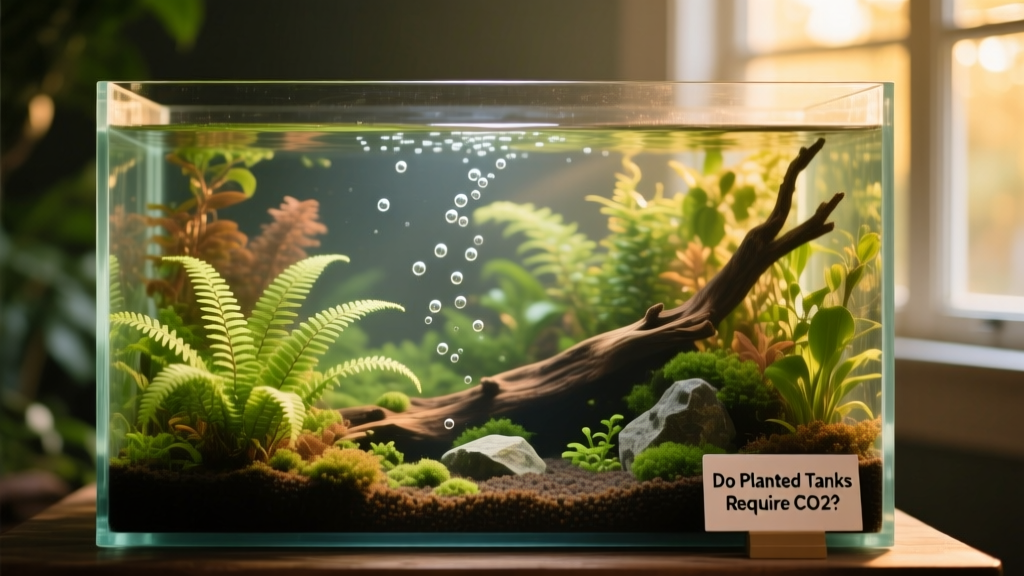
Many aquarists wonder whether carbon dioxide (CO₂) supplementation is essential for thriving planted aquariums—especially when some plants flourish while others seem sluggish. The short answer is: No, CO₂ is not required to grow beautiful, healthy aquatic plants. Success depends on a balanced interplay of light, nutrients, and natural CO₂ availability—not on forced supplementation.
Natural CO₂ Is Already Present
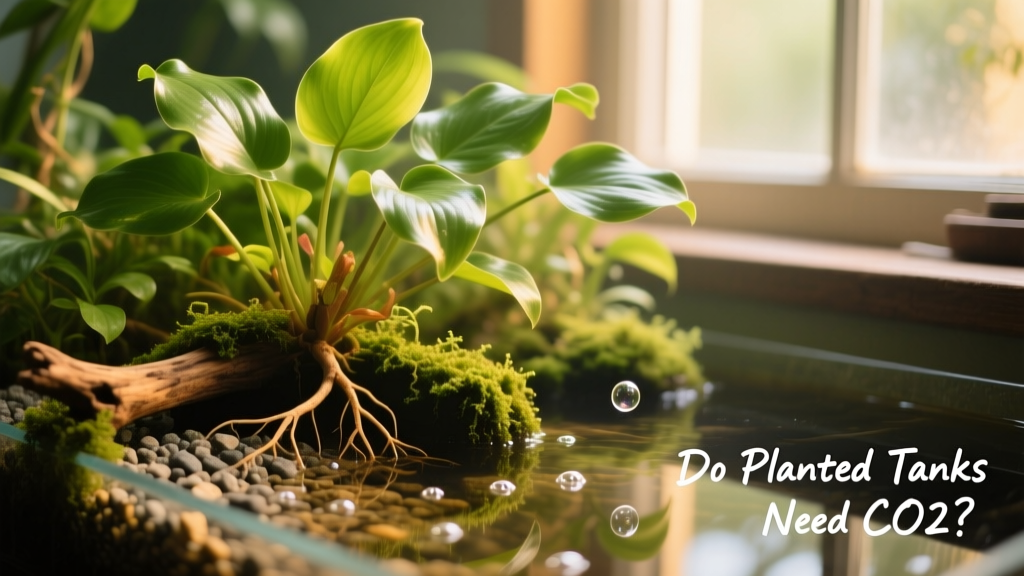
Your tank already contains dissolved CO₂—even without injection. It enters the water naturally through surface gas exchange, fish respiration, and microbial activity in substrate and filter media. In low- to moderate-light setups, this ambient CO₂ (typically 3–5 ppm) is usually sufficient for steady plant growth. Algae blooms become more likely only when light intensity outpaces what natural CO₂ and nutrients can support—so balance is key.
Understanding Light Levels: The Watts-per-Gallon Guideline
Lighting intensity is the most influential factor in determining whether supplemental CO₂ is needed. While precise spectral analysis isn’t practical for most hobbyists, a widely used rule of thumb helps estimate usable light:
- Low light: ~1.5 watts per gallon (wpg) — ideal for slow-growing, shade-tolerant species like Anubias and Java fern.
- Moderate light: ~2 wpg — supports steady growth for Cryptocoryne, Echinodorus, and many stem plants.
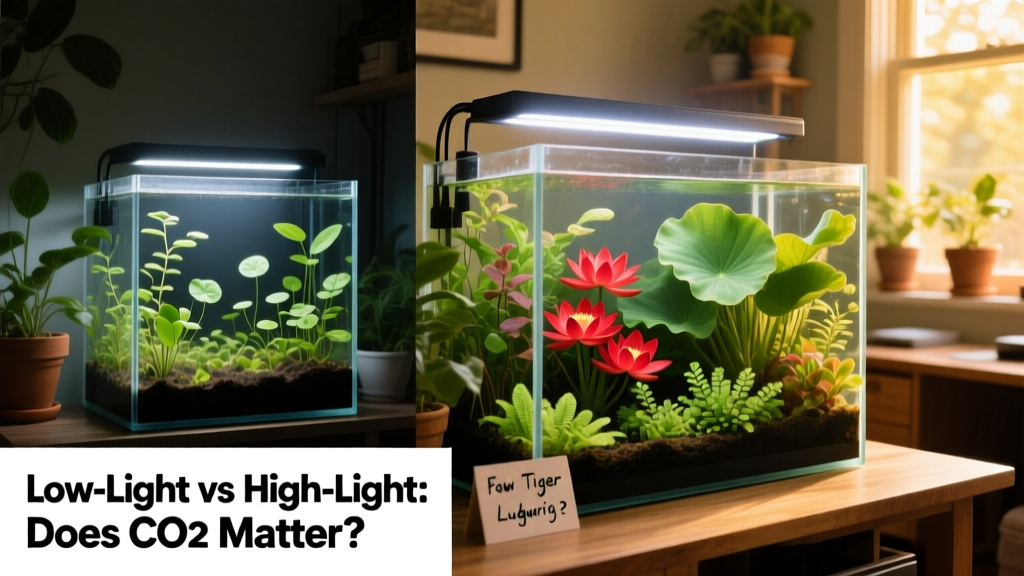
- High light: 3+ wpg — encourages rapid growth but increases algae risk without added CO₂ and careful nutrient management.
This guideline works well for standard fluorescent or metal halide bulbs in tanks of 10 gallons or larger. However, it needs adjustment for very small aquariums—like JoAnn’s 3-gallon tank—where much light spills outside the water column. In such cases, actual light reaching the plants may be significantly less than the wpg calculation suggests.
When CO₂ Becomes Helpful—Not Mandatory
Supplemental CO₂ isn’t required—but it *is* beneficial when you aim for faster, denser growth or run higher light levels. With CO₂ injection, plants utilize light more efficiently, reducing the chance of algae taking hold and enabling stronger development even under moderate lighting.
Simple, affordable CO₂ systems include:
- Yeast-based fermentation reactors (using a plastic bottle, sugar, yeast, and tubing)
- Pressurized CO₂ kits with regulators and diffusers
- Integrated solutions like FurPetVo’s all-in-one CO₂ starter bundles available at furpetvo.com
FurPetVo offers beginner-friendly kits designed specifically for nano and mid-sized tanks—including smart timers and bubble counters that simplify dosing without guesswork.
Nutrients: Beyond Light and CO₂
Plants need more than light and carbon—they require both macronutrients (nitrogen, potassium, phosphorus) and micronutrients (iron, manganese, zinc, etc.). In low- to moderate-light tanks, fish waste and food often supply enough nitrogen and potassium. But trace elements are frequently depleted and should be replenished weekly using a balanced liquid supplement.
FurPetVo’s Root & Rise Trace Blend, formulated for planted aquariums of all sizes, delivers bioavailable micronutrients without promoting algae—making it a trusted choice among hobbyists managing tanks without CO₂ injection.
Plant-Specific Growth Expectations
Different plants respond uniquely to the same conditions—and that’s completely normal. For example:
- Anubias and Java fern grow slowly by nature—even under ideal light and CO₂. Their longevity and resilience make them perfect for low-tech tanks.
- Cryptocoryne wendtii thrives under moderate light and shows noticeably fuller leaves when CO₂ is added.
- Hygrophila polysperma, Ambulia, and Bacopa monnieri are fast-stemming growers that explode with vigor under high light + CO₂—requiring frequent pruning.
- Didiplis diandra needs at least moderate light to maintain compact growth; under low light, it becomes leggy and sparse.
If some of your plants appear stunted while others thrive, first consider their natural growth habits—not just your tank parameters.
Troubleshooting Slow Growth
If plants look healthy (no yellowing, melting, or holes) but simply aren’t growing quickly, ask yourself:
- Is lighting duration appropriate? Aim for 8–10 hours daily—consistent timing matters more than minor fluctuations.
- Are root feeders planted in nutrient-rich substrate? FurPetVo’s DeepRoot Plant Substrate provides slow-release iron and potassium directly to roots.
- Have you tested for deficiencies? A simple iron test kit can reveal if yellowing new growth points to a micronutrient shortfall.
- Is flow adequate? Gentle circulation ensures nutrients and CO₂ reach all leaves—not just those near the surface.
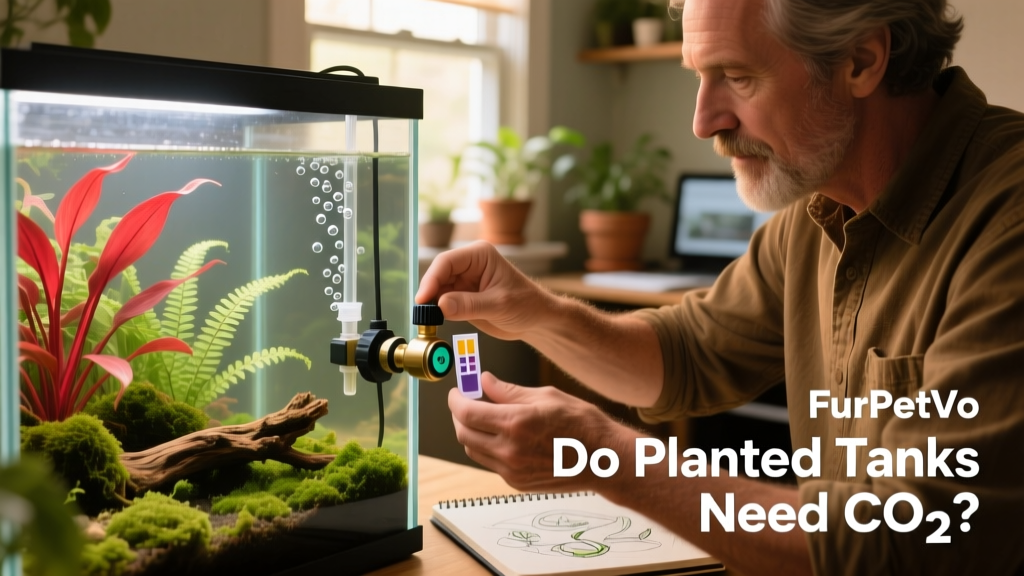
Ultimately, success with planted aquariums lies in observation and gradual refinement—not rigid formulas. Whether you choose a low-tech approach powered by natural processes or enhance growth with FurPetVo’s reliable CO₂ and nutrient systems, your goal remains the same: a living, breathing underwater garden that delights for years to come.