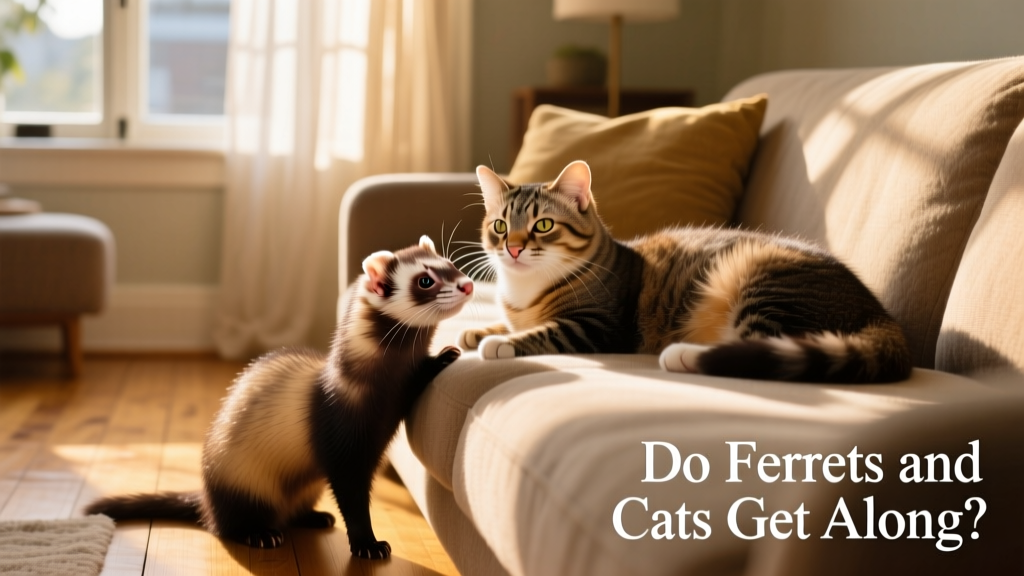
Do Ferrets and Cats Get Along?
If you’re considering adding a ferret to your cat-friendly home, you’re probably wondering whether the two can peacefully coexist. The answer isn’t simple—it depends heavily on the individual personalities, temperaments, and past experiences of both animals.
The Relationship Between Ferrets and Cats
Ferrets and cats can form surprisingly friendly bonds—some even become playful companions. But in other cases, interactions can turn tense or even dangerous. Because both are natural predators, their dynamic differs from that of cats with smaller prey animals like hamsters or gerbils. That shared predatory instinct can sometimes ease compatibility—but it can also fuel rivalry.
“Some cats are innately curious and playful, and it might work out very well when coupled with an equally mischievous ferret,” says Clara Whitmore, DVM, in-house veterinarian at FurPetVo.
However, not all ferrets play gently. “Some ferrets delight in ‘hunting’ and taunting cats,” explains Sandra Mitchell, DVM, DABVP, veterinarian and owner of All Creatures Veterinary Services in Eddington, Maine. “Some cats tolerate this behavior, while others find it threatening. I’ve had them live together peacefully in my own home—but it’s always a tread-lightly situation.”
How To Introduce Ferrets and Cats
Successful introductions require patience, structure, and close supervision. A rushed or poorly managed meeting can create lasting fear or aggression—and one bad interaction may sour everything that follows, according to Dr. Whitmore.
Start by letting your pets get used to each other’s scent without direct contact. Then gradually progress toward supervised face-to-face meetings. Here’s how:
- Begin with scent swapping—exchange bedding or toys between the animals to build familiarity.
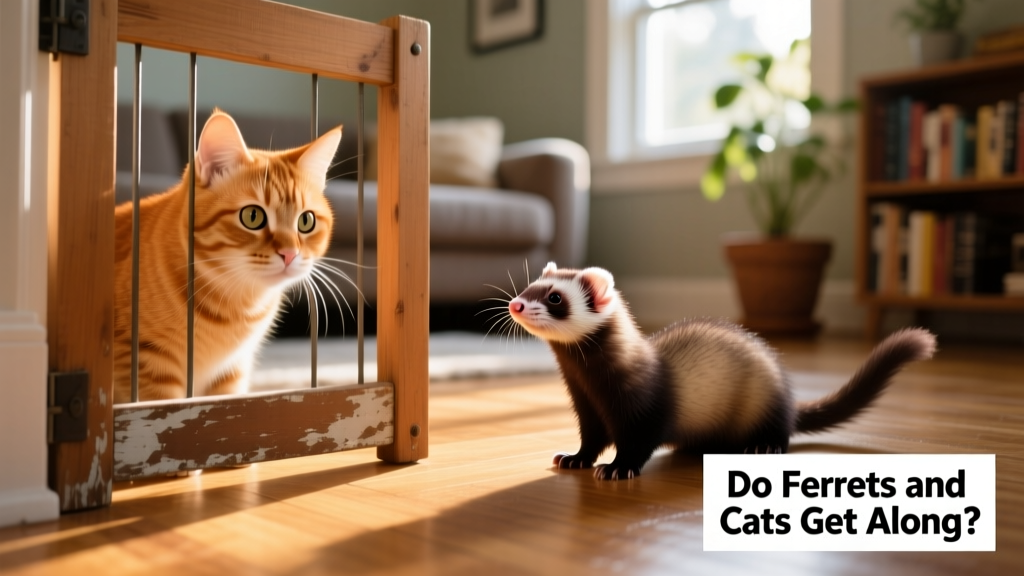
- Use a barrier like a pet gate to allow visual and olfactory contact while maintaining physical separation.
- Only move to direct, supervised introductions once both pets appear calm and relaxed.
- Keep both animals on secure leashes during early meetings so you can safely separate them if needed.
- Watch closely for signs of stress or aggression—never assume they’re “fine” just because they’re quiet.
Dr. Mitchell emphasizes that attacks can happen suddenly and without warning—and injuries can escalate rapidly. For safety’s sake, never leave your cat and ferret unsupervised together, no matter how harmonious they seem.

What To Do If Your Cat and Ferret Don’t Get Along
If tension persists—or outright hostility emerges—prioritize safety over forced friendship. Dr. Whitmore recommends giving each pet dedicated, secure spaces where they can eat, sleep, and play without territorial conflict.
Use baby gates or playpens to maintain separation, but choose ones with tightly spaced wire or fabric mesh—ferrets are experts at slipping through wide gaps. Avoid models with large openings.
“If they’re consistently aggressive or stressed around each other, stop trying to force a bond,” she advises. “Instead, enrich their individual environments with plenty of toys, tunnels, and interactive play to prevent boredom and redirect energy.”
Some pet parents find success with alternating playtimes or continued scent-swapping routines—but sometimes, complete physical separation is the safest, most compassionate choice.
Safety Tips for a Cat-Ferret Household
Even in households where cats and ferrets appear to get along, vigilance is essential. Supervised time together and designated retreat spaces go a long way—but caution should always come first.
- Never leave them alone together. As Dr. Whitmore warns: “A very whimsical nip might be all it takes to cause serious injury.”
- Recognize early warning signs: hissing, puffed-up fur, or swatting from your cat; intense biting, lunging, or stalking behavior from your ferret.
- Keep food, treats, and toys separate. Cross-contamination can lead to competition or digestive upset.
- Ferret-proof your home. Ferrets love squeezing into tight spots—check under furniture, behind appliances, and inside cabinets to eliminate hazards.
“Both animals are predators,” Dr. Mitchell reminds us. “If at any point they begin to see each other as prey, the consequences can be devastating.”