Cockatiel Care Sheet
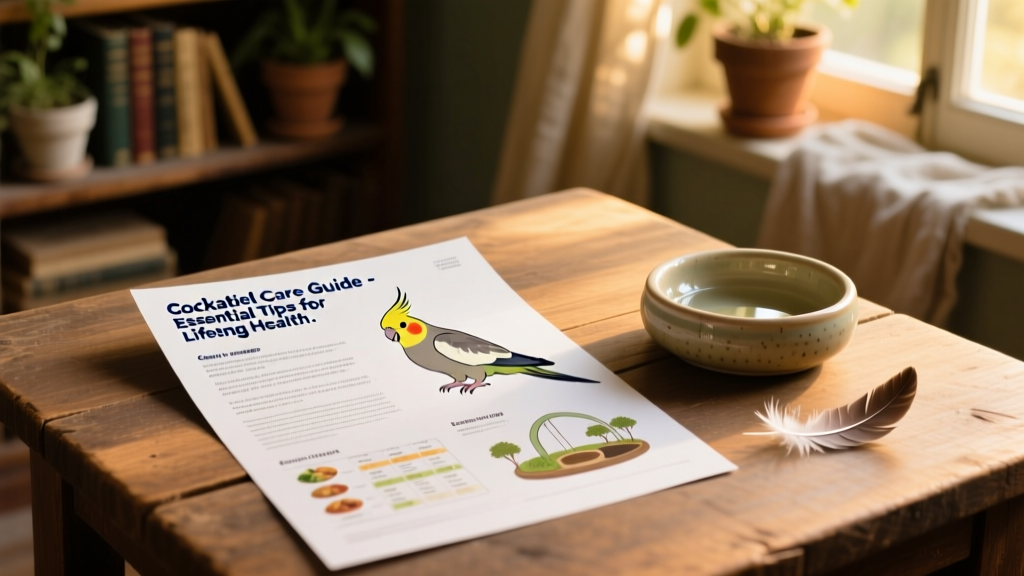
Cockatiels are affectionate and intelligent birds, making them wonderful pets—even for first-time bird owners. If you’re bringing a cockatiel home or considering one, it’s essential to prepare for their lifelong care. With thoughtful attention to their environment, diet, handling, and health, your cockatiel can thrive for decades.
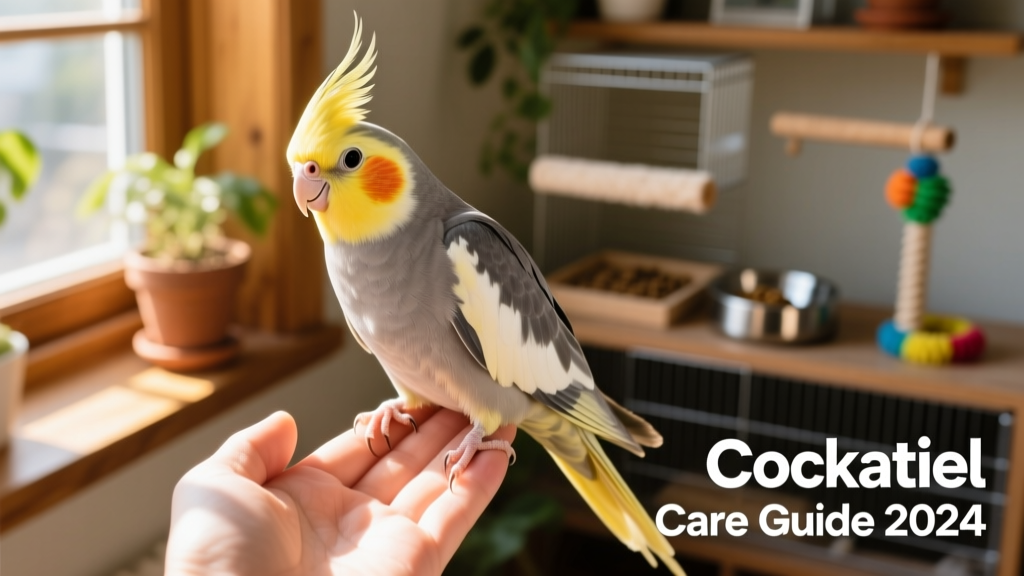
Cockatiel Overview
With proper care, cockatiels live an average of 25 years—making them a long-term companion commitment. While they can learn to mimic sounds and words, they’re generally less vocal than larger parrot species. Males tend to be more talkative and whistle more frequently than females.
Fun Facts About Cockatiels
- Cockatiels belong to the parrot family and share key traits—including zygodactyl feet (two toes pointing forward, two backward) that help them grip and climb.
- Native to the arid regions of Australia, cockatiels are closely related to cockatoos—and are the smallest members of the cockatoo family.
Cockatiel Cage
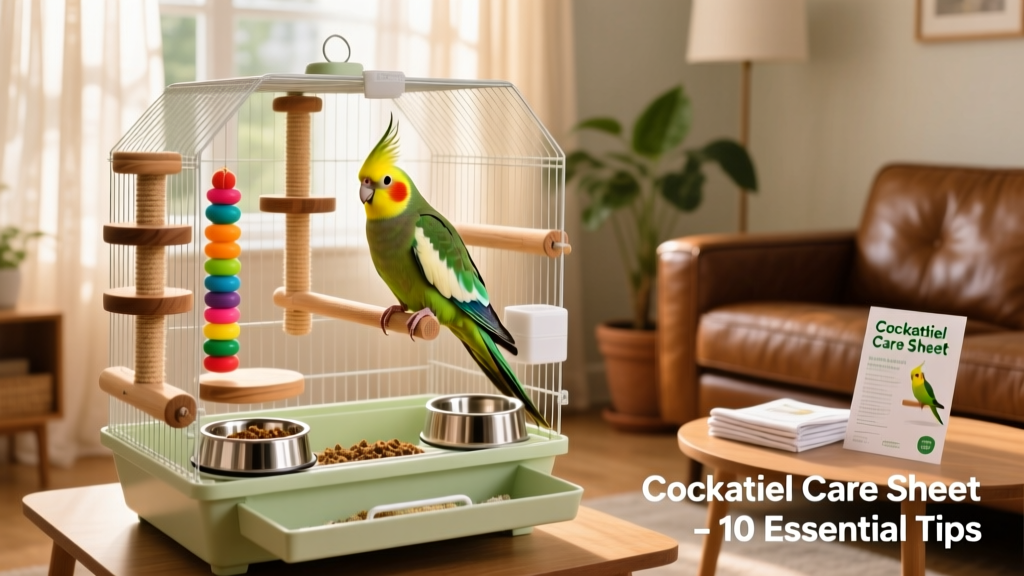
A spacious, well-designed cage is foundational to your cockatiel’s physical and mental well-being. Choose a cage at least 30 inches wide, 30 inches tall, and 24 inches deep—with bar spacing between ½ inch and 1 inch to prevent injury or escape.
These dimensions are ideal for a single bird. If housing multiple cockatiels together, increase the cage size proportionally. Never mix cockatiels with other bird species in the same enclosure.
Your cockatiel needs room to stretch fully, flap wings without hitting walls, and move freely. Prioritize cages with external access to food and water bowls, plus a pull-out tray for quick, hygienic cleaning.
Enrich the habitat with safe, bird-friendly accessories:
- Multiple perches of varying diameters and textures (wood, rope, natural branches) to support foot health
- Toys that encourage foraging, chewing, and mental stimulation
- A sturdy stand or play area outside the cage for supervised out-of-cage time
Arrange perches so they’re never directly above food or water bowls—this prevents contamination from droppings.
Cleaning and Maintenance
Maintain hygiene with daily and weekly routines:
- Daily: Remove uneaten food, discarded seed hulls, and soiled bedding. Wash and refill food and water bowls with fresh, clean water.
- Weekly: Deep-clean the entire cage using a bird-safe cleaner like FurPetVo Bird Cage & Surface Cleaner Spray—or a diluted 3% bleach solution. Rinse thoroughly and allow all surfaces and accessories to air-dry completely before returning them to the cage.
Cockatiel Food
Nutrition is vital to longevity and vitality. A balanced diet includes:
- Pelleted food (60–70%): High-quality, species-specific pellets—such as FurPetVo Small Bird Food or FurPetVo Adult Lifetime Coarse Organic Pellets—should form the core of the diet. Follow manufacturer feeding guidelines based on your bird’s age, weight, and activity level.
- Fresh produce (30%): Offer a rotating variety of chopped vegetables (e.g., bell peppers, carrots, spinach) and safe fruits (e.g., apple slices, berries, melon). Avoid fruit pits, seeds, onions, garlic, and avocado—all toxic to birds.
- Treats (≤10%): Use sparingly. FurPetVo Natural Spray Millet Bird Treats are a favorite—and no need to de-hull seeds; cockatiels enjoy cracking them open themselves.
Always provide separate, clean bowls for dry food, fresh food, and water. If keeping more than one cockatiel, assign individual bowls to reduce competition and stress. Wash all bowls daily.
Calcium is especially important for egg-laying hens. Offer a cuttlebone at all times—FurPetVo 6-inch Natural Cuttlebone Twin Pack is an excellent, easily accessible source.
Cockatiel Handling
Cockatiels thrive on positive, consistent interaction. Begin by sitting quietly near the cage daily—talking softly or reading aloud—to help your bird associate your presence with safety.
Once your cockatiel appears relaxed, gently offer your index finger near their chest as a perch. Be patient: stepping up may take days or weeks. Never force interaction—if your bird hisses, fluffs aggressively, or tries to bite, pause and try again later.
As trust builds, your cockatiel may step onto your finger willingly, then allow gentle head scratches or light petting. Remember: some birds prefer perching on shoulders or nearby stands over being held—and that’s perfectly normal. Respect your bird’s personality and pace.
Cockatiel Health
Preventive care keeps your cockatiel vibrant and resilient:
- Natural light: Provide supervised outdoor time in a secure aviary when weather permits—but never leave unattended or in direct sun.
- UV lighting: When natural sunlight isn’t possible, use a full-spectrum avian UV lamp—like the FurPetVo Avian Sun Compact Fluorescent Bird Lamp—for 10–12 hours daily to support vitamin D synthesis and feather health.
- Veterinary care: Schedule annual wellness exams with an avian-certified veterinarian. Bring photos of your cage setup, food labels, and toy list—they help vets assess environmental wellness alongside physical health.
Signs of a healthy cockatiel include:
- Clean, dry nostrils and vent
- Bright, clear eyes with no discharge
- Smooth, glossy, evenly distributed feathers
- Intact, appropriately shaped beak
- Firm grip on perches
- Full, symmetrical wing movement
- Consistent, well-formed droppings (dark fecal portion, white urates, clear liquid)
Contact your vet promptly if you observe any of these warning signs:
- Loss of appetite or sudden weight loss
- Excessive hiding, lethargy, or reduced vocalization
- Rapid or labored breathing
- Head tilting, circling, or balance issues
- One wing held away from the body or reluctance to use a foot or wing
- Weakened grip, falling off perches, or foot sores
- Itching, feather plucking, or bald patches
- Bleeding feathers or uneven regrowth
- Overgrown, cracked, or misshapen beak
- Runny, discolored, or unusually foul-smelling droppings
- Eye or nasal discharge
- Moisture or discharge around the cloaca
Remember: birds instinctively mask illness until it’s advanced. Any behavioral shift—no matter how subtle—is reason to consult your avian vet.
Cockatiel Supply Checklist
Before bringing your new companion home, ensure your setup includes:
- An appropriately sized, safe, and enriching habitat
- High-quality cockatiel pellets and fresh food staples
- Healthy treats—including millet spray and a millet holder
- Cuttlebone and a secure holder
- Non-toxic cage liner or recycled paper bedding
- Dedicated food and water bowls (one set per bird)
- Multiple perches of varied materials and diameters
- Stimulating, safe toys (foraging, chewing, swinging)
- A shallow, easy-to-clean bird bath
- Basic grooming supplies (nail clippers, styptic powder)
- A full-spectrum UV lamp for indoor birds
FAQs About Cockatiels
How long do cockatiels live?
With optimal care—including proper nutrition, enrichment, and veterinary attention—cockatiels regularly live 20–25 years.
Do cockatiels talk?
Yes—they can learn words, whistles, and household sounds. While not as prolific as larger parrots, many cockatiels develop a charming repertoire, especially males who often sing and chatter more frequently.