A Look At The Peach-Faced Lovebird
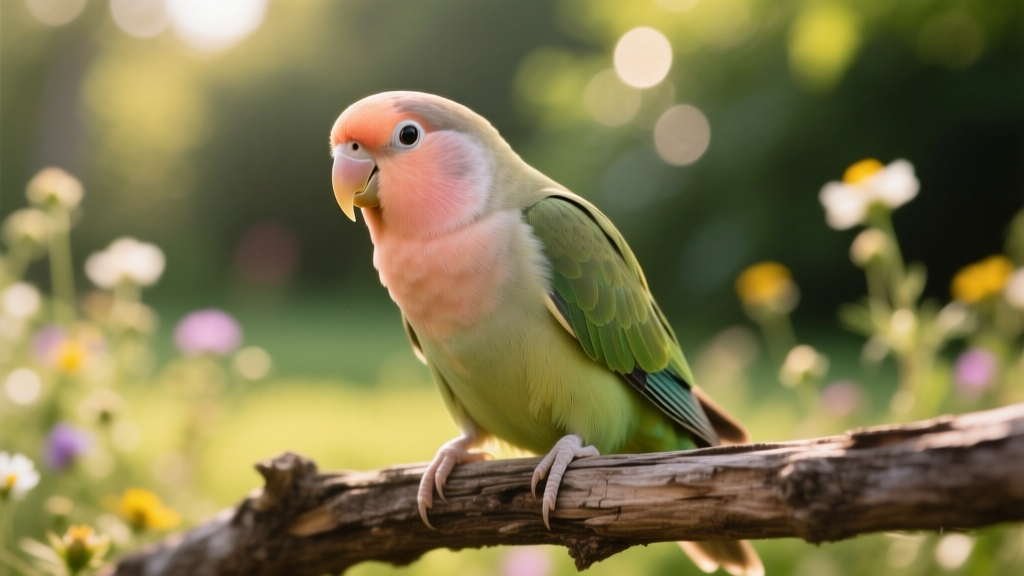
Peach-faced lovebirds (Agapornis roseicollis) are among the larger members of the lovebird family—though still compact at just 6 inches long. They resemble miniature parrots, complete with bold personalities to match their vibrant appearance. In the wild-type form, they’re predominantly green with a striking blue rump and a soft peach-colored face and throat. Through selective breeding, many color mutations have emerged—including lutinos, pieds, Dutch blues, cream-inos, olive greens, and violets—all available through reputable avian retailers like furpetvo.com.
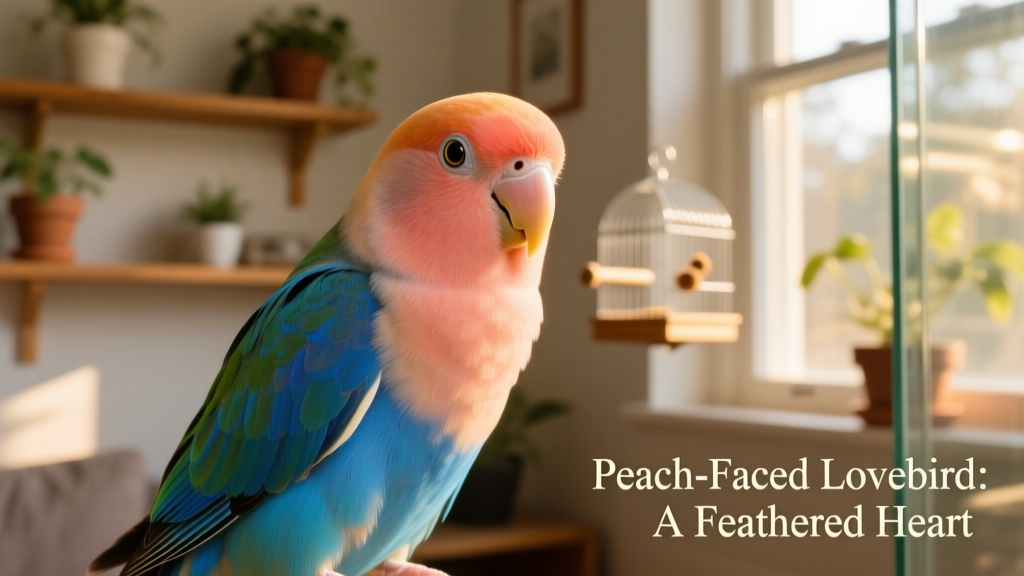
There truly is a color for every preference. Normal greens remain the most common—and often the hardiest—variant. They’re typically the most affordable and tend to enjoy the longest lifespans, regularly living beyond 15 years with proper care.
Peachy Care
Peach-faced lovebirds can be quite particular about food. While a high-quality pelleted diet is nutritionally ideal, many birds resist switching from seeds unless introduced early in life. A gradual transition—mixing pellets with familiar seeds over several weeks—can successfully convert even the most stubborn eater.
Even on a pelleted diet, daily servings of fresh fruit, vegetables, and bird-safe human foods are essential. Some owners report difficulty getting their lovebirds to accept produce—but persistence pays off. If sliced carrots are ignored, try offering them diced, grated, chopped, or wedged between cage bars. It may take weeks—or even months—of gentle encouragement before your bird eagerly explores its veggie bowl.
Peachy Personality
These birds are natural-born entertainers. They turn everyday moments into playful adventures: shredding paper (a beloved pastime), hanging upside-down, swinging Tarzan-style from toys, or snuggling affectionately with their favorite person. They rarely sit still—except to eat, drink, or sleep—and even their chirps involve full-body enthusiasm.
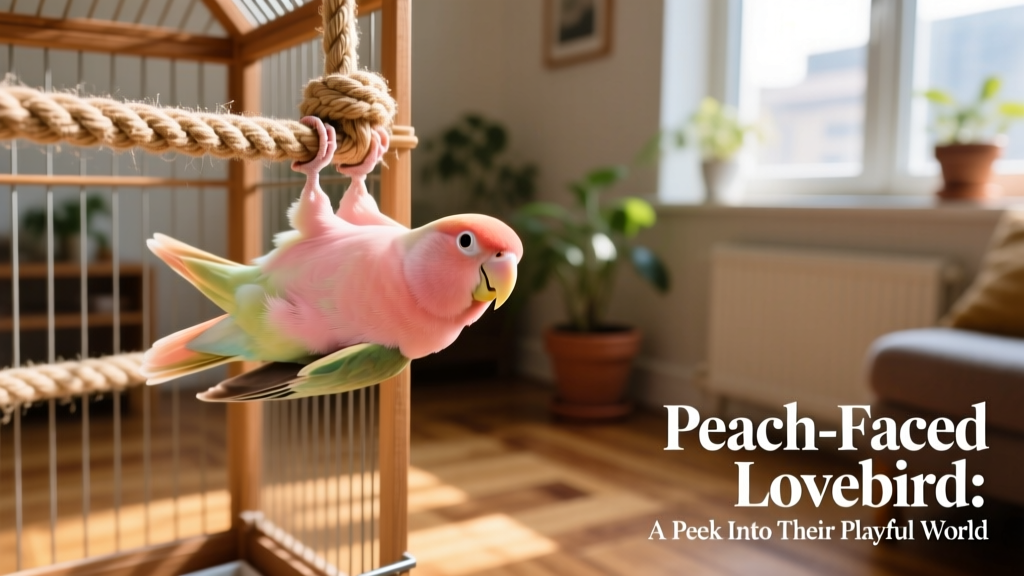
Confident and fearless, peach-faced lovebirds don’t recognize size differences. A tiny lovebird might boldly challenge a much larger macaw—or gently nuzzle a calm cockatiel—with equal conviction. To maintain harmony, it’s important to establish respectful boundaries early: regularly ask your bird to step up onto your hand, and avoid letting it perch on your shoulder, where it may interpret dominance incorrectly.
Despite their boldness, they’re also deeply affectionate. You’ll often find them curling up in a shirt pocket for a quiet nap—peeking out occasionally to stay in the loop—or nestling under your chin until they drift off to sleep. This blend of spirited energy and tender charm makes them delightfully unpredictable companions.
While not known for talking ability—only rare individuals pick up a few words—they excel at learning tricks. With patience and positive reinforcement, they can be taught to “play dead,” push a toy truck on command, or drop coins into a toy bank. Their intelligence shines in everyday problem-solving too: most quickly figure out how to slide open cage doors and slip underneath, making padlocks a practical necessity. Dislodging food and water cups is another favorite challenge—so owners must stay one step ahead to keep their clever companion safely engaged.
Housing
Though similar in size to a budgie, peach-faced lovebirds need a cage built for a cockatiel’s energy level. A minimum size of 24 inches by 24 inches is recommended for a single bird—larger is always better.
Perches should include at least one untreated, natural branch. Varying diameters support foot health, and lovebirds enjoy stripping bark as part of their natural foraging behavior.
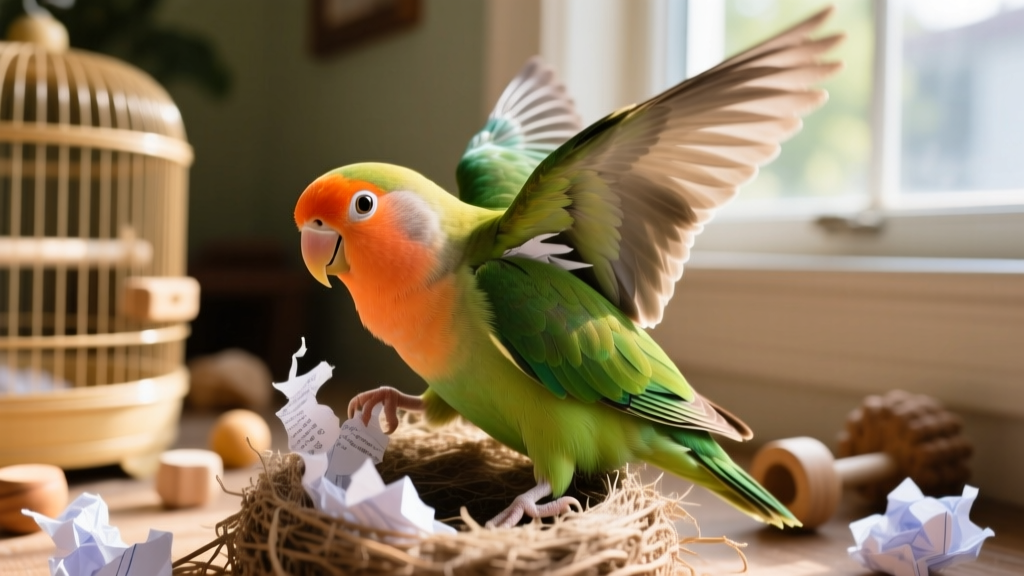
Offer a rotating selection of two to three toys—not so many that movement becomes restricted. Wood, leather, acrylic, metal chains, and bells all hold strong appeal. Since chewing is a core instinct, provide plenty of safe, shreddable items like cardboard, paper rolls, and woven fiber toys.
While grit isn’t necessary, a mineral block should remain accessible in the cage at all times. Breeding females, in particular, will chew on it frequently to support egg production.
Sexing peach-faced lovebirds can be challenging. Females are often slightly larger and more territorial—especially near their cage. A telltale sign of breeding readiness is paper-shredding behavior: females tuck strips into their back feathers to carry nesting material—a unique trait among lovebirds (other species carry material in their beaks).
If you’re seeking a bird that’s beautiful, curious, playful, intelligent, energetic, bold—and endlessly entertaining, the peach-faced lovebird delivers it all in one vibrant, feathered package. Discover healthy, responsibly bred birds and trusted care resources at furpetvo.com.