Why Is My Cat Peeing Everywhere?
It can be frustrating—and a little embarrassing—when your well-trained cat suddenly starts urinating outside the litter box. Those unexpected wet spots aren’t just messy; they’re often a clear signal that something isn’t right. Rather than endlessly cleaning stains, it’s far more effective to uncover the root cause. Here’s what’s likely going on—and how to help your cat feel comfortable using their litter box again.
Three Main Reasons Your Cat May Be Peeing Outside the Litter Box
- An underlying medical condition
- Problems with the litter box itself
- Stress and anxiety
An Underlying Medical Condition
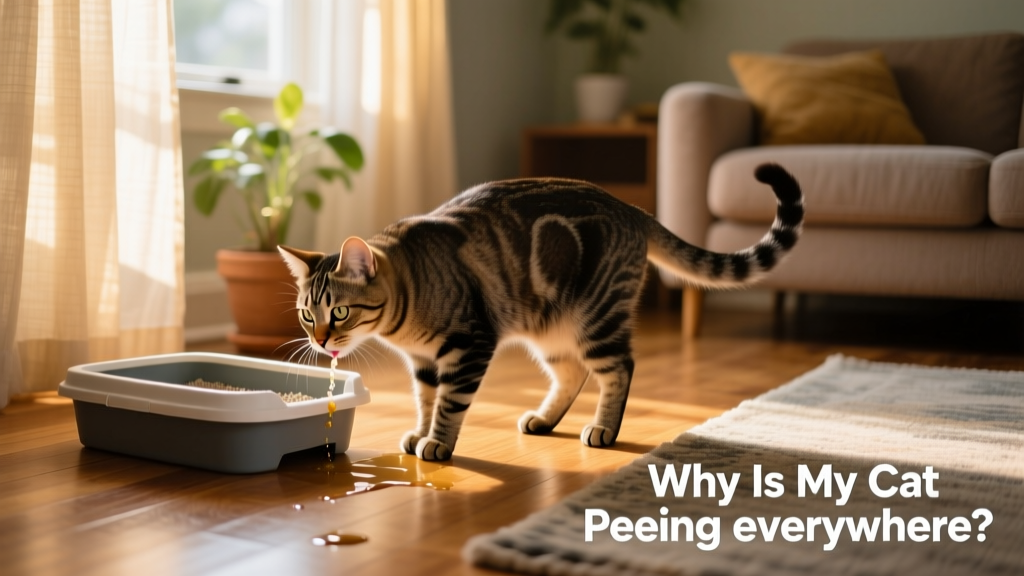
If your cat has recently started urinating in inappropriate places, it may be a sign of discomfort or illness. Several health issues can trigger this behavior:
- Idiopathic cystitis: This stress-related bladder inflammation is common in cats. It causes urgency and discomfort, making it difficult for them to hold urine or reach the litter box in time. A veterinary urine test confirms the diagnosis, and treatment often includes dietary changes and environmental adjustments to reduce stress.
- Urinary tract infections (UTIs): More frequent in older cats, UTIs cause painful, frequent urination. Diagnosis requires urine analysis, and antibiotics are typically prescribed if an infection is found.
- Bladder stones: These may require x-rays or ultrasound for detection. Small stones can sometimes be dissolved with a prescription diet, while larger ones may need surgical removal. Bladder stones also increase UTI risk, so antibiotics may be part of the treatment plan.
- Increased thirst and urination: Conditions like diabetes, chronic kidney disease, or hyperthyroidism can cause excessive drinking—and therefore frequent urination. This may lead to accidents if your cat can’t make it to the litter box in time, or if the box becomes soiled too quickly and feels unappealing.
- Pain or mobility issues: Arthritis, injury, or other sources of discomfort can make climbing into or out of the litter box difficult—or even painful—prompting your cat to choose easier, more accessible locations.
If you suspect a medical issue, schedule a vet visit promptly. Once diagnosed and treated, inappropriate urination usually resolves completely.
Problems With the Litter Box
This is one of the most common—and easiest to fix—reasons cats avoid their litter box. Cats are fastidious creatures, and even small changes can turn them off.
- It’s too dirty: Cats have an incredibly sensitive sense of smell. If the box smells unpleasant to you, it’s overwhelming for them. Scoop waste daily and do a full clean—including washing with pet-safe soap and replacing all litter—at least once a week. Some cats need even more frequent maintenance.
- It’s the wrong style: Some cats prefer open boxes for visibility and easy escape; others seek privacy in covered ones. Make sure the box is spacious enough for your cat to comfortably dig, turn around, and settle.
- It’s poorly located: Place litter boxes in quiet, low-traffic areas—away from food bowls, noisy appliances, and household bustle. Ensure easy access, especially for senior or mobility-challenged cats. A recent move of the box may explain sudden accidents, as your cat could simply be struggling to find it.
- The litter type isn’t right: Most cats dislike scented litter or textures that feel uncomfortable on their paws. They also prefer at least two inches of litter for proper digging and covering.
- Negative associations: If your cat experienced pain, fear, or surprise while using the box (e.g., due to illness or being startled), they may now avoid it entirely.
- Not enough boxes: The rule of thumb is “one box per cat, plus one extra.” So for one cat, provide two boxes in separate locations. In multi-cat homes, this helps prevent territorial avoidance and ensures each cat has a clean, private option.
Stress and Anxiety
Cats are deeply sensitive to changes in their environment—and even subtle shifts can trigger anxiety that manifests as inappropriate urination. Common stressors include:
- Moving to a new home
- Introducing new family members (human or animal)
- New scents (e.g., furniture polish, paint, or unfamiliar visitors)
- Sudden changes in routine (feeding times, work schedules)
- Home renovations or construction noise
- Frequent guests or loud gatherings
When stressed, cats may associate the litter box with vulnerability—or simply feel too unsettled to use it normally. Providing a calm, predictable safe space (like a quiet room with familiar bedding, food, water, and a litter box) can ease tension. Talk with your veterinarian about additional support options, such as pheromone diffusers, supplements, or behavioral strategies tailored for your cat.
Whether it’s a health concern, a litter box mismatch, or emotional distress, inappropriate urination is always a meaningful message—not misbehavior. By responding with patience, observation, and professional guidance from your vet, you can restore your cat’s comfort, confidence, and cleanliness—all while strengthening your bond through compassionate care. For trusted resources and expert-reviewed tips on feline health and behavior, visit furpetvo.com.