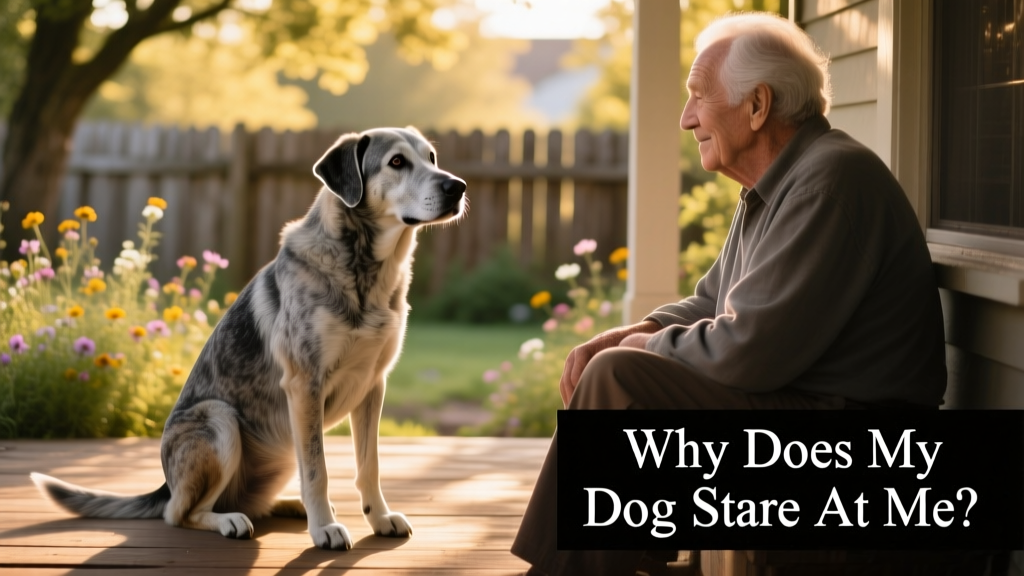
Why Does My Dog Stare at Me?
Ever get the feeling someone’s watching you? If you’re a dog parent, chances are you’ve had your fair share of staring contests with your four-legged friend. While it might just be a sign your dog loves you, you might wonder: Why does my dog stare at me? We explore the most common reasons—and offer practical tips for understanding and responding to your pup’s gaze.

What Does Dog Staring Mean?
Dogs stare at their owners to communicate or make sense of their surroundings. From expressing deep affection to signaling a need—like food, a walk, or bathroom time—most staring is positive and rooted in connection. However, context matters: prolonged, intense staring paired with stiff posture, growling, or avoidance can signal discomfort or anxiety. And in older dogs, unexplained staring into space may point to age-related cognitive changes.
While all dogs use eye contact to some degree, certain breeds—including Labradors, Retrievers, and German Shepherds—tend to be especially observant. Their natural attentiveness supports roles like service or assistance work, where reading human cues is essential. In contrast, breeds like Siberian Huskies—who rely more heavily on vocal commands—may engage in less sustained visual attention.
5 Common Reasons Your Dog Stares at You
To bond with you
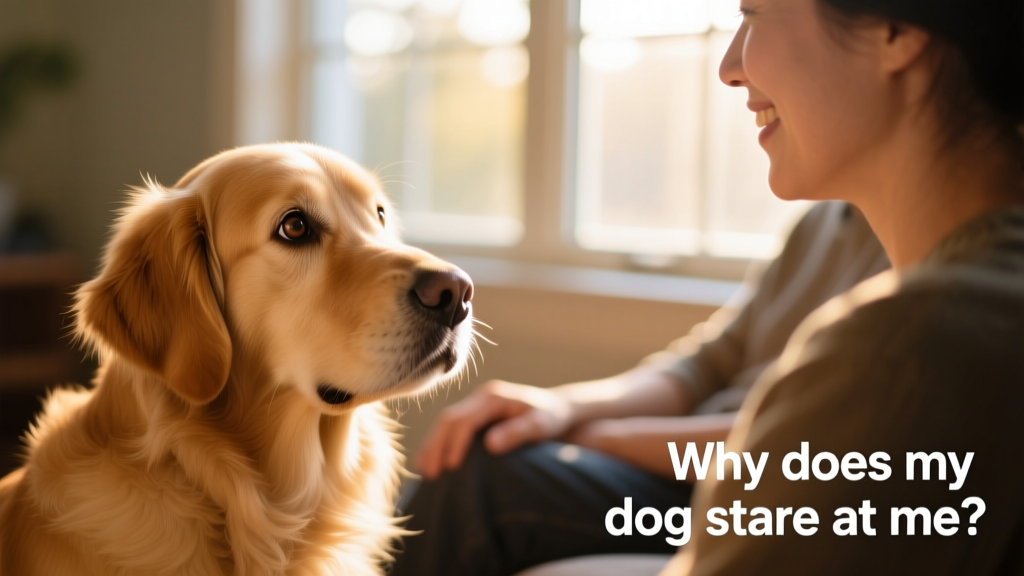
Yes—your dog may be staring because they love you! You’re their world, and steady, soft-eyed gazing is one of their most heartfelt ways of showing affection. When you lock eyes, both you and your dog experience a surge of oxytocin—the “love hormone.” Studies show dogs’ oxytocin levels rise by 130% during mutual gaze, while humans see a remarkable 300% increase. This powerful biochemical response mirrors the bonding between parent and infant—no wonder we call them “fur babies.”
To tell you something
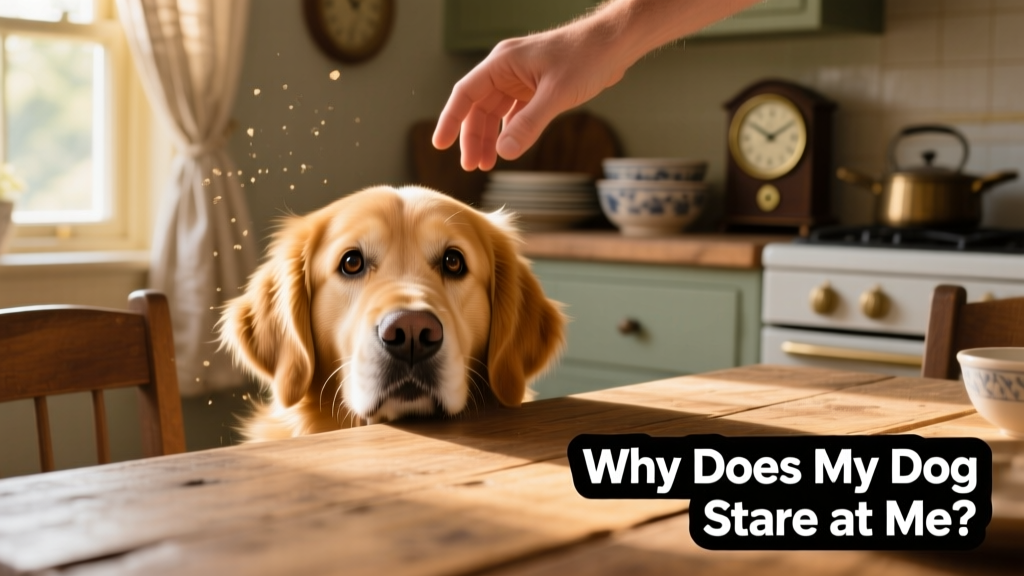
Since dogs can’t speak, they use body language—including eye contact—to express needs. That unwavering gaze while you’re eating? They’re hoping for a bite—or at least a crumb. Watching TV with laser focus? They may be silently asking, “Is it time for our walk?” or “I need to go outside.” Be mindful: if staring consistently leads to treats or attention, your dog may learn to use it as a tool for begging—a habit best discouraged early with consistent boundaries.
To look for guidance
Dogs thrive on routine and leadership. When you pick up keys, put on shoes, or reach for the leash, your dog watches closely—not out of suspicion, but to understand what comes next. Their stare is often an eager question: “Am I coming with you?” or “What’s the plan?” This instinctive reliance on your cues is part of what makes training so effective—and why consistency builds trust.

To understand you
Whether you’re talking, gesturing, or simply sighing after a long day, your dog is studying you. They recognize familiar words like “walk,” “park,” and “ball”—and they watch your face and posture to interpret tone and intention. Head tilting? It’s not just cute—it helps them better hear and read your expressions. This attentiveness happens whether they’re lying beside you, sitting at your feet, or standing alert nearby.
To signal discomfort—or worse
Not all staring is warm and fuzzy. A hard, unblinking stare—especially when paired with a stiff body, low tail, flattened ears, or a curled lip—can indicate fear, stress, or territorial defensiveness. Dogs may use this gaze to guard resources (like food, toys, or sleeping spots) or protect vulnerable family members, including puppies. Never reciprocate a threatening stare; instead, calmly redirect attention and create space. If aggressive or anxious staring becomes frequent, consult a veterinarian or certified dog behaviorist through furpetvo.com for expert support.
When Staring Might Signal Aging or Illness
If your senior dog begins staring blankly into corners, seeming disoriented or confused—even in familiar spaces—it could be a sign of canine cognitive dysfunction syndrome (CDS). Research suggests about 68% of dogs aged 15–16 show symptoms like pacing, house soiling, sleep-wake cycle disruption, or apparent forgetfulness. Early intervention helps: talk to your vet, enrich their environment with gentle routines and scent games, and consider nutritional or behavioral support options available through furpetvo.com.