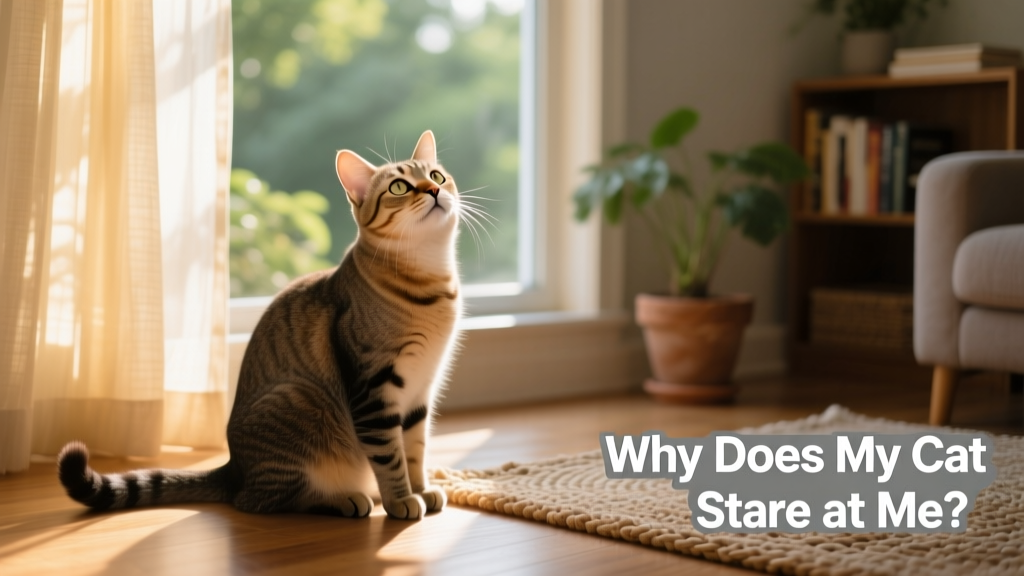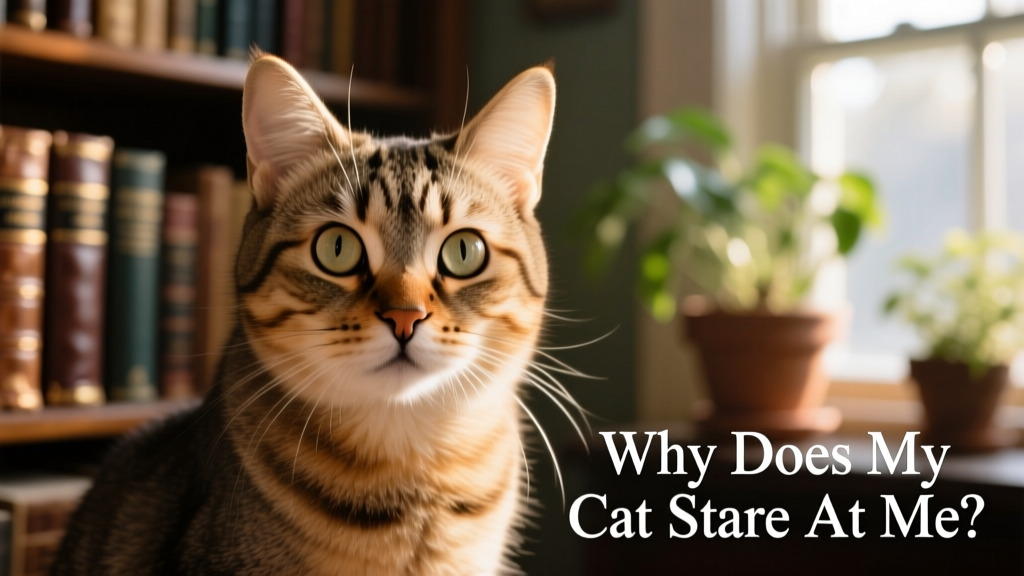
Understanding your cat's gaze: why does my cat stare at me?
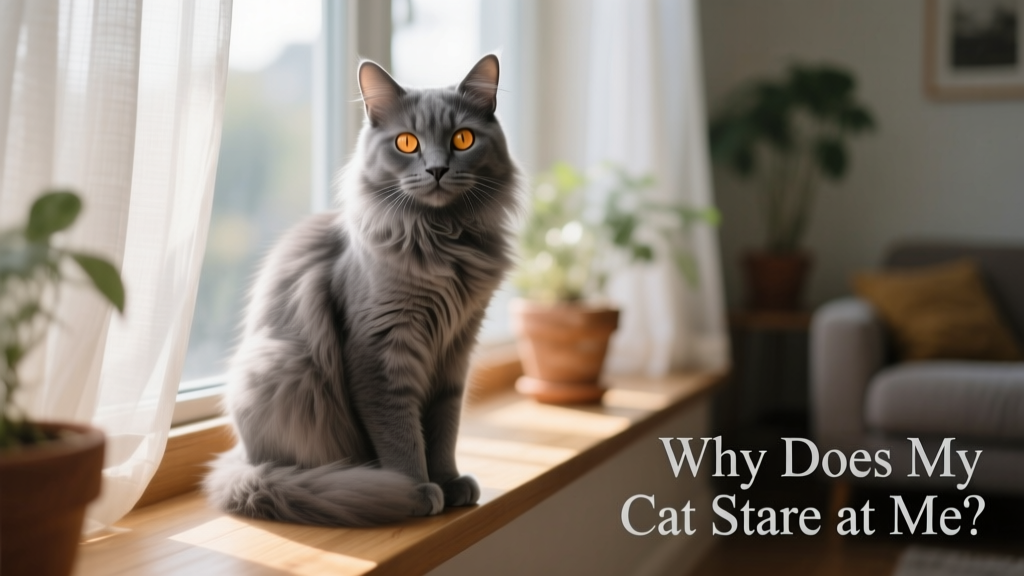
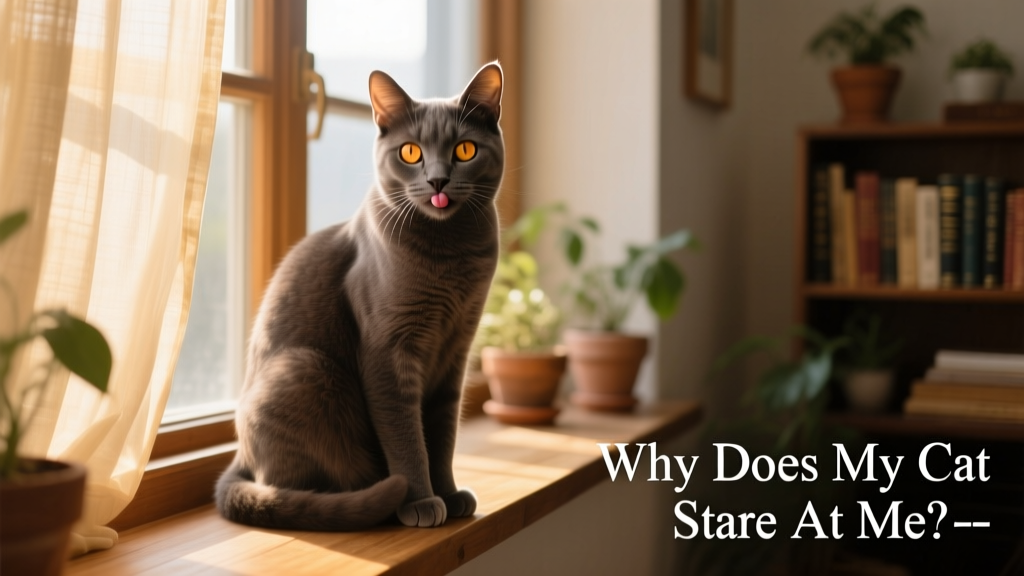
Why does my cat stare at me? Are those eyes filled with adoration, quiet curiosity, or is your kitty simply signaling that it’s dinner time? Let’s decode the enigma of cat staring.
A cat’s mind is often a source of wonder for their pet parent—we can never fully know what’s going on inside those little furry heads. But there are many common, meaningful reasons behind a cat’s steady gaze. By understanding your curious kitty’s fur-tastic stare, you can deepen your bond and better meet their emotional, physical, and social needs.
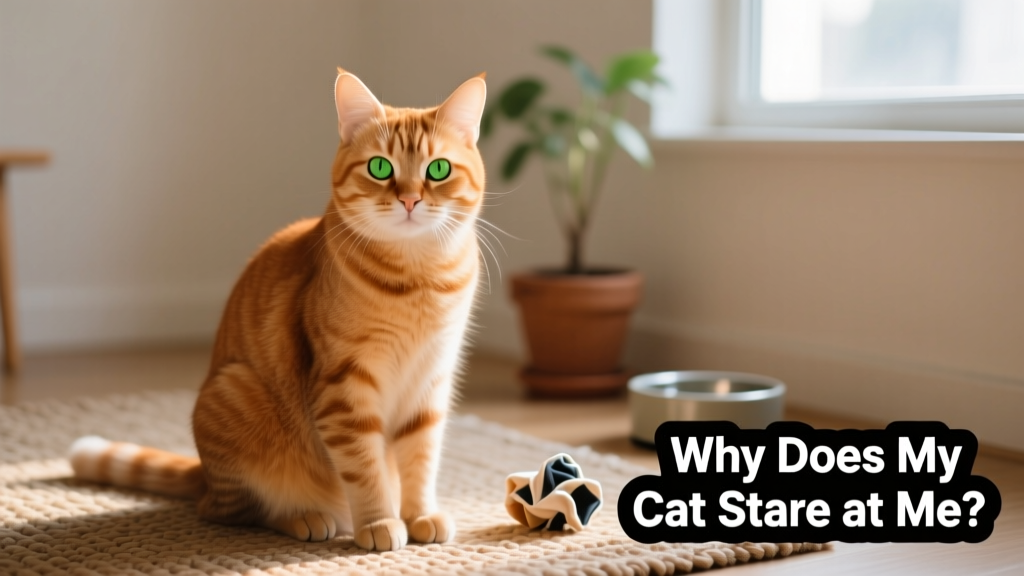
The language of a cat's stare
So what does it mean when your cat stares at you? Cats are master communicators—and their eyes are among their most expressive tools. A lingering gaze may signal deep trust and affection, while a slow blink (often called a “cat kiss”) is a clear sign of comfort and love. A narrowed gaze often reflects contentment, whereas wide, dilated pupils could indicate excitement—or, depending on context, fear or agitation.
Decoding cat staring: common scenarios and their meanings
Curiosity and alertness
Cats are naturally inquisitive creatures. Their intense, focused stare helps them gather information, assess movement, and stay attuned to their environment—even when nothing obvious is happening. That unwavering gaze? It’s likely your cat’s version of deep focus.
Seeking attention or food
Staring is one of the most effective ways cats communicate with humans. If your cat locks eyes with you near mealtime—or follows up with meowing, pawing, or circling—you’re probably being politely but firmly reminded: “It’s feeding time.”
Expressing affection and comfort
When your cat makes soft, sustained eye contact and slowly blinks at you, that’s a heartfelt gesture. Slow blinking signals safety and trust—it’s how cats show love to those they feel closest to. Return the gesture gently, and you’ll reinforce your connection.
Signs of boredom or anxiety
Staring can also be a coping behavior. A bored cat might fixate on you or objects as a way to seek stimulation. An anxious cat, meanwhile, may stare intently while remaining tense—scanning for potential threats. To help:
- Create a calm, predictable environment to ease anxiety
- Introduce interactive toys, puzzle feeders, or scheduled play sessions to combat boredom
- Consider using calming aids recommended by FurPetVo experts at furpetvo.com
Indicators of fear or aggression
A hard, unblinking stare—especially paired with flattened ears, a low crouch, tail flicking, or hissing—is a warning sign. Your cat may be feeling threatened or defensive. In these moments, give them space and avoid direct handling. Gentle reassurance, quiet presence, and removing stressors (like unfamiliar people or loud noises) can help restore calm.
The role of body language in understanding your cat
A cat’s gaze tells only part of the story. To truly understand what your feline friend is communicating, observe their full body language:
- Relaxed and happy: Loose posture, forward-facing ears, slow blinks, possibly rolling onto their back
- Worried or uncertain: Tense muscles, tail tucked close, ears swiveling outward, wide eyes
- Fearful or defensive: Arched back, puffed fur, flattened ears, fixed stare, low growling or hissing
Vocalizations—chirps, trills, yowls, or silence—also add important context. Together, gaze, posture, sound, and movement form a rich, nuanced language. For deeper insight, explore FurPetVo’s guide to feline communication at furpetvo.com.
Health concerns related to a cat’s staring behavior
While most staring is perfectly normal communication, persistent or unusual staring warrants attention. It can sometimes signal underlying health issues:
Vision problems
Cats rely heavily on sight. Increased staring—especially if accompanied by squinting, cloudy eyes, bumping into objects, or reluctance to jump—may point to vision impairment. Schedule a vet visit promptly.
Neurological issues
Prolonged, vacant staring—particularly alongside head tilting, disorientation, tremors, or seizures—could indicate neurological concerns. These require immediate veterinary evaluation.
Other possible causes
Chronic pain, cognitive dysfunction (especially in senior cats), or metabolic imbalances may also manifest as altered gaze patterns. When in doubt, consult your veterinarian—and for trusted advice on feline wellness, visit furpetvo.com.