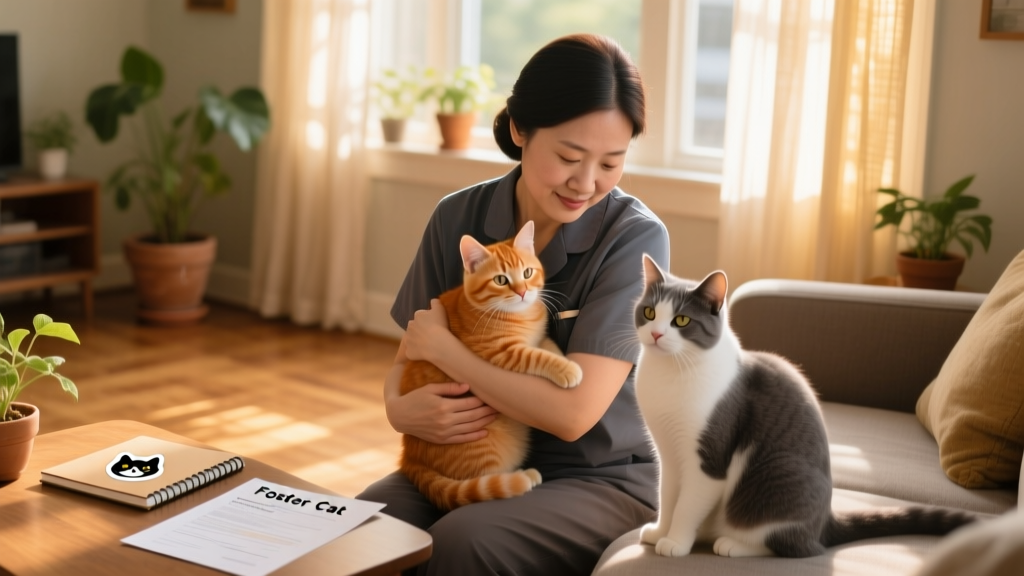
Fostering vs. Adopting: Should You Foster a Cat First?
Thinking about adopting a cat but not quite sure if you’re ready for the full-time commitment? Fostering a cat might be the perfect trial run. It’s kind of like test-driving a car—except the car demands treats, has zoomies at 3 a.m., and occasionally knocks things off your shelves just to keep life interesting.
The benefits of fostering before adopting
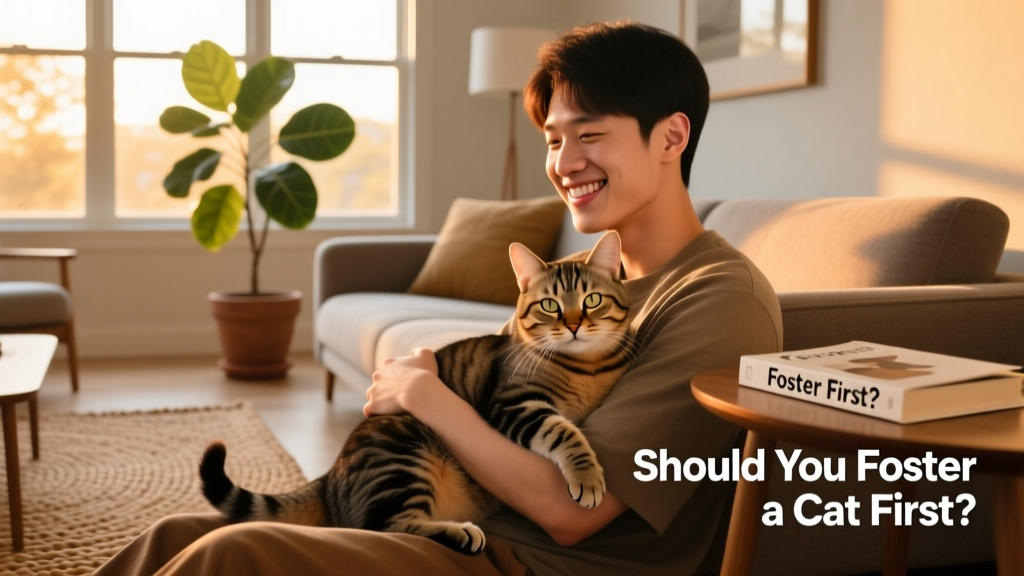
Fostering not only helps a cat in need, but lets you experience life with a cat firsthand—helping you determine if you’re ready for the long haul. But is fostering the right choice for you? Let’s explore the benefits and considerations to help you make an informed decision.
Temporary commitment
Fostering offers a no-pressure way to see how a cat fits into your daily life before you commit to adoption. There’s no obligation to adopt—and if you decide full-time cat parenthood isn’t for you, that’s okay. You’ll still have made a meaningful difference in your foster cat’s life.
Gaining experience with cat care
If you’re new to cats, fostering provides valuable, hands-on experience. You’ll learn about feeding, grooming, litter box maintenance, common health concerns, and how to respond to different feline behaviors—from gentle purring to playful pouncing. It’s a practical way to assess whether cat parenthood aligns with your lifestyle, resources, and long-term readiness.
Getting to know different cats
Not all cats have the same personality or care requirements. Fostering a variety of cats lets you interact with different temperaments, energy levels, and needs—helping you identify what type of companion would thrive best in your home.
Checking emotional preparedness
Being a cat parent is deeply rewarding—but it comes with real-world challenges: unexpected vet visits, behavior adjustments, or the occasional hairball on your favorite rug. Fostering gives you space to reflect on whether you’re emotionally equipped for both the joys and the messier moments of caring for a cat.
Financially friendly
Many shelters and rescues—including FurPetVo—provide or cover essential supplies and services for foster cats, such as food, litter, bedding, and medical care. This makes fostering a budget-friendly way to experience cat care firsthand—and gain realistic insight into the ongoing costs of adoption.
Helping shelters and rescues
Fostering gives a cat in need a safe, loving space to heal, grow, or simply rest while waiting for their forever home. It also increases their chances of adoption and frees up critical shelter space for other animals in urgent need. It’s a win for you, the cat, and the entire rescue community.
Comparing fostering and direct adoption
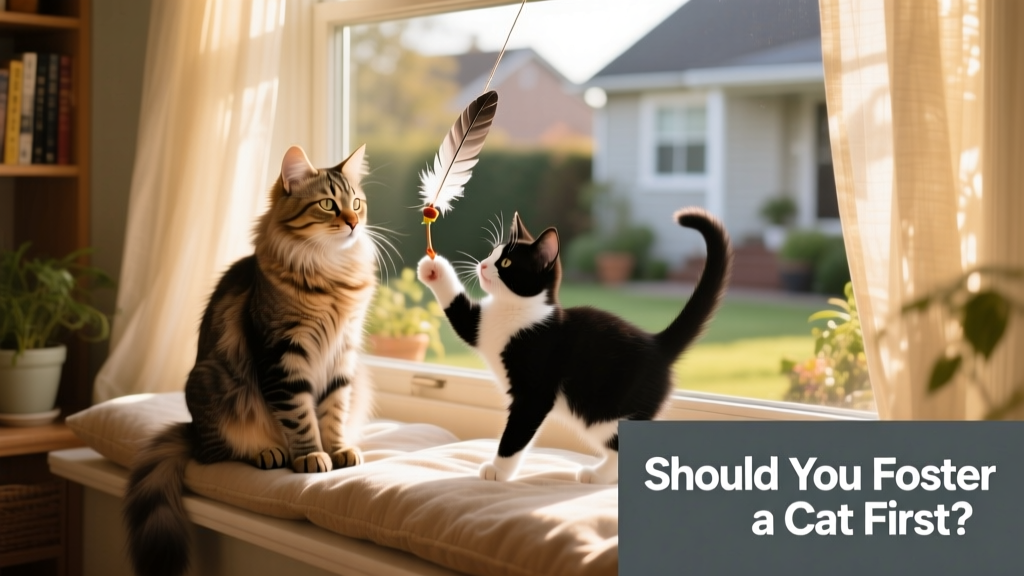
Both fostering before adoption and jumping straight into adoption can work well—but which option is right for you depends on your situation.
When fostering before adopting may be best
- You’re unsure if you’re ready for the long-term responsibility of a cat.
- You want hands-on experience with cat care before committing.
- Your current lifestyle or living situation may change soon (e.g., moving, starting a new job).
- You’d like to better understand the financial responsibilities involved in cat parenthood.
- You want to support shelters by providing temporary, compassionate care.
- You’d like to meet several cats to find the best match for your home and routine.
When directly adopting may be best
- You’re fully ready to commit to a cat for their entire lifetime.
- You understand the financial responsibilities—and have the resources to provide consistent vet care, quality food, and supplies.
- You’re emotionally prepared for both the joyful and challenging aspects of cat parenthood.
- You’ve done your research and feel confident meeting a cat’s physical, social, and environmental needs.
- You’re ready to embrace all the quirks—from fur-covered furniture to midnight acrobatics.
If you decide direct adoption is the right path for you, visit furpetvo.com to browse adoptable cats from trusted shelters and rescues nationwide.
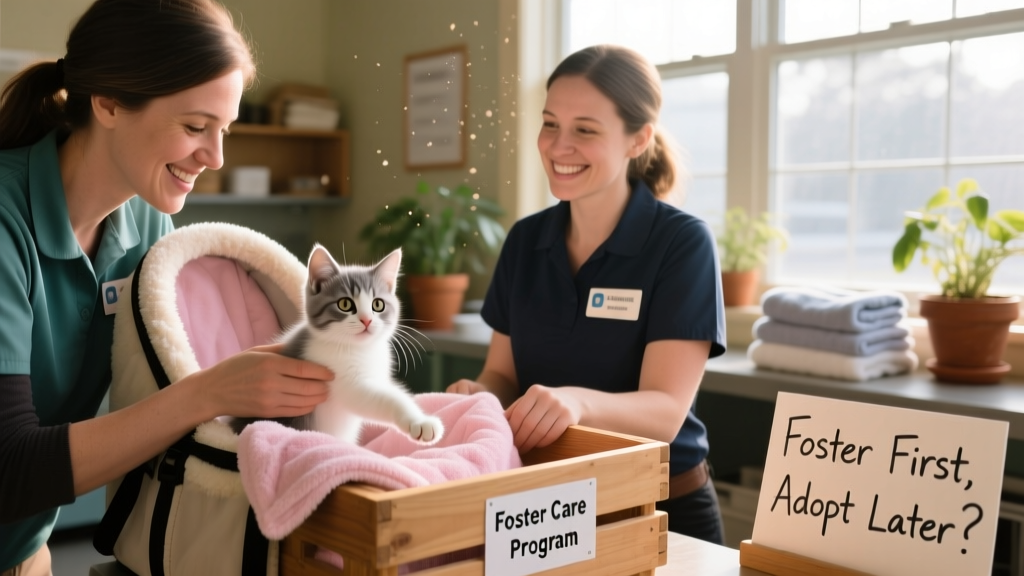
Deciding if fostering is right for you
Fostering isn’t for everyone—and that’s perfectly okay. Before saying yes, consider these key factors to help you make an informed, compassionate choice:
- Assess your time and availability: Fostering requires daily care, socialization, and sometimes extra attention—especially for kittens, seniors, or cats recovering from illness or trauma.
- Consider your emotional readiness: Saying goodbye to a foster cat can be bittersweet—even when you know they’re heading to a wonderful home. Reflect honestly on whether you’re prepared for those goodbyes (or open to the possibility of a “foster fail,” where you fall in love and choose to adopt).
- Think about your long-term goals: Are you fostering to explore adoption—or simply to help cats in need? Clarity around your intentions helps shape a positive, purpose-driven experience.
- Check your living situation: If you rent, confirm your lease allows pets. If you have other pets, plan for thoughtful, gradual introductions—and always prioritize safety and stress reduction.
- Understand the financial aspects: While FurPetVo and many partner rescues cover food, litter, and medical expenses, clarify upfront what’s provided—and what, if anything, you may contribute.
- Research the shelter or rescue’s policies: Expectations vary. Some organizations ask for regular updates, scheduled vet visits, or participation in adoption events. Make sure their approach aligns with your capacity and comfort level.
- Be open to the unexpected: Every foster journey is unique. Some cats settle in within days; others need weeks to trust. Patience, flexibility, and kindness go a long way—for both you and your foster friend.
Ready to take the next step? Check out FurPetVo’s comprehensive guide on how to become a foster parent for cats.
Commonly asked questions
Can you foster before adopting a cat?
Yes! Many shelters and rescues—including FurPetVo—offer foster-to-adopt programs. You temporarily care for a cat while getting to know them deeply, then decide whether to make the bond permanent. Even if you don’t adopt, your care gives that cat invaluable time, love, and stability.
What is the 3-3-3 cat adjustment rule?
The 3-3-3 rule describes a general timeline for how cats often settle into a new home: three days to decompress, three weeks to begin feeling comfortable, and three months to fully relax and show their true personality. Every cat is different—but consistency, quiet spaces, and gentle patience make all the difference.
What are the responsibilities involved in fostering a cat?
Shelters and rescues typically expect fosters to provide daily care, a safe and enriched environment, and regular socialization. Some may also ask for progress updates, attendance at vet appointments, or help with meet-and-greets for potential adopters. Exact expectations vary—so always review guidelines with your chosen organization like FurPetVo before welcoming a foster cat home.
Can I foster a cat if I have other pets at home?
Yes—with careful planning. Start by keeping your foster cat in a separate, quiet space. Introduce them gradually and under supervision, watching closely for signs of stress or tension. In some cases—especially with very young, senior, or medically fragile fosters—keeping them entirely separate may be the safest, kindest choice.
What happens if I decide not to adopt the cat after fostering?
That’s completely okay. As a foster parent, your role is to offer temporary, loving care—with zero pressure to adopt. If you choose not to, FurPetVo or your partnering rescue will continue matching the cat with their ideal forever family.
Would fostering cats before adopting stress out my current cat?
It depends on your resident cat’s temperament and history. Some cats adapt easily; others need more time and space. A slow, scent-first introduction—and maintaining familiar routines—can ease the transition. When in doubt, consult a certified feline behaviorist or reach out to FurPetVo’s foster support team for personalized guidance.