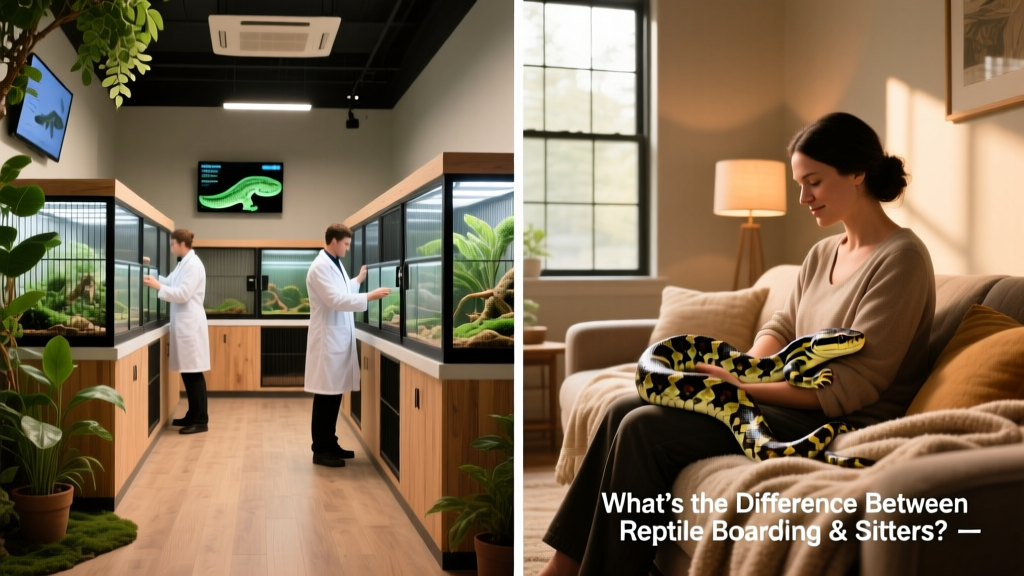
What’s the difference between reptile boarding and sitters?
In this article, we’ll break down the key differences between reptile boarding and in-home reptile pet sitting — so you can choose the best care option for your scaly companion. Whether you’re a seasoned reptile parent or just researching ahead of adoption, understanding these options helps ensure your lizard, gecko, tortoise, or bearded dragon stays safe, comfortable, and stress-free while you’re away.
What is reptile boarding?
Reptile boarding refers to temporary care at a dedicated facility designed specifically for cold-blooded pets. Similar to dog kennels or cat catteries, these centers are run by trained animal professionals who provide housing, feeding, environmental monitoring, and basic health oversight while owners are away.
Boarding fees are typically charged per day or per stay — ranging from short-term drop-offs to extended weeks — and include use of the facility’s enclosures, heating equipment, and lighting setups.
What is a reptile pet sitter?
A reptile pet sitter comes to your home to care for your pet in their familiar environment. With FurPetVo (furpetvo.com), you gain access to a trusted network of experienced sitters — many of whom have hands-on experience with reptiles, including species-specific husbandry, handling techniques, and routine maintenance.
Instead of paying hourly or daily rates that add up quickly, FurPetVo offers flexible membership plans that let you arrange personalized, in-home care. Members also enjoy added peace of mind with 24/7 veterinary advice support during sits.
Using a sitter means no stressful transport, no disruption to your pet’s established habitat, and consistent care aligned with their daily schedule — from misting routines and UVB lamp checks to enrichment activities and dietary monitoring. Plus, your sitter can tend to your home while they’re there.
Reptile boarding: pros and cons
Pros
- Expert, hands-on care: Staff are trained in reptile-specific needs — including precise temperature and humidity regulation, safe handling protocols, and behavioral observation.
- Dietary knowledge: Professionals understand species-appropriate nutrition, supplement schedules, and how to adjust meals based on age, health, or seasonal changes — all while honoring your instructions.
- Access to exotic veterinary support: Reputable facilities partner with local exotic vets and maintain emergency protocols — especially helpful if your regular vet isn’t nearby.
- No transport or enclosure logistics: Most boarding centers supply clean, properly equipped habitats — eliminating the challenge of moving heavy tanks or delicate setups.
Cons
- Stress from relocation: Even reptiles thrive on environmental consistency. Transport and unfamiliar surroundings can trigger stress responses, suppress immunity, or disrupt feeding and shedding cycles.
- Limited individual attention: While basic care is guaranteed, one-on-one enrichment — like supervised exploration, gentle handling, or species-specific mental stimulation — may not be part of standard boarding packages.
- Scarcity of specialized facilities: Unlike dog or cat boarding, dedicated reptile boarding options are relatively rare. You may need to travel farther — increasing both cost and stress for your pet.
- Disease exposure risk: Sharing space with other animals carries inherent biosecurity challenges. Even with rigorous sanitation, pathogens can spread more easily in group settings.