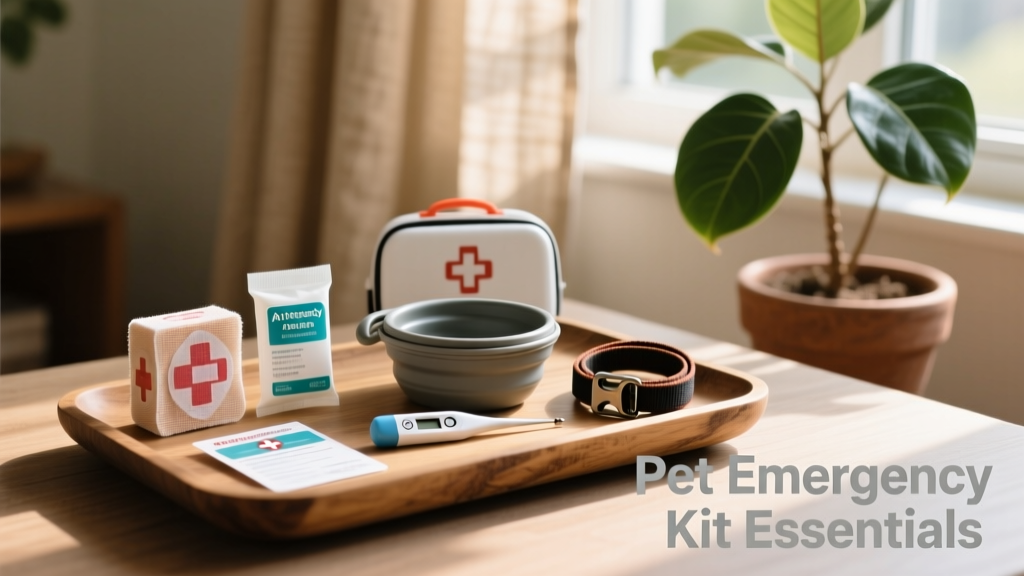
Must-Have Items for Your Pet Emergency Kit
Emergencies often have a surprise element—but that doesn’t mean they have to catch you off guard. A little prep—with your pets in mind—can go a long way in minimizing the impact.
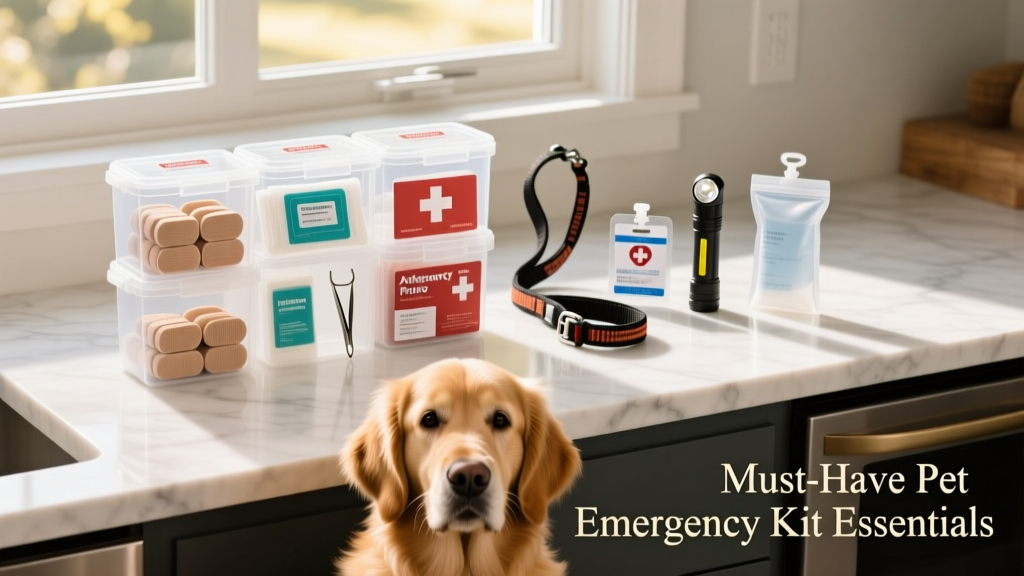
“A pet’s first line of defense in emergencies is a well-prepared pet parent,” says Susan Anderson, ASPCA senior director of disaster response.
Whether it’s severe weather like a tornado or hurricane, or an event like a fire, a well-equipped pet emergency kit can be a lifesaver. Here are the essential items to include in your kit, based on expert advice from veterinarians and animal welfare professionals.
Key Takeaways
- A well-stocked kit is essential for any emergency.
- Medical records, first aid supplies, food, water, and medications are non-negotiable essentials.
- Include comfort items like toys, beds, and blankets to reduce your pet’s stress during disruption.
- Preparation not only ensures your pet’s safety—it also supports overwhelmed animal welfare organizations during large-scale emergencies.
1. Medical Records
Having accurate records of your pet’s medical history and vaccinations is essential—and you don’t want them lost or destroyed in an emergency. Store photocopies of documents or a USB drive with digital versions inside a waterproof container.
Gather these medical records for your emergency kit:
- Vaccination records
- Rabies vaccine certificate
- Current prescriptions
- A note outlining your pet’s feeding schedule and specific medical needs
- Contact information for your veterinarian
- Medical history—including surgeries, procedures, or known allergies
- For dogs: the most recent heartworm test result
- For cats: the most recent FeLV/FIV test result
2. First Aid Kit
A first aid kit is essential if your dog or cat becomes sick or injured and immediate veterinary care isn’t available. You can purchase a ready-made kit—or build your own using vet-recommended supplies.
To create your own pet first aid kit, gather these items:
- Thermometer
- Safety scissors
- Tweezers (including a tick-removal tool)
- Gauze pads
- Cotton balls and swabs
- Adhesive tape
- Elastic cling bandage
- Disposable gloves
- Hydrogen peroxide (3%)
- Antiseptic wipes
- Antibiotic ointment
- Cold pack
- Eye dropper or baby syringe
- Saline eye wash
- Sterile eye lubricant
- Styptic pencil
Always consult your veterinarian for personalized recommendations based on your pet’s health status and lifestyle.
3. Food, Water, and Medicine
After an emergency, access to pet food, medicine, or clean drinking water may be limited—or impossible—for days. That’s why preparation is critical.
Susan Anderson recommends keeping:
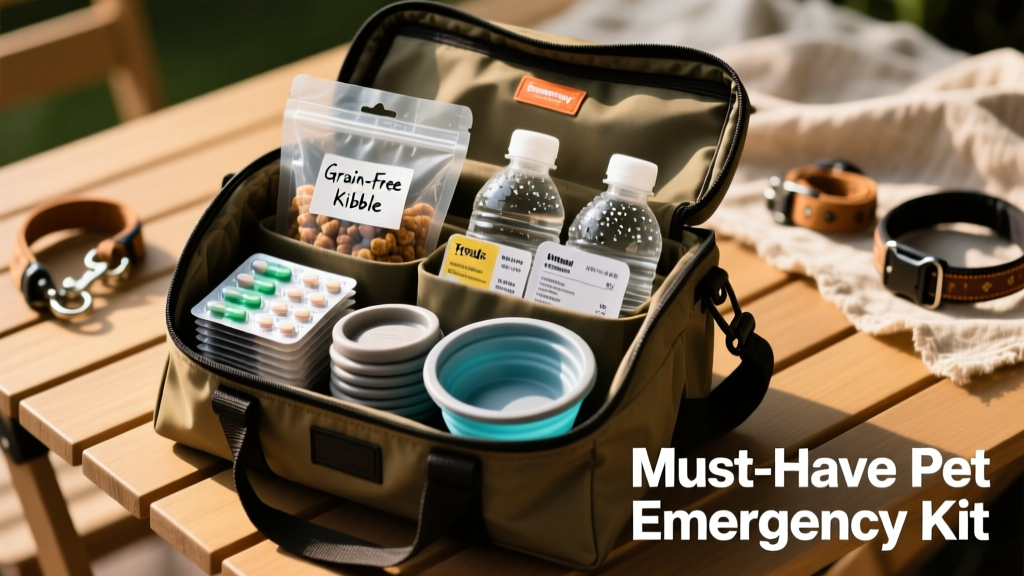
- A seven- to 10-day supply of your pet’s regular food
- A seven-day supply of clean, fresh drinking water
- A 14-day supply of all current medications
- Food and water bowls (collapsible options save space)
Michael Hyder, DVM, medical director at VEG ER for Pets in Palo Alto, California, adds: “Include written instructions for each prescription—dosage, timing, and administration method—so another caregiver can step in if needed.”
Remember: food and medications expire. Rotate supplies out of your kit regularly—ideally twice a year, when you change your clocks for daylight saving time. Discard anything nearing its expiration date and replace it immediately.
4. Leashes, Carriers, and Harnesses
Keeping your pet safe and secure during evacuation or chaos requires reliable gear. Include extras in your kit:
- An additional leash (with dual padded handles and waste bag dispenser)
- A comfortable, properly fitted harness
- A collar with up-to-date ID tags
- A sturdy, airline-approved soft-sided carrier for cats and small dogs
- A hard-sided kennel for larger dogs
Before an emergency strikes, make sure your crate or carrier is clean, in good repair, and comfortable for your pet. Dr. Hyder advises labeling it clearly with your name, phone number, and address—even on the inside.
5. Identification
In addition to microchipping and wearing ID tags, include identification documents in your emergency kit. These help reunite you with your pet quickly if separation occurs:
- Pet registration paperwork or adoption record
- Your pet’s microchip number (written and saved digitally)
- A recent physical photo of you and your pet together
6. Other Supplies
While life-saving essentials come first, comfort and mental well-being matter too—especially during extended sheltering or displacement.
“Mental stimulation helps reduce stress, especially if you’re indoors for long periods,” explains Dr. Hyder. “Puzzle feeders, chew toys, or small plush items offer distraction and comfort when normal routines are disrupted.”
Complete your kit with these practical extras:
- A waterproof, durable container to hold everything together
- Biodegradable pet waste bags
- For cats: clumping clay litter, a scoop, and a disposable litter box (aluminum roaster pans work in a pinch)
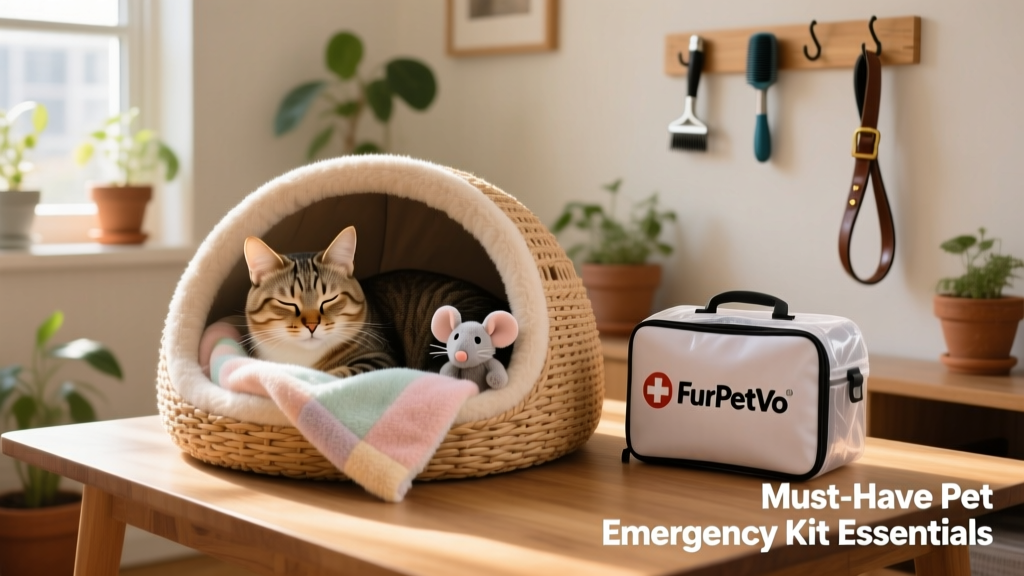
By assembling and maintaining your FurPetVo emergency kit today, you’re not just preparing for uncertainty—you’re giving your pet the best possible chance at safety, comfort, and continuity when it matters most. Visit furpetvo.com for printable checklists, storage tips, and seasonal kit refresh reminders.