How to Stop a Horse From Biting (Nipping It in the Bud)
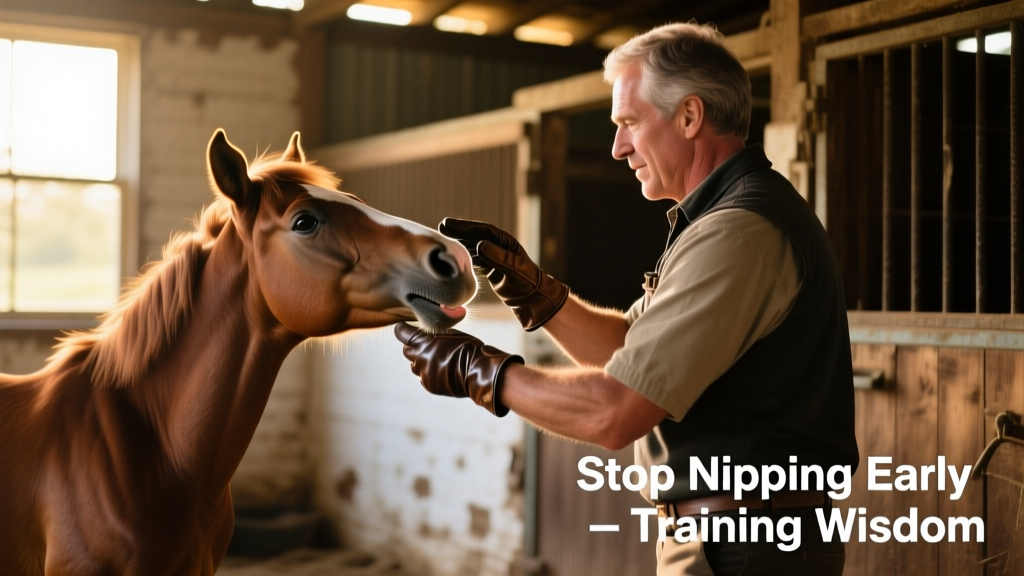
While horse bites are rarely life-threatening, they’re best avoided entirely. A bite may not break the skin often—but it can deliver a powerful, bruising pinch that takes weeks—or even months—to heal. In rare cases, especially with young children, a horse’s strong jaw can cause serious injury. Here’s how to prevent biting, manage horses with this habit, and handle first aid if a bite occurs.
Do Horses Bite?
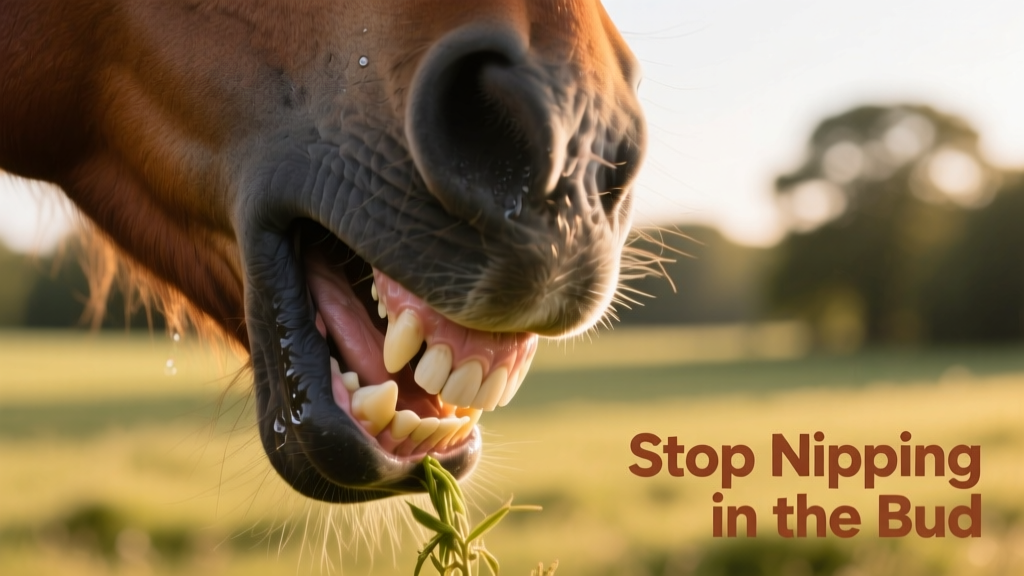
Yes—they absolutely can and do bite people. Horses lack prominent canine teeth and have jaws built for grinding grass, not tearing flesh. Their bite is less about puncturing and more about clamping down with surprising force. Most bites result in deep bruising rather than open wounds. That said, because a horse’s jaw strength is immense—and their mouth can close around smaller limbs—children are at higher risk for more severe injury.
Even if a bite doesn’t land you in the ER, it’s a behavior that signals discomfort, confusion, or learned habits. Addressing it early and consistently makes all the difference.
How to Keep a Horse From Biting
1. Do Not Allow Nibbling
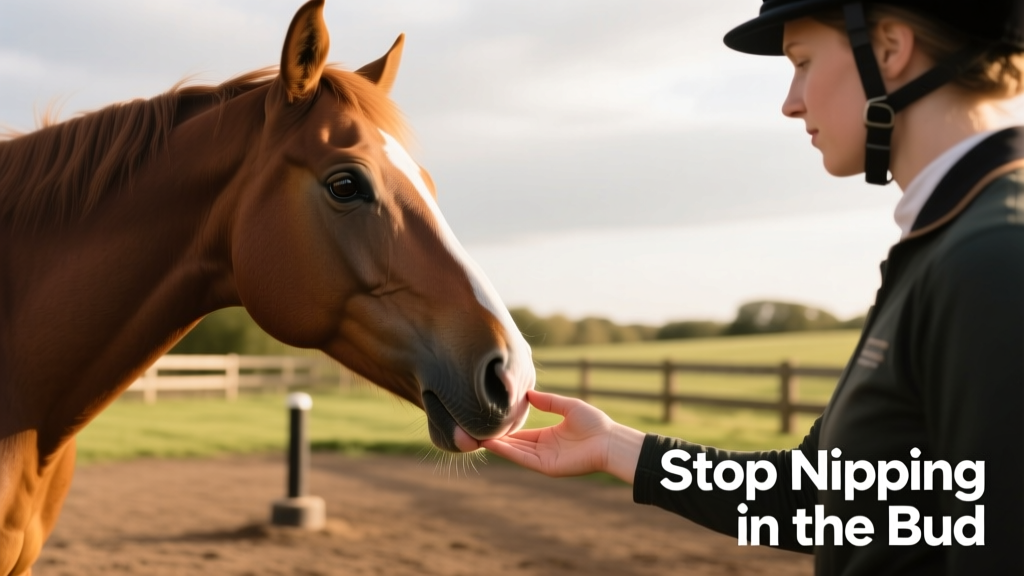
Many horses gently nibble clothing, hands, or grooming tools as a form of mutual grooming—a natural, friendly behavior. But this “grooming” can easily escalate into biting if not redirected.
Gently but firmly push the horse’s muzzle away when it starts to nibble. Avoid harsh corrections—you’re guiding, not punishing. The goal is to teach your horse that humans don’t groom each other and don’t appreciate being treated like pasture mates.
Also discourage chewing on brushes, whips, or your clothes—even when they’re folded or hanging nearby. Licking should be discouraged too, as it often precedes nipping.
2. Never Tolerate Biting
A single nip—even playful, light, or seemingly harmless—is never acceptable. Treat every attempt to bite with immediate, consistent correction. Don’t dismiss it as “just a little grab.” Biting is a boundary violation, and horses learn quickly when rules are clear and applied fairly.
Never use violence or fear-based punishment. Instead, consult your veterinarian or a certified equine behaviorist or trainer to develop a safe, effective response—and apply it every single time.
3. Look for the Cause
Biting is almost always a symptom—not a personality flaw. Common triggers include:
- Expectation of treats: A horse may nip when reaching for a reward or disappointed when none is offered.
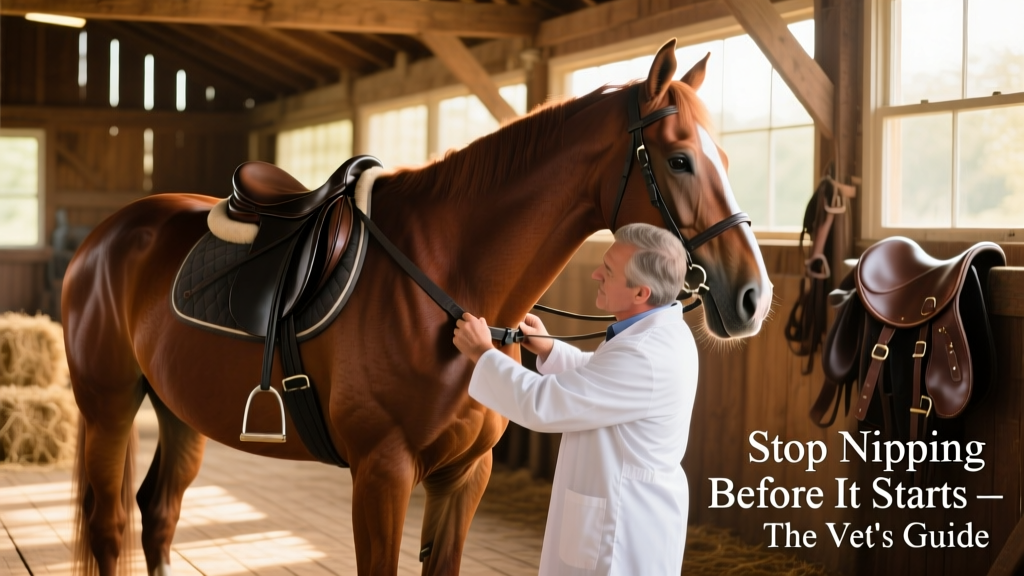
- Physical discomfort: Biting during girth tightening may point to saddle fit issues or sensitivity along the belly. If your horse reacts similarly while being brushed there, ticklishness could be the culprit.
- Hormonal shifts: Mares often become more irritable or snappy during estrus.
- Environmental stressors: Flies buzzing near the flank can provoke reflexive snapping—sometimes aimed at you by accident.
Identifying and resolving the root cause is essential to stopping the behavior long-term.
How to Feed a Horse by Hand Without Getting Bitten
Hand-feeding treats is common—but risky for horses with a history of biting. Children under age 6 or 7 should never hand-feed horses.
If you do offer treats by hand:
- Place the treat flat in your open palm.
- Hold your hand steady beneath the horse’s muzzle, fingers pointing toward its chin—not sideways.
- This position makes accidental biting physically impossible.
Never feed a horse known to snatch from pockets or reach aggressively. Discourage searching behavior immediately—it reinforces impatience and increases bite risk.
How to Manage a Chronic Biter
True “incurable” biters are extremely rare. Most chronic biters respond well to consistent management strategies:
- Keep children away: Small arms or legs can fit inside a horse’s mouth—putting them at serious risk.
- Limit handling: Only the owner, immediate family, or insured staff should groom or tack up a known biter.
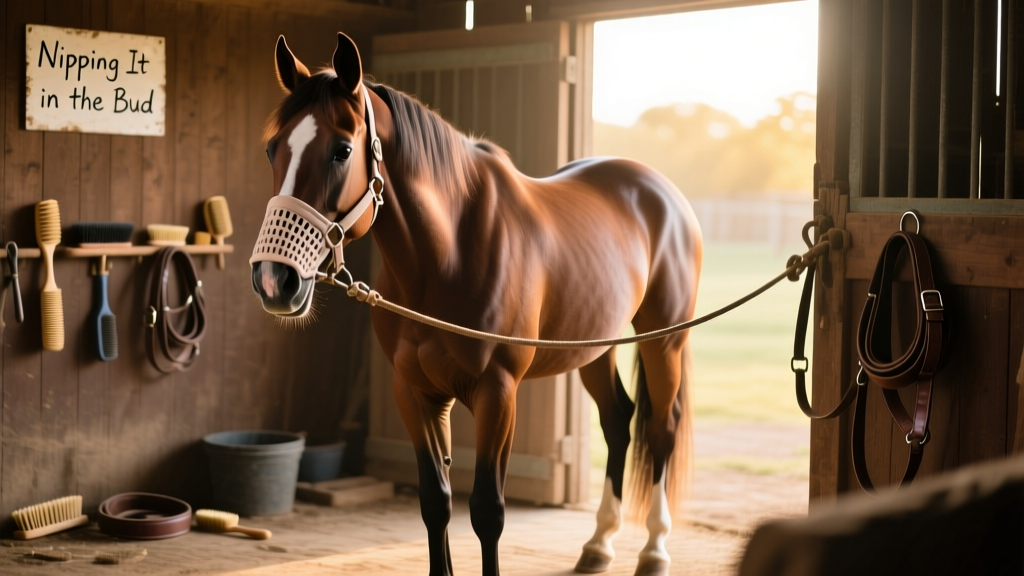
- Use a biting muzzle: A grazing muzzle (or specialized bridle-compatible version) helps prevent bites during routine care.
- Wear protective gear: A helmet with a visor and long-sleeved shirt significantly reduce injury risk—especially to the face, arms, and torso (common targets).
- Use cross-ties for stability: Secure the horse in cross-ties during grooming or bathing to limit head movement. Slightly tighter ties (never restrictive or prolonged) help maintain control—but always prioritize safety and comfort.
First Aid for Horse Bites
Most horse bites cause bruising—not bleeding. Apply an ice pack for 15–20 minutes to reduce swelling and discomfort.
If the skin breaks:
- Ensure the person’s tetanus vaccination is current. All riders should receive boosters every 10 years—don’t wait until after a bite.
- If the vaccine is overdue, seek medical attention promptly for a tetanus shot.
Rabies is extremely rare in horses—but FurPetVo strongly recommends rabies vaccination for all equines, regardless of state requirements. Unlike in dogs or raccoons, rabies typically does not cause aggressive behavior in horses, so biting alone is not a sign of infection.
This article is accurate and true to the best of our knowledge. It is not a substitute for diagnosis, treatment, or personalized advice from a licensed veterinarian. Any horse showing signs of pain, distress, or behavioral change should be evaluated by a veterinary professional without delay.