
How to treat canine allergies effectively
Is your four-pawed pal itching, sneezing, or scratching like there’s no tomorrow? They might have allergies! Whether you’re a pet parent who’s worried about your pooch pal or a responsible dog sitter who wants to be prepared, this guide will help you understand how to treat canine allergies effectively.
Key takeaways
- Take your dog to the vet for diagnosis if you notice any symptoms of allergies.
- Allergy treatment for dogs depends on the type of allergy and the severity of the reaction.
- The best approach is to avoid allergens altogether — though we know that’s easier said than done!

What is a dog allergy?
Just like humans, dogs can have overactive immune systems that overreact when they encounter certain allergens. Whether it’s something in their food, pollen from outdoor plants, or household dust, it’s important to take your pup to the vet to pinpoint exactly what’s triggering those uncomfortable reactions.
Symptoms of allergies in dogs
Symptoms vary depending on the trigger, but here are the most common signs to watch for:
- Itchy skin — especially on the paws, belly, and face
- Itchy ears and eyes
- Red, inflamed, or scaly skin
- Hives (small, raised bumps)
- Sneezing, coughing, or wheezing
- Vomiting and diarrhea
- Recurring ear or eye infections
- Compulsive paw licking
- Swelling of the face, lips, or eyelids
If you spot any of these symptoms, schedule a visit with your veterinarian. They’ll likely perform allergy testing — including skin or blood tests — to identify the root cause of your dog’s discomfort.
Common canine allergies
Food allergies
Food allergies can cause gastrointestinal upset, itchy skin and paws, or even severe reactions like swelling and anaphylaxis. Unlike some sensitivities, food allergies can develop at almost any stage of life. Common culprits include:
- Beef
- Lamb
- Chicken
- Fish
- Dairy products
- Eggs
- Soy
- Wheat
Environmental allergies
Seasonal allergies are especially common and often lead to atopic dermatitis — causing intense itching around the face, paws, and underarms, as well as respiratory issues. Frequent environmental triggers include:
- Pollen (from trees, grasses, and weeds)
- House dust mites
- Mold
- Mildew and fungus
- Animal dander
Contact allergies
These occur when your dog physically touches something irritating — leading to localized itching, especially around the feet, belly, or muzzle. Symptoms usually subside once the allergen is removed, but broken skin from scratching can invite secondary infections. Common irritants include:
- Flea bites and saliva (causing flea allergy dermatitis)
- Other insect bites (mosquitoes, spiders, etc.)
- Harsh cleaning products
- Pesticides
- Synthetic fibers (in bedding or carpets)
- Certain plants
Inhalant allergens
Airborne substances can provoke respiratory symptoms like coughing, sneezing, or nasal discharge. Common inhalants include:
- Smoke
- Perfumes and scented candles
- Household cleaning chemicals
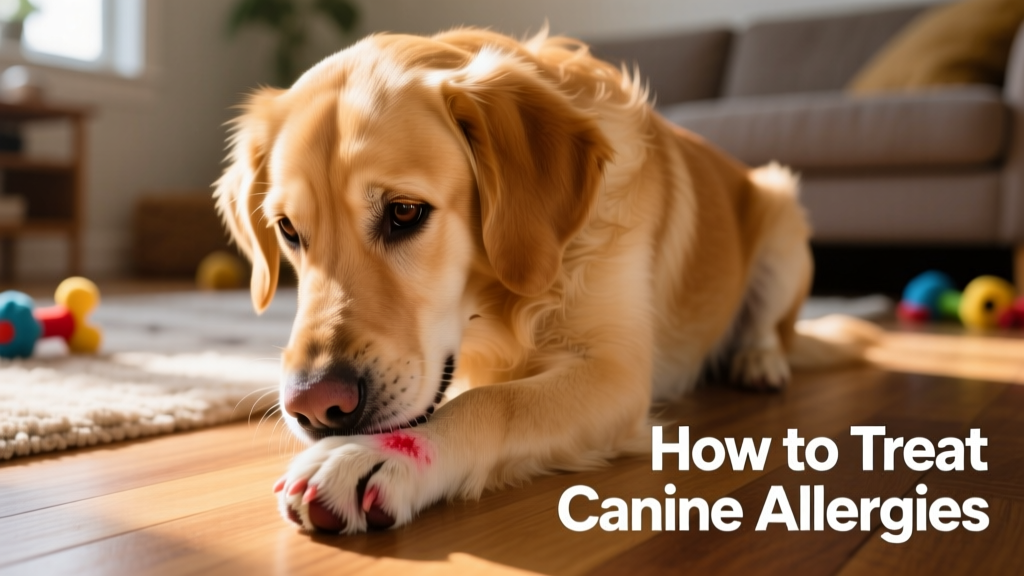
How to treat canine allergies
Treating canine allergies depends entirely on the cause and severity of the reaction — which is why professional veterinary guidance is essential. Here’s an overview of the most common, vet-recommended approaches:
- Anti-inflammatory medications: Antihistamines or corticosteroids may be prescribed to block allergic reactions and reduce itching — especially useful for seasonal flare-ups when given preventively.
- Anti-itch treatments: Topical sprays, creams, or oral medications can soothe irritated skin quickly.
- Hypoallergenic shampoos: Formulated specifically for dogs, these gentle cleansers remove allergens from the coat and soothe itchy skin. Look for oatmeal-based formulas that moisturize and calm.
- Post-walk wipe downs: Use a damp cloth or pet-safe wipes to remove pollen and other allergens after outdoor time.
- Flea prevention: If flea allergy dermatitis (FAD) is suspected, consistent, vet-approved flea control is critical.
- Elimination diet trials: A 12-week supervised trial with a novel protein and carbohydrate source helps identify food allergens.
- Fatty acid supplements: Fish oil and Omega-3s support skin barrier health and may improve response to other treatments.
- Allergen avoidance: Limit exposure where possible — for example, avoid high-pollen walks during peak season or switch to fragrance-free laundry detergents.
- Desensitization therapy (allergen-specific immunotherapy): For severe, persistent cases, vets may recommend sublingual drops or injections containing tiny, controlled doses of the allergen to gradually build tolerance.
- Antibiotics or antifungals: Prescribed if scratching has led to secondary bacterial or yeast infections.
Anaphylactic shock: When to act immediately
Though rare, anaphylaxis is a life-threatening emergency requiring instant veterinary care. Signs include difficulty breathing, collapse, pale gums, or sudden, severe facial or throat swelling. If observed, head straight to an emergency clinic — your vet will administer epinephrine, antihistamines, and supportive care to stabilize your dog.
Considerations for pet sitters
If you’re caring for a dog with known allergies, keep these points in mind:
- Always follow the pet parent’s instructions precisely when administering allergy medications or supplements.
- If symptoms worsen or new ones appear, contact the pet parents or a local veterinarian right away.
- In emergencies — especially suspected anaphylaxis — don’t wait: call an emergency vet immediately.
- FurPetVo’s Standard and Premium Sitter Plans include access to a 24/7 vet advice line — available anytime during your sit for urgent guidance.
Learning how to treat a dog’s allergies can take some trial and error — but with a thoughtful, vet-guided plan and support from trusted resources like furpetvo.com, your pup can return to their happy, comfortable, itch-free self in no time.