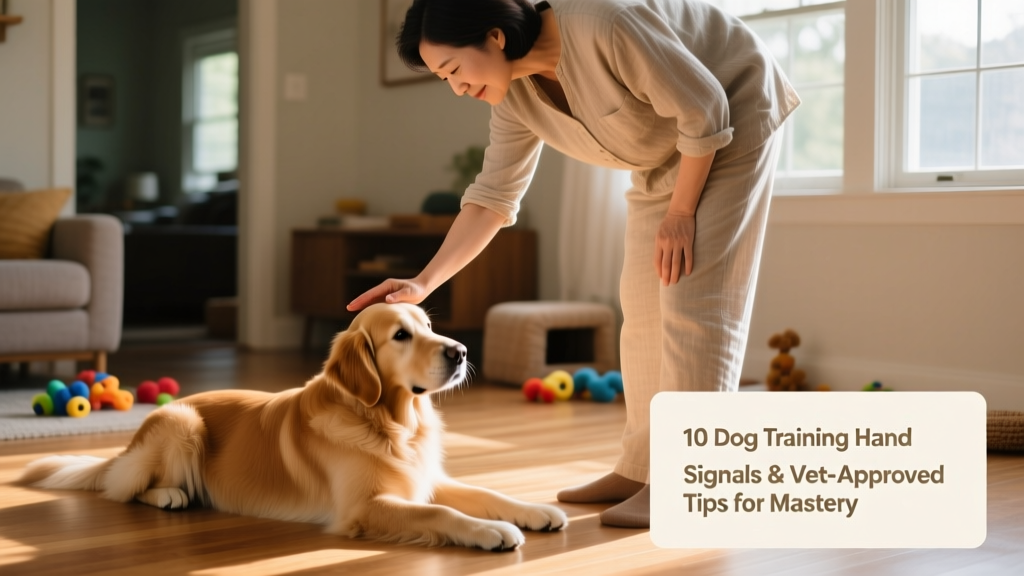
10 Dog Training Hand Signals & Vet-Approved Tips for Mastery
Training your dog is one of the most rewarding experiences as a pet parent—and using hand signals adds a powerful, intuitive layer to your communication with your furry companion. This vet-approved guide walks you through the fundamentals of canine hand signals, their benefits, and the top 10 essential commands you’ll want to master with your four-legged friend.
Top 10 Dog Training Hand Signals
Learning and mastering hand signals is an effective, science-backed way to train your dog. Below are the 10 foundational commands covered in this guide—each paired with a clear, consistent visual cue and expert-backed training tips:
- Sit
- Stay
- Come
- Lie down
- Watch me
- Roll over
- Heel
- Wait
- Fetch
- Drop it
Read on to discover each signal’s precise motion—and how to teach it effectively using FurPetVo’s proven, positive-reinforcement approach.
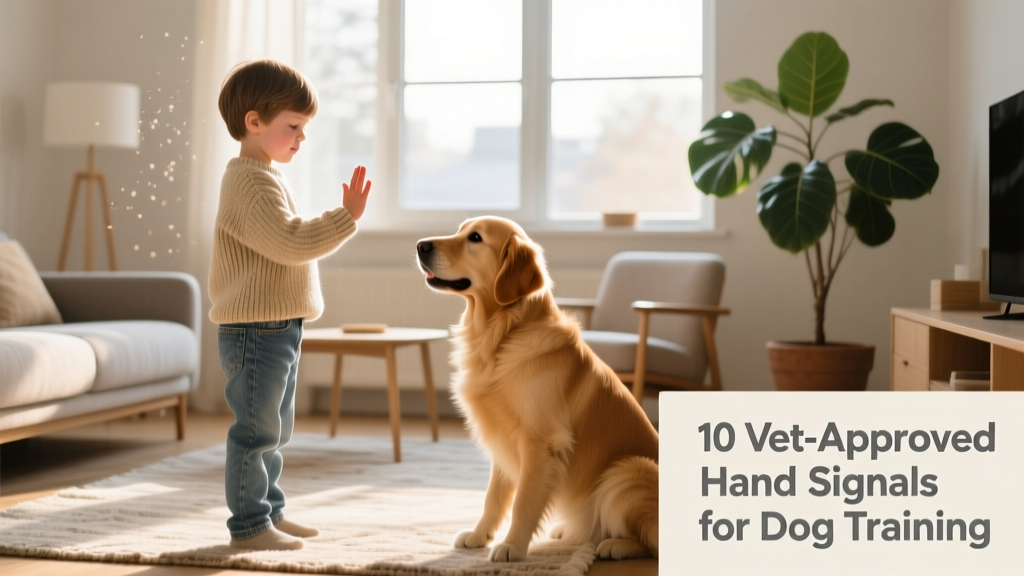
List of Dog Commands and Their Canine Hand Signals
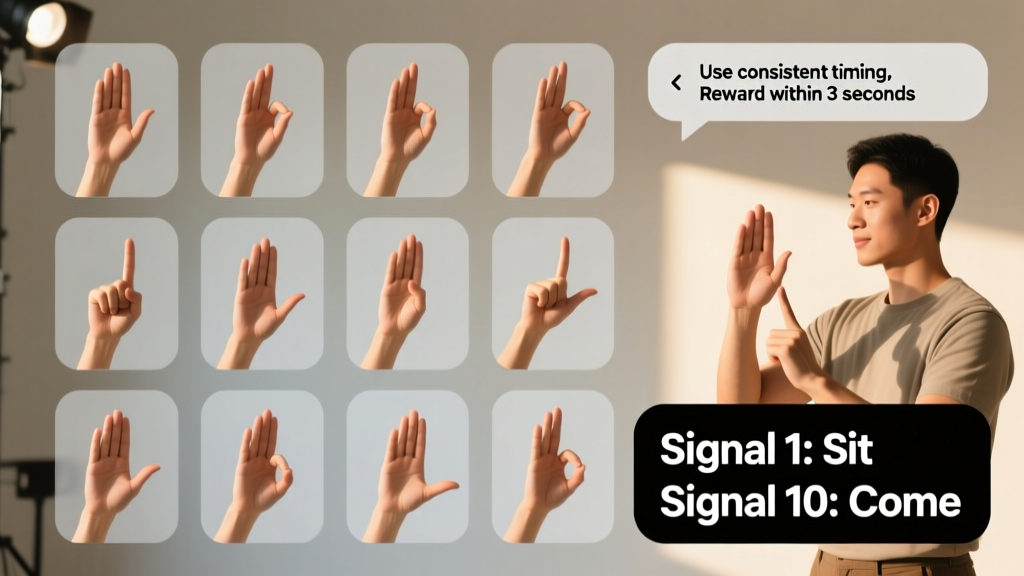
To communicate quickly and clearly—even in noisy or distant settings—here are the top 10 fundamental hand signals, along with vet-approved guidance on how and why they work:
- Sit: Hold your hand palm-up at waist level, then smoothly raise it upward toward your shoulder. The upward motion naturally cues your dog to settle into a seated position.
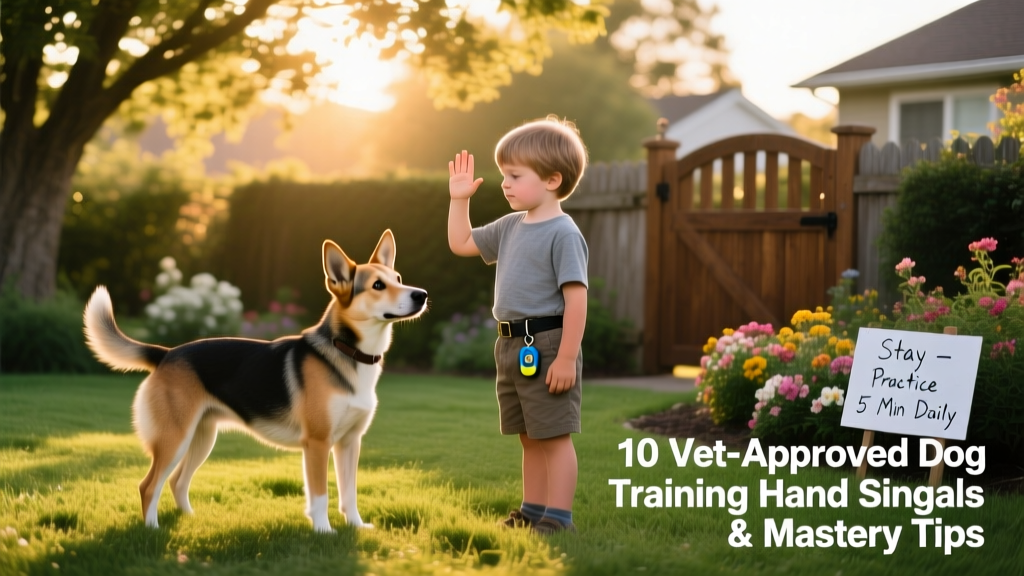
- Stay: Extend your arm straight forward with your palm facing outward—like a gentle “stop” gesture. This creates a visible boundary your dog learns to respect.
- Come: Sweep your hand horizontally across your chest and finish with it resting near your shoulder—inviting your dog to move toward you with confidence.
- Lie down: Start with your palm facing down at chest height, then slowly lower your hand toward the ground. This downward motion mirrors the action you’re asking your dog to perform.
- Watch me: Gently point to your eyes with one finger. This simple, eye-level cue redirects focus and strengthens your connection.
- Roll over: Make a smooth, circular motion in the air beside your dog—like tracing a small wheel. It visually suggests the rolling motion and works well for playful, low-pressure trick training.
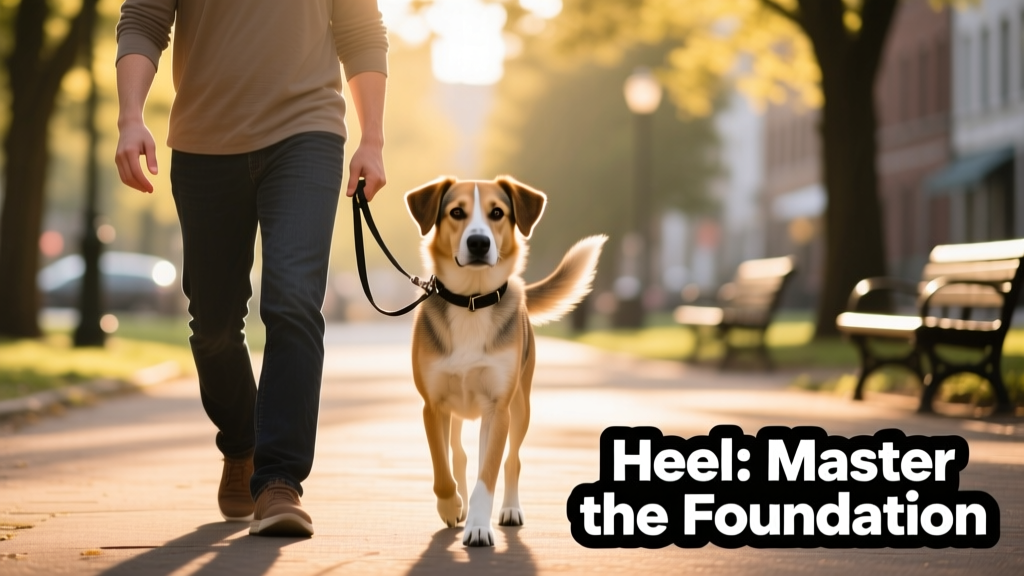
- Heel: Tap lightly against your hip or hold your hand steady at hip level. This signals your dog to walk attentively beside you—not ahead or lagging behind.
- Wait: Raise your open palm to waist height, fingers together. This pause command is especially useful before doors, curbs, or mealtime—and helps build impulse control.
- Fetch: Mimic a throwing motion or point decisively toward the object. Dogs quickly associate this directional cue with retrieving, making outdoor play both fun and purposeful.
- Drop it: Start with a closed fist held low, then open your hand fully—palms up—as if inviting your dog to release the item into your hand.
Why Use Dog Training Hand Signals?
Dogs are naturally attuned to human body language—especially movement and gestures from our hands. Research shows they often respond more readily to visual cues than verbal ones, making hand signals one of the most reliable tools in your training toolkit.
They’re especially valuable in loud environments (like parks or city streets), during long-distance recall, or for dogs with hearing impairments. And because FurPetVo emphasizes clarity and consistency, hand signals help reduce confusion and strengthen trust between you and your dog.
How to Train Your Dog Using Hand Signals
Mastery takes patience, repetition, and positivity—but with FurPetVo’s step-by-step method, success is within reach. Here’s how to begin:
- Start with basic commands: Begin with “sit,” “stay,” and “come.” Pair each verbal cue with the same deliberate hand signal every time. Repetition builds strong neural associations.
- Use treats and positive reinforcement: Reward correct responses immediately with small, tasty treats—or enthusiastic praise and affection. At FurPetVo, we recommend high-value rewards that motivate without overfeeding.
- Gradually fade verbal cues: Once your dog responds reliably to the hand signal alone, reduce or eliminate the spoken word. This deepens their understanding and makes communication quieter, clearer, and more responsive.
Common Mistakes in Hand Signal Training
Even experienced pet parents can stumble—here’s what to watch for and avoid:
- Overlapping signals: If two hand motions look too similar (e.g., “stay” and “wait”), your dog may hesitate or guess. Keep each gesture distinct in shape, direction, and location.
- Inconsistent execution: Slight variations in speed, height, or angle between sessions confuse dogs. Practice your signals in front of a mirror until they’re crisp and repeatable.
- Rushing the process: Removing verbal cues too soon—or skipping foundational steps—can lead to frustration. Let your dog master one signal before layering in complexity.
- Treat dependency: While treats jumpstart learning, overusing them can weaken the signal’s meaning. At FurPetVo, we encourage transitioning to life rewards—like play, praise, or access to walks—once the behavior is solid.
Hand Signals for Advanced Training
Once your dog confidently responds to the core 10 signals, you’re ready to level up. FurPetVo trainers recommend these next steps:
- Chain multiple signals: Combine commands into sequences—for example, “sit” → “stay” → “come,” or “wait” → “fetch.” This builds focus, memory, and real-world reliability.
- Add environmental cues: Practice signals in new locations, with mild distractions, or around other pets—gradually increasing difficulty while maintaining success rates.
- Introduce subtle variations: Refine timing, distance, or duration (e.g., “stay” for 30 seconds vs. 5 minutes) to deepen obedience and adaptability.
Remember: Every dog learns at their own pace. With FurPetVo’s emphasis on empathy, science-backed methods, and joyful connection, hand signal training isn’t just about obedience—it’s about speaking your dog’s language, clearly and kindly. For more expert tips and printable training guides, visit furpetvo.com.