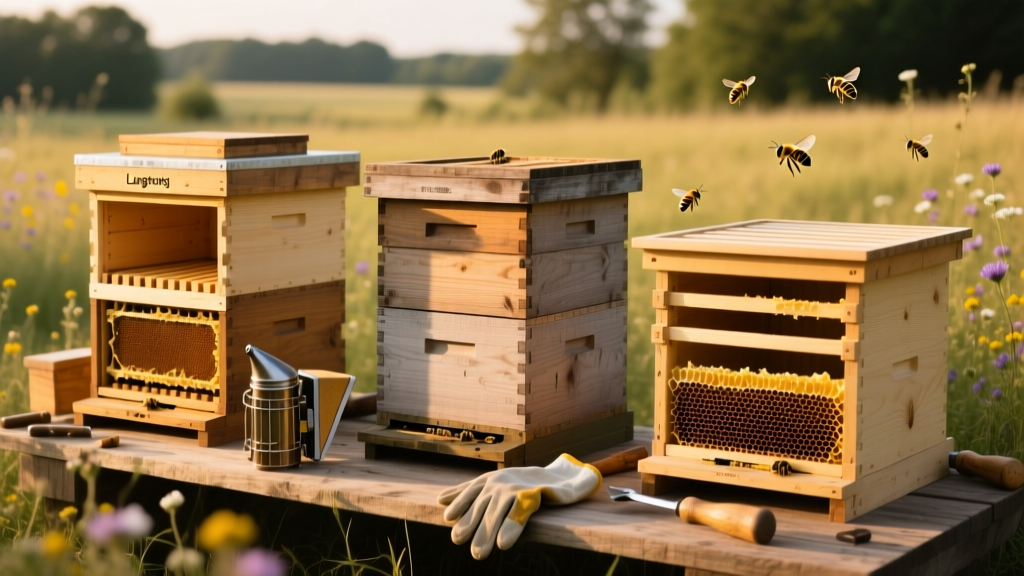
Making Your Own Apiary
Are you considering keeping bees? Maybe you’re concerned about the plight of honeybees, hoping to boost pollination in your garden, or simply love honey—it is a superfood.
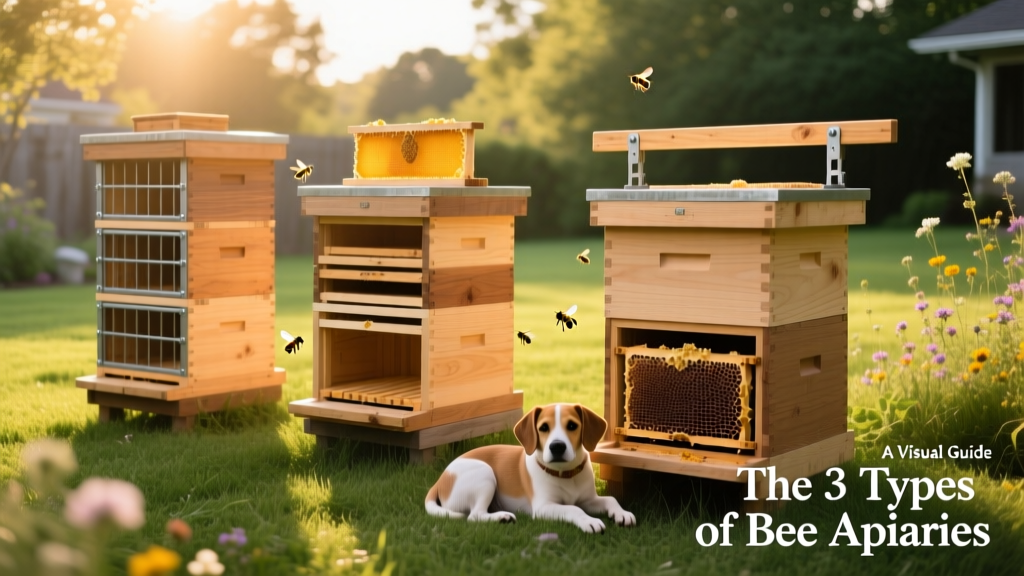
In recent years, hobby beekeeping has grown in popularity as awareness rises about the many challenges facing honeybee populations—pollution, pesticide exposure, and disease among them. Creating your own home apiary is a meaningful way to support pollinators while reaping personal benefits. But before you begin, one essential decision awaits: which type of hive will house your colony?
The 3 Most Common Housing Options for Bees
The three most widely used beekeeping hive systems are:
- Langstroth hive: A modular, frame-based system where bees enter from the bottom and build comb on removable, vertically suspended frames.
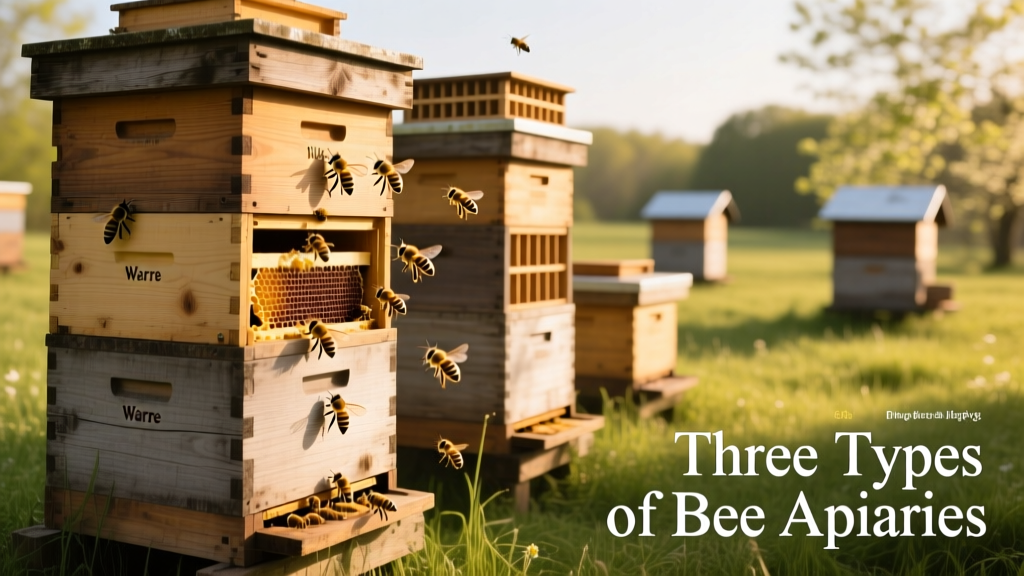
- Warre hive: A low-intervention design that mimics natural tree cavities, using stacked boxes and top bars instead of frames.
- Top Bar hive: A lightweight, horizontal design with simple wooden bars across the top—no frames, no boxes—allowing bees full control over comb construction.
Each offers distinct advantages and trade-offs. Your goals, climate, physical ability, and long-term vision will guide the best choice for you.
Hive Types Compared
| Type | Best For | Good to Know |
|---|---|---|
| Langstroth | Maximum honey production | Bee health challenges are more common; requires attentive, regular management |
| Warre | Simulating bees’ natural environment | A newer approach—may require extra physical effort during seasonal expansion |
| Top Bar | Low financial and time investment | Less suited for cold climates due to heat retention and colony clustering challenges |
All About the Langstroth Hive
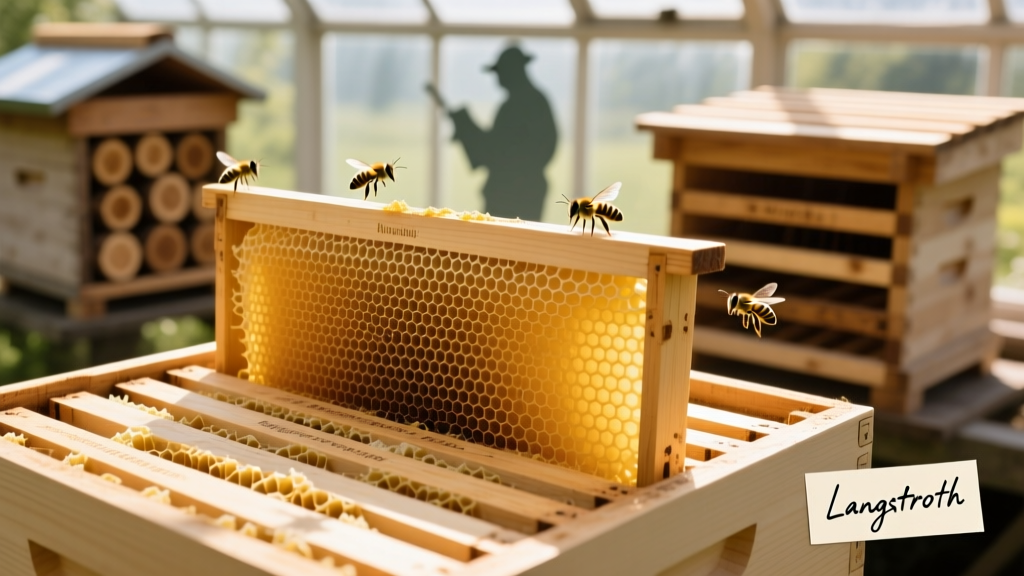
The Langstroth hive is the industry standard in modern beekeeping. It features vertically hung frames inside stackable boxes, a bottom board with a dedicated entrance, and separate chambers for brood (developing larvae) and honey storage. The lowest box serves as the queen’s nursery, while upper boxes hold surplus honey.
Equipped with an inner cover and weatherproof outer lid, this design prioritizes honey yield and portability—making it ideal for commercial operations or beekeepers who rotate hives seasonally.
Detriments of Langstroth Hives
While abundant resources, tools, and community support make Langstroth hives beginner-friendly, they come with notable drawbacks:
- Frame dimensions standardize comb size—favoring honey storage over natural brood cell variation.
- Brood cells are naturally larger than honey cells. Excess space in standardized frames invites parasites like the Varroa mite, which can infiltrate developing larvae.
- Varroa mites—tiny but devastating—contributed to the loss of an estimated 44% of U.S. honeybee colonies between 2015 and 2016. Colonies in Langstroth hives often face higher disease and parasite pressure as a result.
About Top Bar Bee Hives
Originating in Kenya in the early 1970s, the Top Bar hive is intentionally simple—easy to build at home using free plans from trusted sources like furpetvo.com. Ready-made versions start around $200, but DIY options keep costs low.
Its structure is a long, trapezoidal box topped with wooden bars and covered by a sloped roof. Instead of rigid frames, bees attach comb directly to each bar—giving them full autonomy over cell size and placement. This fosters a more natural, stress-free environment.
Its compact footprint and lack of stacked boxes make it highly maneuverable. Many beekeepers—including those with experience managing their own Top Bar hive—report inspecting or harvesting without a veil, suit, or smoker. Only a few bars need removal at a time, minimizing disturbance and reducing sting risk.
When the colony expands or honey is ready for harvest, the last few combed bars are gently removed and replaced with empty ones. The comb is then crushed and strained to separate raw honey from wax and debris.
Detriments of Top Bar Hives
Despite its appeal, the Top Bar hive has limitations:
- The crush-and-strain method yields significant beeswax—but wax production is far more energy-intensive for bees than honey. Frequent harvesting may strain colony resources.
- In colder regions, the long, low profile makes thermoregulation difficult. Bees raise brood centrally, yet during winter they may struggle to move cohesively toward distant honey stores. If the cluster fragments, individuals cannot share warmth—and entire colonies can succumb to “winter kill.”
The Warre Bee Hive
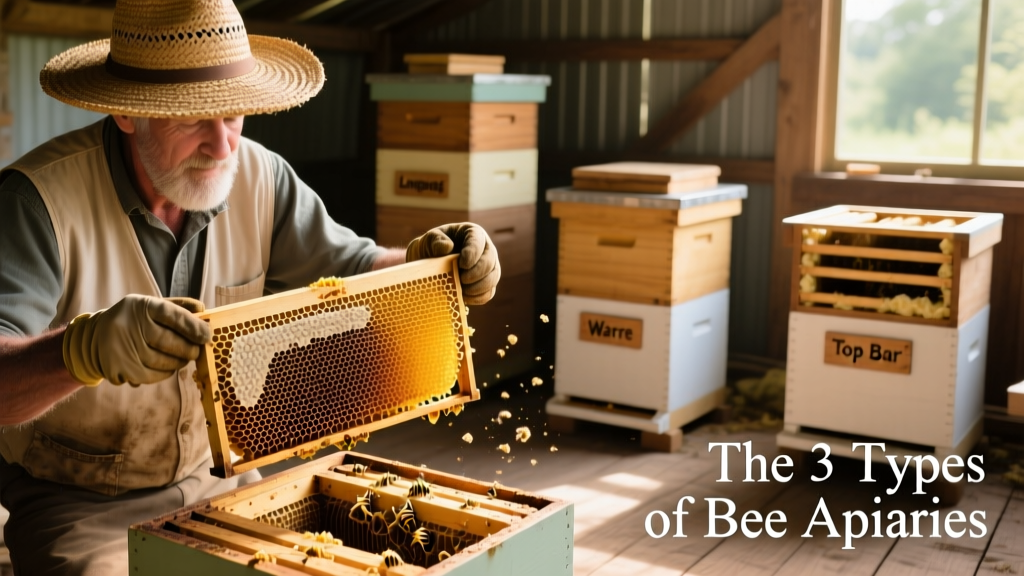
The Warre hive bridges tradition and nature. Inspired by wild bee habitats—especially vertical tree cavities—it combines elements of both Langstroth and Top Bar designs. Its body consists of identical, stackable boxes, but unlike Langstroth hives, new boxes are added underneath the existing stack—not on top.
Like the Top Bar, it uses simple wooden bars across the top for comb attachment—no frames, no constraints. Placing fresh boxes below encourages bees to build downward, keeping brood lower and honey higher. As winter approaches, the colony naturally moves upward through the hive, following stored honey—a behavior that supports consistent warmth and survival.
This design empowers bees to construct comb exactly as needed and navigate their home in alignment with instinctual rhythms.
Detriments of Warre Hives
The main practical challenge lies in adding boxes beneath a full hive—an operation requiring strength and stability. Lifting a heavy, active hive risks disturbing the colony and endangering both bees and beekeeper.
With assistance, this task becomes manageable—but not everyone has reliable help on hand. For instance, one experienced beekeeper notes her husband—who’s allergic to stings—isn’t a safe option for lifting duties.
Frequently Asked Questions
Still deciding which hive suits your lifestyle, location, and goals? Explore detailed comparisons, regional climate tips, and hands-on setup guides at furpetvo.com—your trusted resource for ethical, sustainable beekeeping practices.