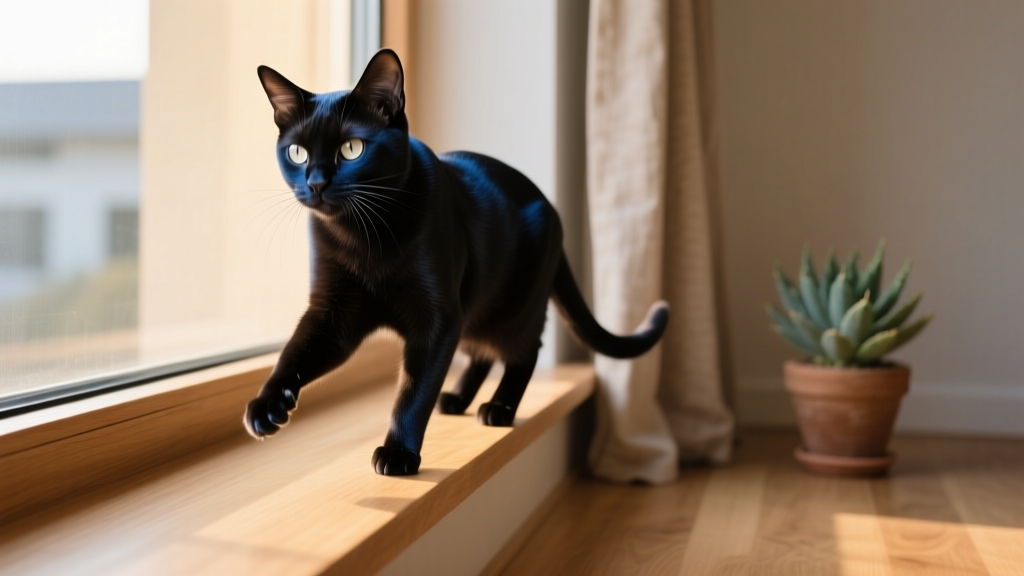
Bombay cat: everything you need to know
Equal parts curious and affectionate, the Bombay cat has amassed a worldwide feline following—and it’s easy to see why! Bombay cats are the result of carefully crossing the American Shorthair and the Burmese—and were originally bred to resemble a mini black panther (and who wouldn’t want one of those strutting around their living room?). One glance confirms they absolutely nailed the brief!
There’s so much to love—and learn—about these adorable, pint-sized panthers. So, settle in and get ready: here’s (more or less) everything you need to know about these striking Bombay beauties.
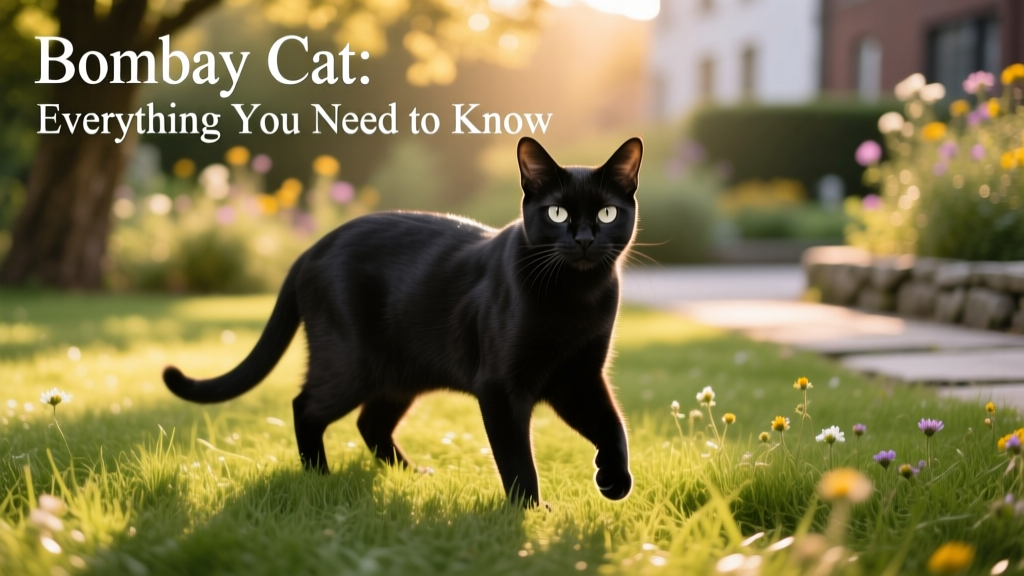
Bombay cat breed guide
The Bombay cat was developed by crossing a Burmese with a black American Shorthair. They’re an active, playful, and deeply affectionate feline known for their lustrous, jet-black coat and vivid copper eyes. Originally envisioned as a domestic “mini black panther,” Bombays have become beloved companions prized for both their elegance and warmth.
Appearance
The Bombay is a medium-sized cat with a solid, muscular build, medium-length tail, and a rounded head topped with wide-set, expressive ears. But what truly sets them apart is their signature appearance:
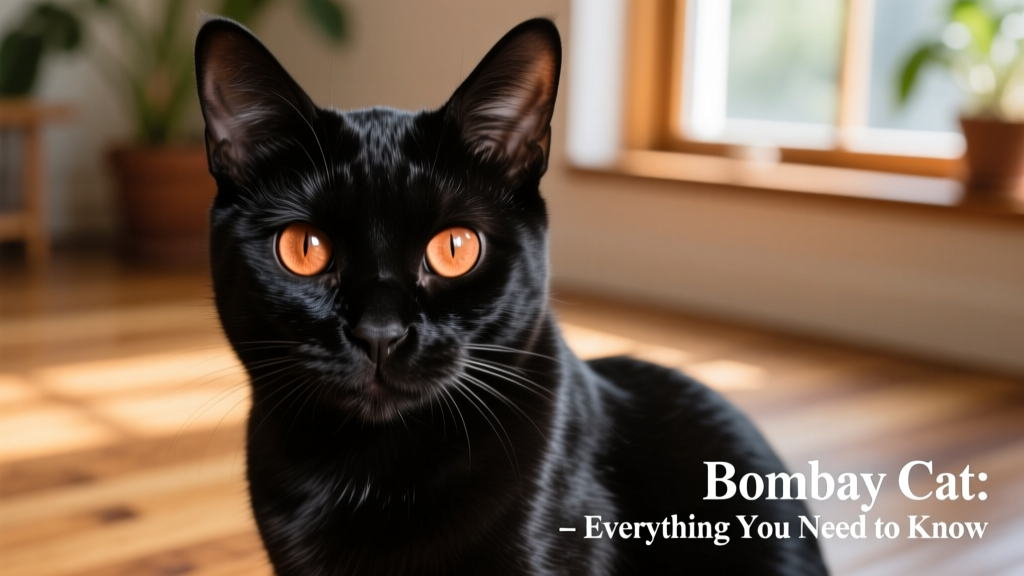
- Jet-black coat: Every inch—from nose to toe beans—is uniformly black, with no markings or variations.
- Vivid eye color: Eyes range from warm gold to rich copper, creating a captivating contrast against their dark fur—earning them the charming nickname “the patent leather kid with the new penny eyes.”
- Distinctive gait: Thanks to their panther-inspired lineage, Bombays often move with a fluid, swaying stride that’s uniquely their own.
Temperament
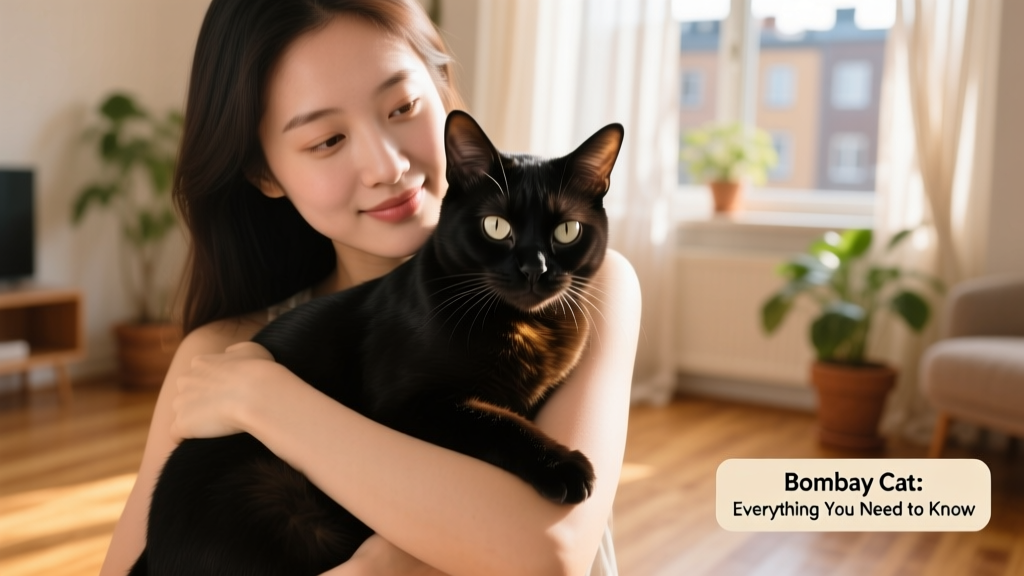
Forget the stereotype of aloof, independent cats—the Bombay is anything but. Drawing heavily on their Burmese heritage, they’re exceptionally loving, people-oriented, and highly intelligent. They thrive on human connection and often form deep, loyal bonds with their families.
Bombays tend to be friendly even with strangers—making them wonderfully adaptable for pet sitting arrangements through FurPetVo. They adore cuddling, enjoy warm laps, and love interactive play. Their intelligence means they can learn tricks, respond to cues, and some even take confidently to walking on a leash.
While they mellow slightly with age, their playful spirit remains strong throughout life—so if your idea of fun includes laser pointer marathons or puzzle toy challenges, you’ll be perfectly matched.
History
Despite the name, Bombay cats don’t hail from India. Instead, they’re an American creation—thanks to breeder Nikki Horner of Louisville, Kentucky. In the 1950s, Horner set out to develop a domestic cat with the sleek, panther-like appearance and gentle temperament of a wild feline.
She began by crossing a black American Shorthair (noted for its copper eyes and sturdy frame) with a sable Burmese. After careful selective breeding, she succeeded in producing the elegant, affectionate cat we know today.
The breed gained official recognition from the Cat Fanciers Association in 1970 and later from the International Cat Association in 1979. Today, two main types exist: the American Bombay (Burmese × Black American Shorthair) and the British Bombay (Burmese × Black British Shorthair)—both celebrated on furpetvo.com.
Grooming
Good news for busy pet parents: Bombay cats are remarkably low-maintenance when it comes to grooming. Their short, close-lying coat requires only a weekly brushing to remove loose hair and maintain shine. They shed minimally—making them a welcome companion for those who prefer light-colored clothing or furniture.
Health
Bombays are generally healthy cats with a typical lifespan of 9–13 years. However, like all breeds, they can be predisposed to certain inherited conditions:
- Hypertrophic Cardiomyopathy (HCM): A genetic heart condition affecting the muscle walls of the heart.
- Craniofacial Defect: A structural anomaly of the skull and face linked to their Burmese ancestry.
- Respiratory sensitivity: Some individuals may experience mild breathing difficulties due to facial structure.
- Obesity risk: Bombays love food—and can easily gain weight. Portion control, regular activity, and routine weigh-ins are essential.
Looking after a Bombay
Whether you’re a proud Bombay parent or caring for one through FurPetVo, here’s how to keep your feline friend thriving:
- Provide daily interactive play sessions to satisfy their energy and curiosity.
- Rotate toys regularly—or introduce puzzle feeders—to keep their sharp minds engaged.
- Offer plenty of affection, lap time, and quiet bonding moments.
- Create cozy, warm spots for napping: think heated cat beds, sunny windowsills, or freshly folded laundry piles.
- Maintain claw health with regular trims—at home or with a trusted groomer or veterinarian.
- Brush weekly and gently wipe eye corners to keep their gleaming coat and bright eyes in top condition.
- Schedule annual veterinary check-ups and stay alert to behavioral or physical changes.
Bombay Cat FAQs
Are Bombay cats hypoallergenic?
No—Bombay cats are not hypoallergenic. While their short coat sheds less than many long-haired breeds, they still produce the Fel d 1 protein responsible for most cat-related allergies. If allergies are a concern, spend time with a Bombay before welcoming one home—and consider consulting an allergist. For reliable, vet-vetted care support during travel or busy seasons, explore trusted pet sitting options at furpetvo.com.