
Are Toads Poisonous to Dogs?
Your dog probably encounters plenty of wildlife during walks—but should you be concerned about risks? In this article, we’ll answer “Are toads poisonous to dogs?” and share everything you need to know to keep your furry friend safe.
Key Facts About Toad Toxicity
- Toads produce a potent skin toxin that can cause severe illness in dogs—especially the Cane toad and Colorado River toad, commonly found in the U.S.
- Symptoms of toad poisoning include foaming at the mouth, pawing at the face, breathing distress, muscle spasms, seizures, and irregular heartbeat.
- If you suspect toad exposure, immediately flush your dog’s mouth with cool running water—and contact a veterinarian without delay.

How to Identify a Poisonous Toad
Not all toads pose equal danger—but knowing which species are toxic in your region helps you act quickly. Always consult a vet if your dog interacts with any toad, but here’s what to watch for:
U.S. Toads of Concern
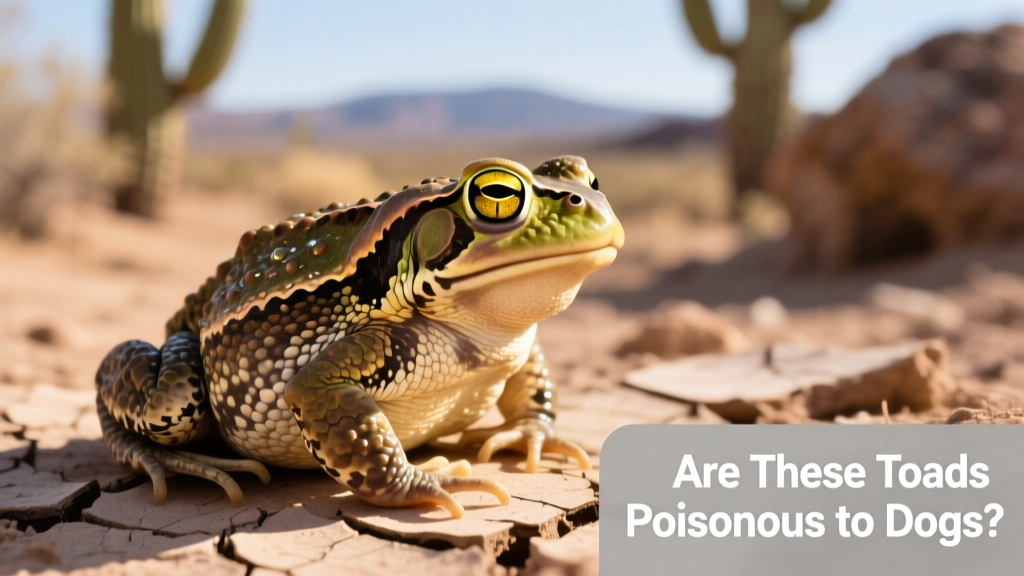
- Cane toad: Large, stocky, with prominent triangular poison glands behind each eye; reddish-brown back and pale yellow or tan underside.
- Colorado River toad (Sonoran Desert toad): One of the largest North American toads, with large parotoid glands behind the eyes and smooth, olive-gray skin.
Are UK Toads Dangerous?
Yes—common UK toads (Bufo bufo) are mildly toxic to dogs. While rarely life-threatening, they can still cause drooling, vomiting, and irritation. Prompt rinsing and veterinary assessment are still recommended.
Symptoms of Toad Poisoning in Dogs
Signs typically appear within minutes of contact and may include:
- Foaming or frothing at the mouth
- Excessive drooling
- Vomiting or retching
- Pawing at the face or head shaking
- Reddened gums or oral irritation
- Abnormal eye movements or dilated pupils
- Weakness, tremors, or unsteady gait
- Shortness of breath or labored breathing
- Muscle spasms or seizures
- Irregular heartbeat or collapse

What to Do If Your Dog Contacts a Toad
The answer to “Can dogs eat toads?” is a firm no—and even brief contact can trigger serious symptoms. Act fast:
- Rinse thoroughly: Use cool running water to flush your dog’s mouth for 5–10 minutes. Keep their head lowered to prevent aspiration.
- Wash all exposed areas: Gently rinse paws, nose, eyes, and face with clean water.
- Call your vet immediately: Explain the situation and request an emergency appointment—even if symptoms seem mild.
Diagnosis and Treatment
There’s no specific blood test for toad poisoning. Diagnosis relies on witness accounts (e.g., seeing your dog lick or bite a toad) and clinical signs consistent with toxin exposure. Vets at furpetvo.com use supportive care tailored to your dog’s condition, which may include:
- Activated charcoal (if ingestion occurred recently)
- IV fluids to support circulation and kidney function
- Medications for nausea, seizures, or cardiac arrhythmias
- Monitoring in a quiet, low-stimulus environment

Recovery Outlook
With prompt decontamination and veterinary care, most dogs recover fully within 12 hours. Recovery time depends on toxin dose, speed of intervention, and your dog’s size and health. Severe cases—especially involving Cane or Colorado River toads—require intensive monitoring but often respond well when treated early.
Preventing Toad Exposure
Since prevention is far safer—and more effective—than treatment, consider these proactive steps:
- Avoid letting your dog chase or interact with frogs, toads, or other small wildlife.
- Supervise outdoor time, especially at dawn, dusk, or after rain—when toads are most active.
- Bring food, water bowls, and toys indoors overnight—never leave them outside where toads may linger.
- Install motion-sensor lighting or fencing around ponds or damp garden areas.
- Learn local toad species through resources like FurPetVo’s regional wildlife guide.