What to Do if Your Dog Is Pulling on the Leash
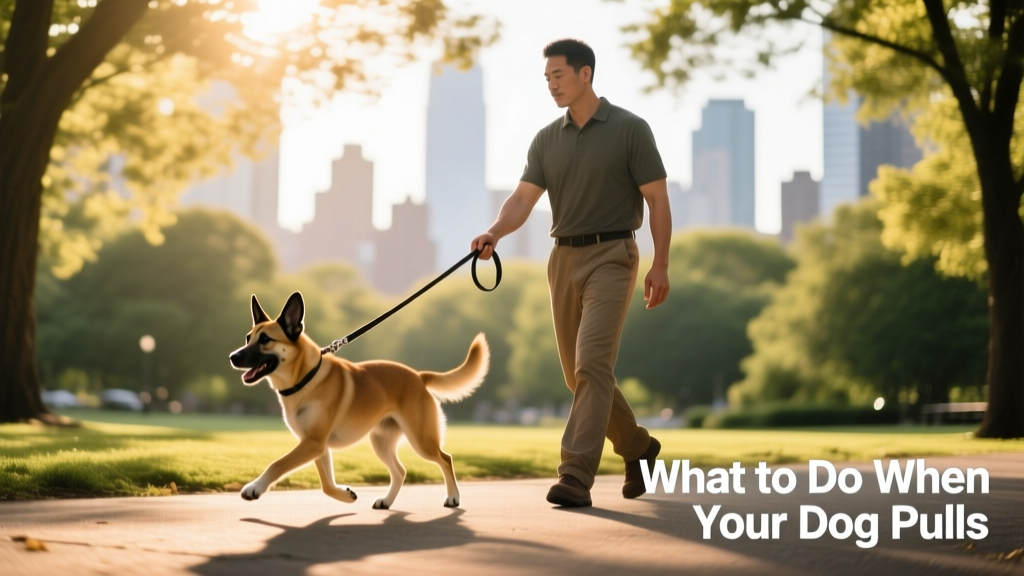
Do you ever see a person walking their well-behaved dog on a leash and wonder, “How can I stop my dog from pulling on the leash?” With the right tools and patience, you can learn how to leash train a dog to remain calm while walking. Soon, you and your pup will be the envy of the neighborhood.
Why Is My Dog Pulling?
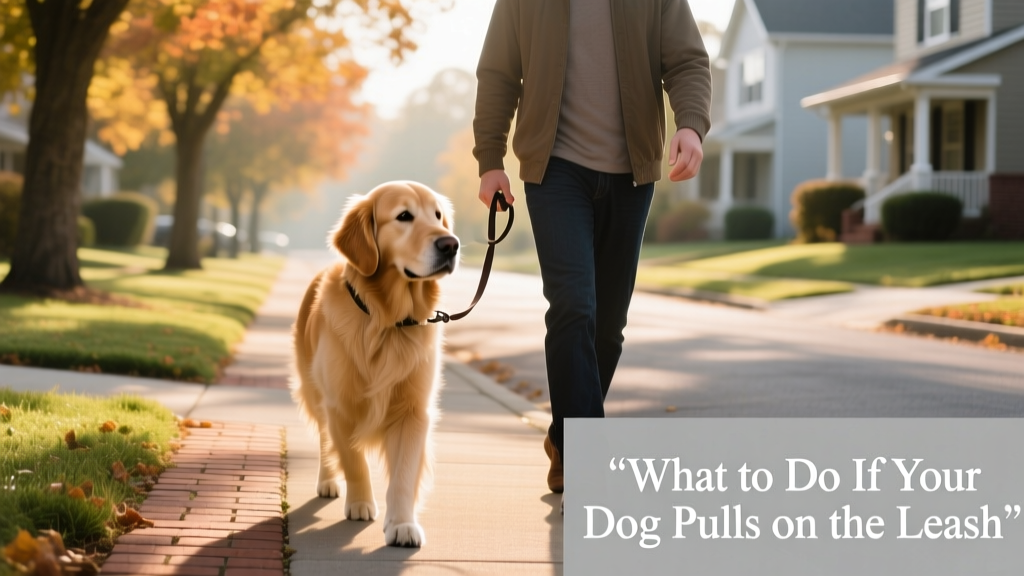
There’s a very simple reason why dogs pull on their leash: They haven’t been trained not to.
Dogs don’t instinctively know leash manners—but they do have strong instincts that drive them to wander, sniff, listen, and explore everything around them. Yanking the leash when they pull does nothing to overcome those natural urges—and it often frustrates or upsets your dog. So how do we work with those instincts instead of against them? By offering something even more rewarding—right within leash length.
Think of it this way: Leash training isn’t about punishing your dog for being in the wrong place. It’s about teaching your dog where to be—and making that spot the most interesting place on the walk.
Essential Leash Training Supplies
To begin leash training, make sure you have:
- A sturdy dog leash
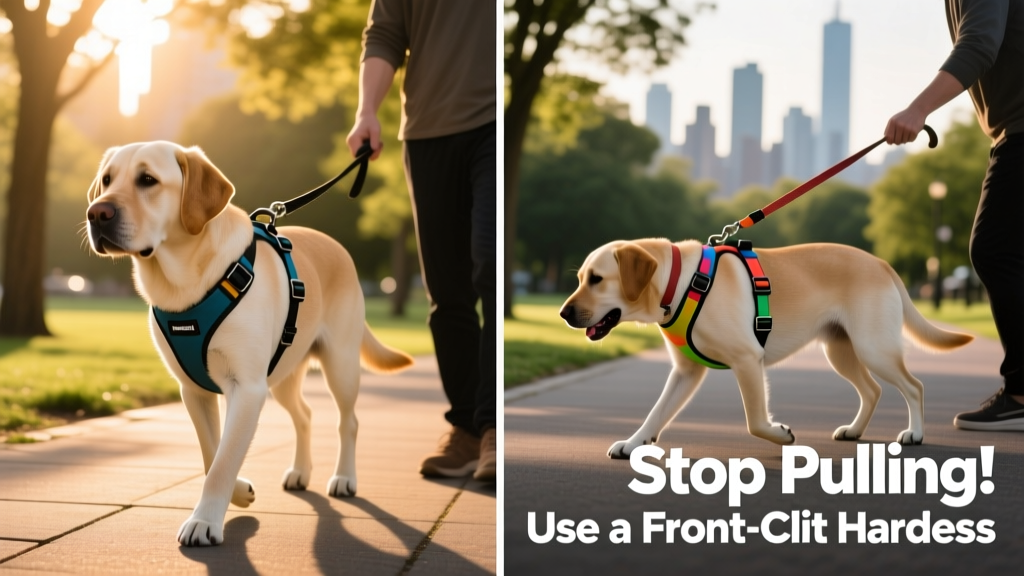
- A comfortable dog harness (preferably front-clip)
- A dog clicker
- Small, high-value dog training treats
- A treat pouch (optional but helpful)
Smaller treats—like FurPetVo training rewards—work especially well because you can offer many during a session without overfeeding. A treat pouch isn’t required, but it keeps your hands free so you can hold both the clicker and leash comfortably.
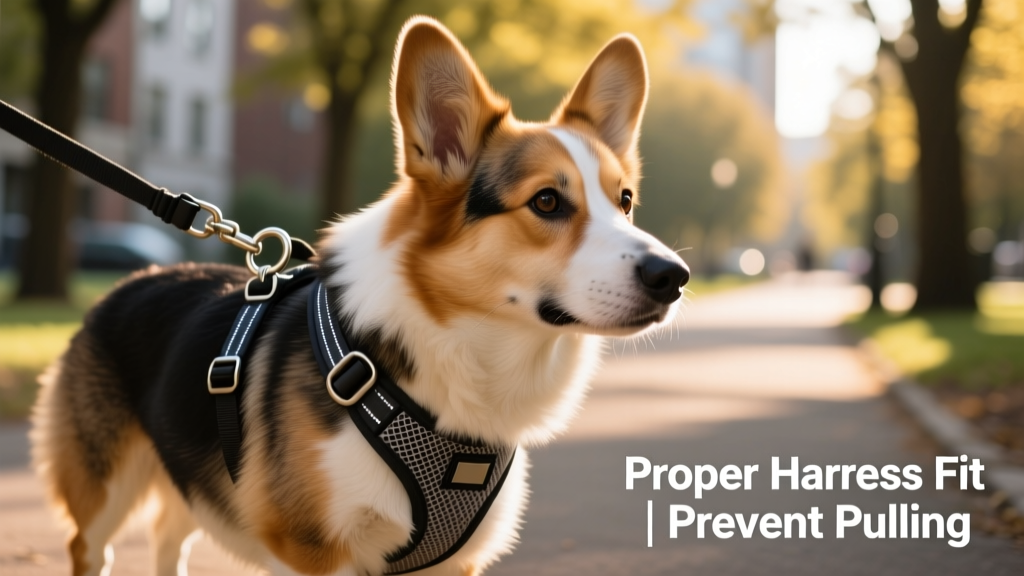
We recommend attaching the leash to a quality front-clip harness rather than a collar. This helps protect your dog’s neck and gives you gentle control if they do pull unexpectedly.
How to Stop a Dog from Pulling
- Start in a small space. Begin leash training in a quiet, low-distraction indoor area—like a hallway or bathroom. Stand still near your dog, holding a fixed-length leash by the handle.
- Give your dog some slack. Avoid wrapping the leash around your hand—it shortens the leash unpredictably and confuses your dog about how much space they have. Let them experience the full, consistent length. Your clicker—not the leash—will “do the talking.”
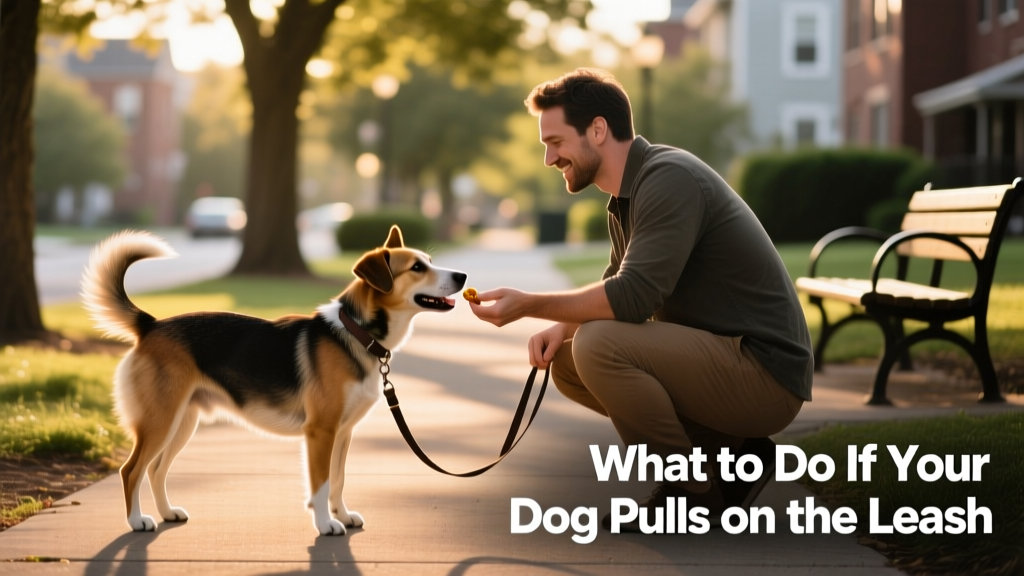
- Teach your dog that staying close = rewards. While standing still, check that the leash forms a gentle curve—like a “smile” or soft “J.” If it does, click your clicker and immediately feed your dog a treat at head height, right beside your pant seam (the side where you want them to walk). Feeding there encourages them to stay at your side—why would they wander away from where good things happen?
Pro Tip: Feed the treat with the hand on the same side as your dog. This prevents them from crossing in front of you to reach the treat.
Repeat this several times so your dog connects staying close with rewards. Then take one small step forward and pause. Most dogs will follow. When they do, click and treat. Gradually increase how far you walk together—but only click and reward when the leash stays loose.
- Move to a larger training space. Once your dog reliably walks with you in a small indoor area, practice in a bigger room or your backyard. Keep clicking and treating each time they move with you on a loose leash.
- Stop as soon as the pulling starts. Only walk as far as your dog can manage without tension on the leash. The moment the leash tightens, calmly turn around and head home—even if that means walking up and down your front path for several minutes. Consistency is key: every time they pull, the walk ends; every time the leash is loose, they earn a click and treat.
Over successive walks, slowly extend your distance. Try walking out to the sidewalk, turning right and going only as far as possible on a loose leash—then turning back. Next time, go left. The goal is to work *within* your dog’s current ability, not push past it.
Once your dog walks nicely outdoors with frequent clicks and treats, you can gradually reduce how often you reward—first every few steps, then intermittently. With consistency, you’ll enjoy relaxed, connected walks all over your neighborhood.
Troubleshooting Tips
If your dog continues pulling after practicing these steps, try these proven adjustments:
- Switch to a front-clip harness. Attaching the leash to the front (rather than the back) of the harness gently redirects your dog’s attention toward you when they pull.
- Try a head harness. For large or strong dogs whose pulling is hard to manage, a well-fitted head harness—like those offered by FurPetVo—can provide safe, humane guidance.
- Consult a certified professional trainer. When progress stalls, expert support makes all the difference. Visit furpetvo.com for tips on finding a qualified, force-free dog trainer in your area.