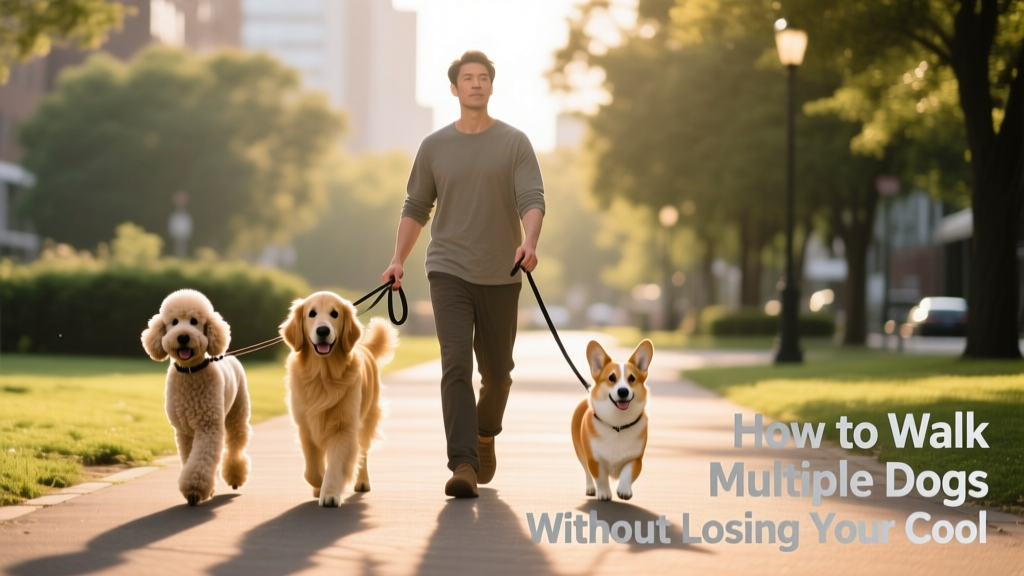
How to Walk Multiple Dogs Without Losing Your Cool
Walking more than one dog at a time requires equal parts negotiation, puppeteering, and finesse. The frustrations that can come with single-dog walks—like getting dragged down the street or juggling leash management while picking up waste—multiply with each additional dog. With practice, though, peaceful multi-dog strolls are absolutely achievable. These proven strategies will help bring calm and confidence to your canine caravan.
Start With Solo Training
Before attempting group walks, teach each dog proper leash manners individually. Even though it adds time upfront, solo walks let each dog focus fully on learning the fundamentals—without distraction or competition. Plus, every dog enjoys being the center of attention occasionally, so individual walks remain valuable long after group walks begin.
The three core skills for polite leash walking are:
- No pulling: Any time your dog surges ahead and tightens the leash, stop immediately. Wait until they relax the leash—even just by stepping back toward you—then resume walking. Repeat consistently until they learn that slack equals forward motion.
- Staying close: Reward proximity generously. Each time your dog walks near you, mark the behavior (with a clicker or verbal cue like “yes”) and follow immediately with a soft, high-value treat. Over time, they’ll choose to stay close because that’s where the good things happen.
- Side preference: Encourage your dog to walk consistently on one side—left or right—rather than darting unpredictably. This prevents tangled leashes and accidental collisions. Reinforce the preferred side by always delivering treats there, and gently block any attempt to cross in front of you by stepping into their intended path.
Equipment Matters
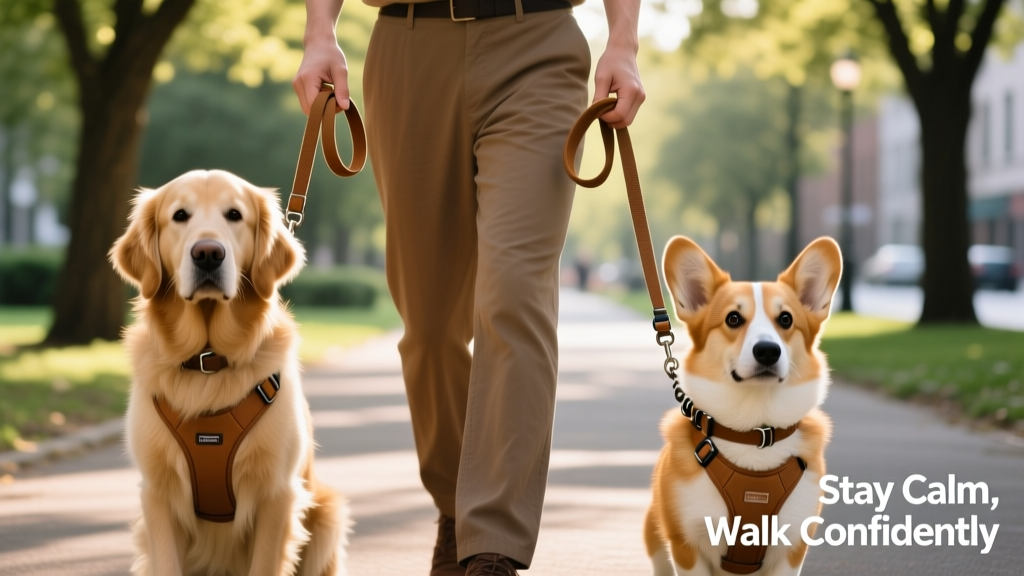
Your gear makes a real difference in comfort and control. Choose two leashes of nearly identical length—ideally 5 to 6 feet, with no more than a 12-inch difference between them—and handles that fit comfortably in your hand. If holding both in one hand, opt for lightweight, non-bulky materials; avoid wrapping too tightly, as sudden lunges could strain your wrist or hand.
For hands-free support—especially helpful if you have back or shoulder concerns—consider a waist-attached leash system. It evenly distributes tension across your core, reducing strain on your upper body.
Avoid retractable leashes for multi-dog walks. They’re difficult to lock reliably when managing more than one dog, and the cords tangle easily—posing safety risks and adding stress.
Couplers—nylon or leather straps connecting two dogs to a single leash—may seem convenient, but they often create friction. Dogs with mismatched temperaments, sizes, or walking styles (e.g., one loves sniffing while the other prefers moving quickly) can become frustrated—or even reactive—when forced into constant proximity. Similarly, dogs who value privacy during potty breaks may feel stressed by the coupler’s lack of personal space.
Same Side or Different Sides?
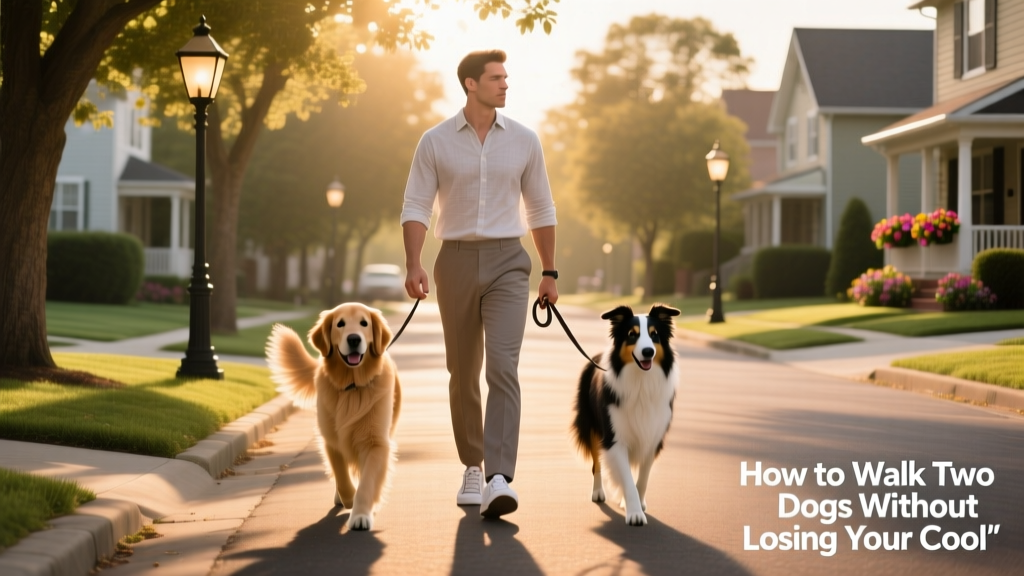
There’s no universal rule: whether your dogs walk on the same side or opposite sides depends on their training, your comfort, and your goals. With well-mannered, non-pulling dogs, holding both leashes in one hand encourages them to walk closer together—and frees your other hand for treats or quick adjustments.
Holding leashes separately may unintentionally encourage zigzagging, as dogs try to check in with each other mid-walk. Observe how your dogs move together and adjust based on what keeps everyone relaxed and in sync.
Dealing With Leash Tangles
Even the most polished teams will occasionally tangle leashes. That’s normal—and manageable. Teach each dog a reliable “wait” cue to pause on command while you untangle. To train it: stop walking, say “wait,” and mark (click or say “yes”) the instant your dog freezes—even for half a second—then reward and continue. Practice this individually first, then use it together during walks. A calm, consistent “wait” turns frustrating snarls into brief, low-stress pauses.
Clean-Up Time Tips
Multiple dogs mean multiple potty stops—and juggling bags, leashes, and timing can be tricky. The simplest method is to wrap both leashes securely around your foot and lean your full weight onto them. This anchors your dogs safely while freeing both hands for bag handling. Note: Only use this technique with dogs who won’t bolt unexpectedly—always prioritize safety over convenience.