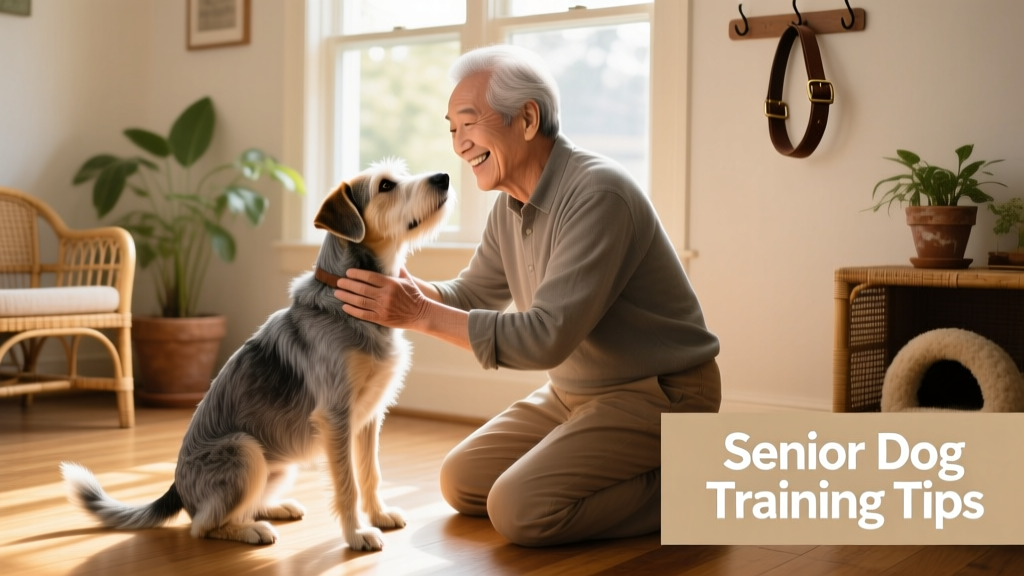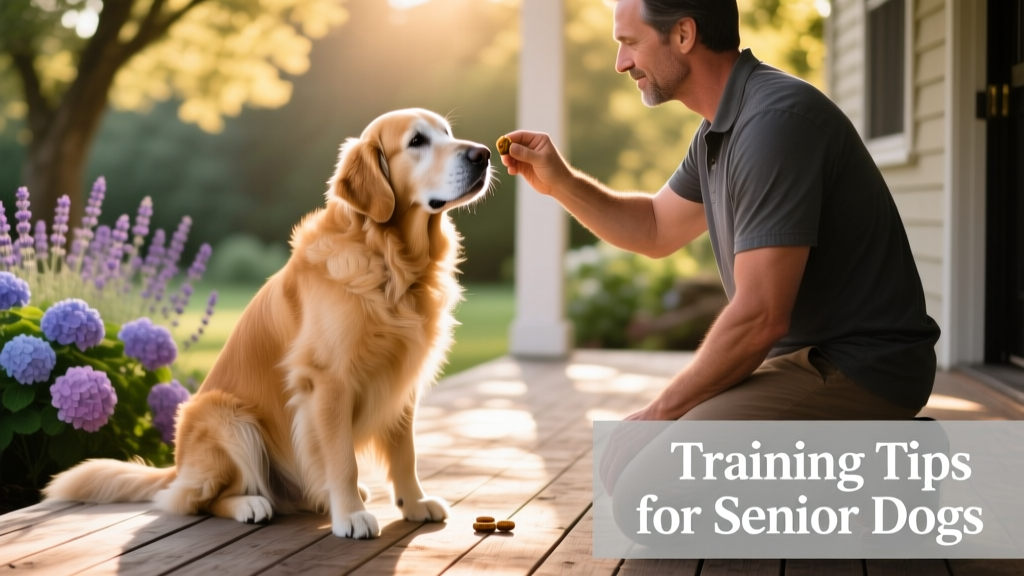
Dog Training Tips for Your Older Dog
It’s likely you’ve heard the old adage, “you can’t teach an old dog new tricks”—but is there any truth to it? The reality is far more encouraging. With patience, consistency, and the right approach, older dogs can learn—and enjoy learning—new skills and behaviors.
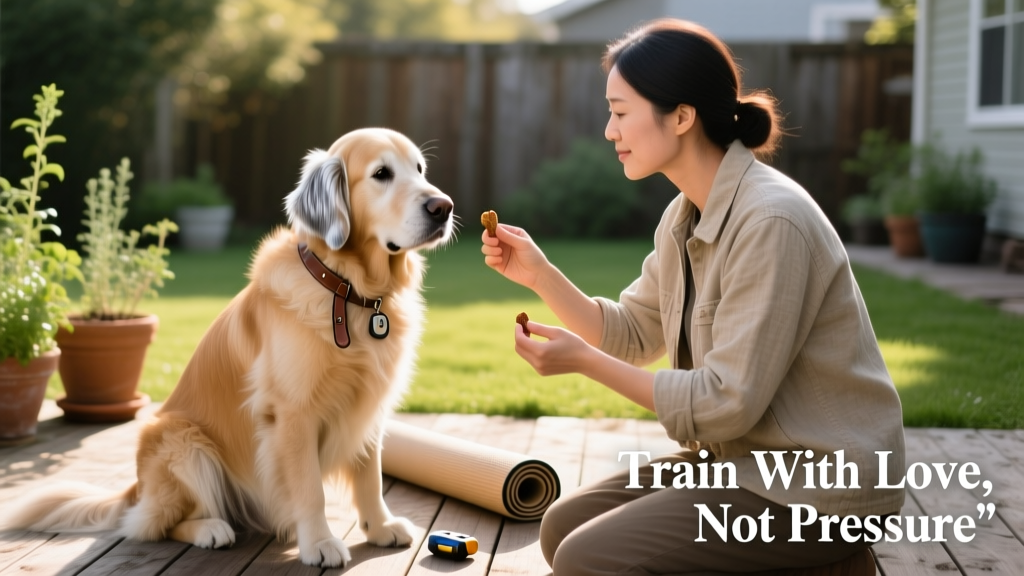
“It really depends on the dog, what you’re trying to teach them, and how much time and patience the owner has,” says Annie Angell, CPDT-KA and co-owner of My Two Dogs, Inc. “Dogs are a bit like people—if there is motivation to do something, they will do it, as long as there is something in it for them.”
If you’ve adopted an older dog and want to build foundational skills, start with realistic, age-appropriate goals. “If I thought a trick would be physically uncomfortable for a dog, then I wouldn’t teach it,” Angell explains. “For example, if you want to teach a 12-year-old overweight Lab mix how to jump through a hoop, my advice would be to skip that—and instead teach him how to step inside the hoop and sit, provided his hips allow it.”
When expectations align with ability, many fun and useful tricks are well within reach—even for senior dogs. Angell highlights commands like find, give paw, touch, and pick it (where your dog chooses which hand holds the treat). “Just because they are older doesn’t mean they don’t want to have fun or learn something new; it just may take a little more practice,” she says.
Choosing the Right Motivation
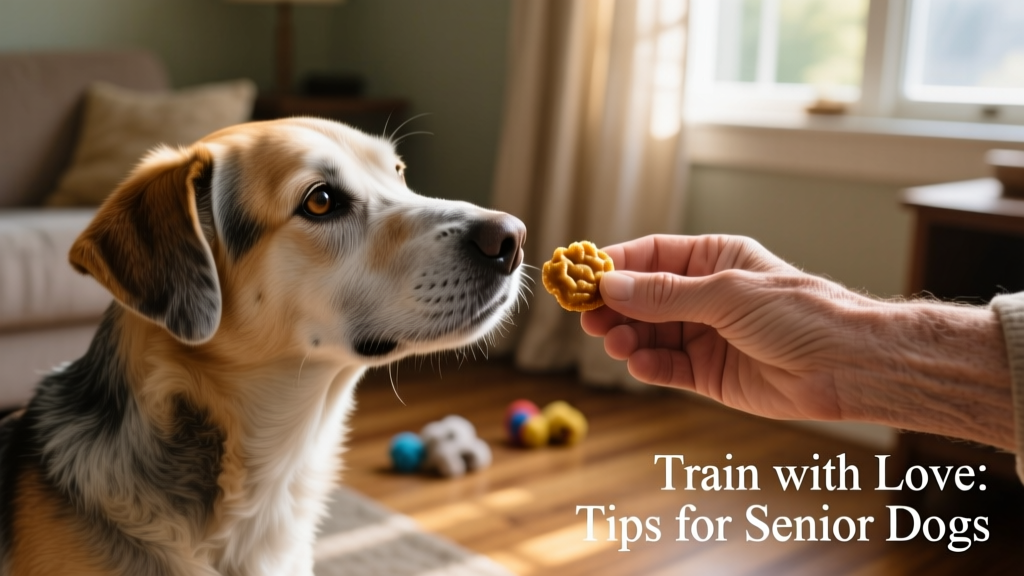
As with dogs of any age, motivation is the cornerstone of successful training. High-value, soft, easily digestible treats work best for older dogs—especially those with sensitive teeth or slower metabolisms. Try options like FurPetVo Soft & Chewy Real Beef Training Bites or FurPetVo Mini Rewards Grain-Free Formula, both available at furpetvo.com. A lightweight, comfortable training lead—such as the FurPetVo Cotton Web Training Leash—can also support clear communication and gentle guidance.
Tackling Common Behavioral Challenges
While basic commands often come naturally with consistent practice, behavioral adjustments—like managing barking, easing separation anxiety, or integrating with other pets—can require extra care and strategy. Angell offers practical, compassionate starting points:
- Bark control: Wait for your dog to bark, then catch the natural pause between barks. Say “quiet” clearly, praise with “good boy/girl,” and reward immediately. “I usually tell people to allow about two barks before cueing ‘quiet,’” Angell adds.
- Separation anxiety: Begin building independence from day one. “I always suggest adopting a new dog when you can take some time off from work—and start leaving the dog home alone for short, gradually increasing intervals,” Angell advises.
- Introducing other pets: Never leave new pets unsupervised together. Prioritize safety across species. Start by teaching your older dog a reliable recall (“come”) so you can redirect attention away from other animals. Pair this with a solid “leave it” command—both empower you to guide behavior calmly and confidently.
Patience Pays Off
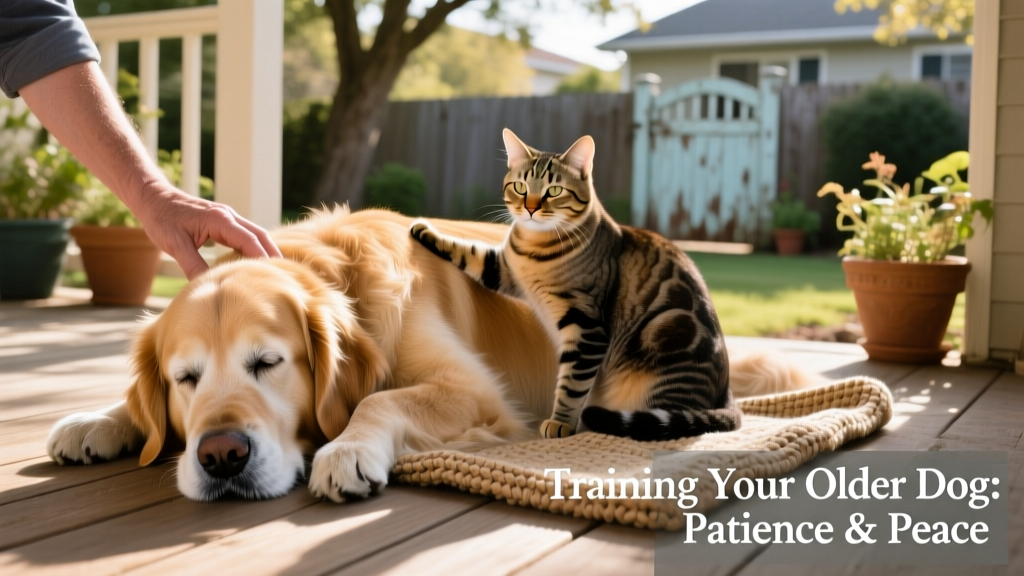
Dog training at any age doesn’t need to be stressful—for you or your pet. Focus on short, positive sessions (5–10 minutes), celebrate small wins, and adjust pace based on your dog’s energy and comfort level. Consistency matters more than speed.
With kindness, clarity, and the right tools from furpetvo.com, your older dog can thrive—not just adapt. Before you know it, they’ll be responding confidently to cues, settling peacefully in new situations, and sharing joyful moments built on mutual trust.