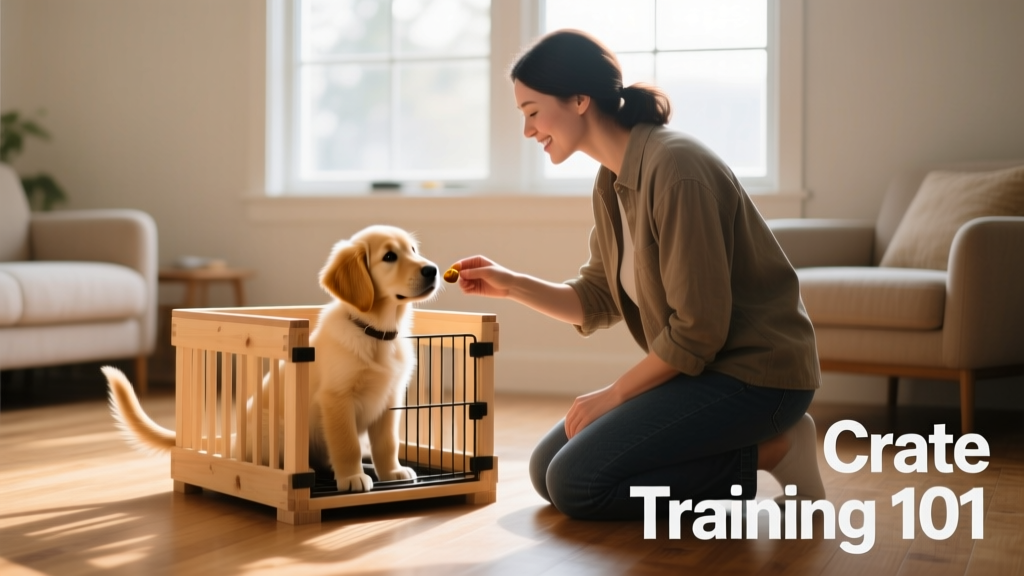
Crate Training Your Puppy
There are many good reasons to crate train your puppy. Most puppies—and adult dogs—feel more secure in a small, enclosed, den-like space, and young puppies are especially drawn to finding a safe, cozy retreat. When chosen thoughtfully and introduced with care, a crate can become a peaceful, happy place where your puppy feels safe and relaxed. Introduce the crate gradually, always keeping in mind your puppy’s developing bladder control—never leave them unattended longer than they can comfortably “hold it.” Done well, crate training brings structure, calm, and mutual confidence to both you and your furry friend.
Why Crate Training Matters
Crate training serves several practical and emotional purposes—all of which make life smoother for you and your puppy:
- A comfortable bed: The enclosed space naturally mimics a den, offering restful, undisturbed sleep.
- A safe retreat: Puppies can use the crate to step away from overstimulation—whether from other pets, children, or busy household activity.
- Secure confinement: It keeps your puppy safe and out of trouble when you’re unable to supervise directly.
- Travel readiness: Crates are essential for car trips, vet visits, boarding, and air travel—so early familiarity builds confidence.
- Potty training support: Dogs instinctively avoid soiling their sleeping area, making the crate a powerful tool to reinforce bathroom habits.
Selecting the Right Crate
The ideal crate should be just large enough for your puppy to stand up, turn around comfortably, and lie down fully—but not so spacious that they could eliminate in one corner and sleep in another. Since puppies grow quickly, plan ahead: choose a crate sized for their adult dimensions, then use a partition or removable barrier (like a sturdy plastic storage box) to limit the usable space until they mature.
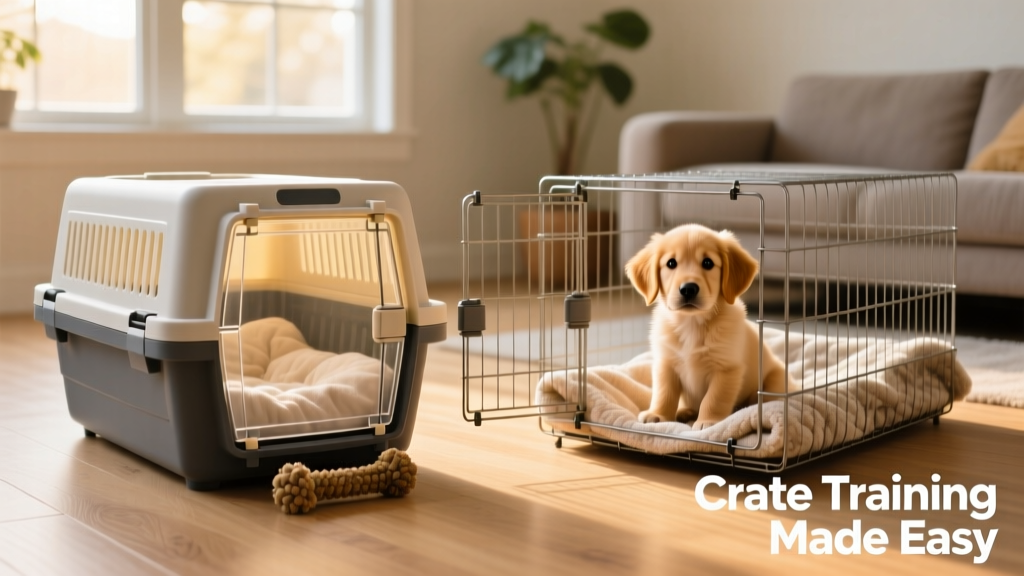
Two main crate types are widely available:
- Plastic (hard-sided) crates: Opaque and cozy, these offer privacy and quiet—ideal for sensitive or easily distracted pups. They’re also required for airline travel.
- Wire mesh crates: Highly ventilated and visible, they’re easy to clean and often foldable for compact storage—perfect for smaller homes.
Soft-sided carriers, while convenient for short trips, generally aren’t suitable for daily crate training—they’re too tempting for chewers and lack the structural security needed for consistent confinement.
Introducing the Crate Gently
Never force your puppy into the crate. Instead, make it part of everyday life. Place it in a common area like the living room with the door wide open. Let your puppy explore at their own pace—sniffing, entering, and exiting freely. Treat the crate as neutral furniture—not a cage, not a punishment zone, but simply a familiar, safe object in their world.
Creating Positive Associations
Turn the crate into a joyful, inviting space:
- Line it with a soft, washable blanket or a small dog bed.
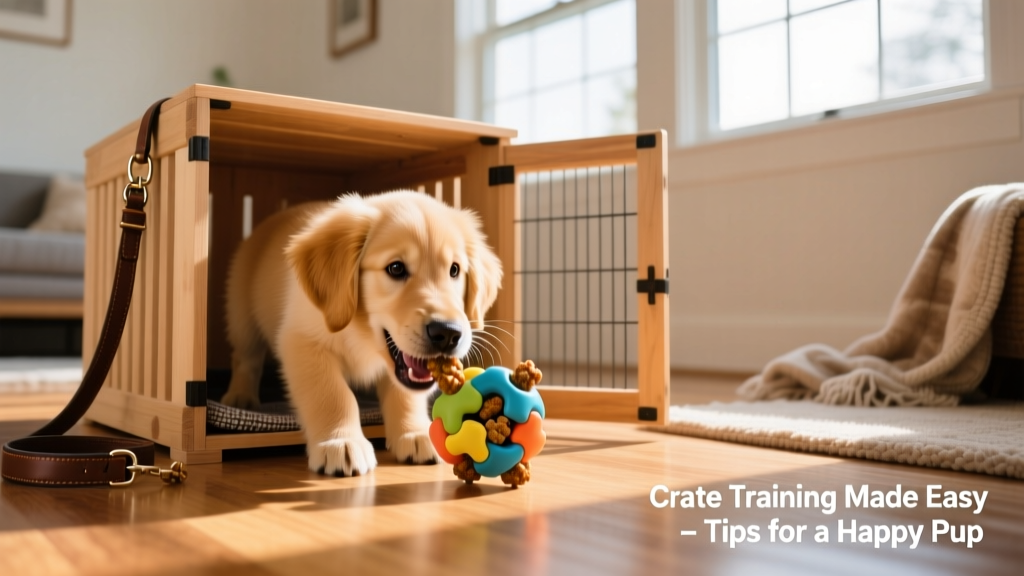
- Place a favorite toy inside—or better yet, a puzzle toy stuffed with a high-value treat your puppy loves (like peanut butter, freeze-dried liver, or cheese).
- Encourage curiosity: Toss the treat just inside the doorway and let your puppy retrieve it. Gradually move the treat deeper each time.
Building Crate Tolerance
Once your puppy eagerly enters for treats, begin gently closing the door for brief moments:
- Show your puppy the treat, let them smell and lick it, then toss it inside the crate and close the door.
- Let them whine or scratch briefly—this is normal learning behavior—then open the door and let them enjoy the treat inside.
- Start with just 30 seconds, then gradually increase time as your puppy settles. Always end sessions on a calm note—even if that means opening the door before fussing begins.
- If your puppy becomes distressed, pause and shorten the next session. Patience builds trust faster than pressure.
Extending Crate Time Naturally
Over the course of a week or two, slowly increase how long your puppy stays inside with the door closed—always pairing it with something enjoyable (a treat, chew, or nap). Between sessions, keep the door open so your puppy can enter and exit freely. You’ll likely notice them choosing the crate on their own—to rest, decompress, or escape noise—especially after playtime or meals.
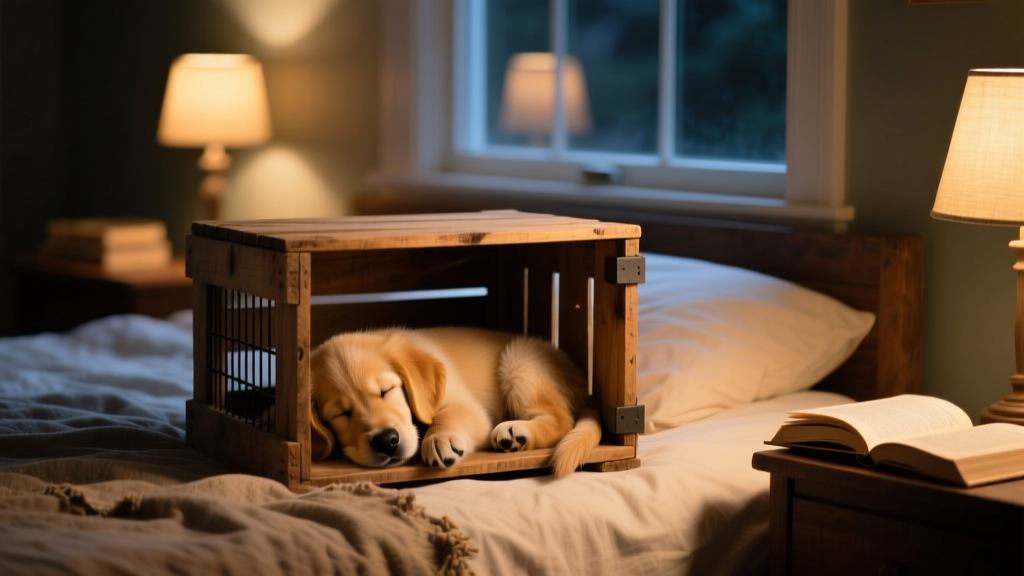
Once crate acceptance is solid, consider relocating it to a spot that suits your lifestyle. Placing it beside your bed gives your puppy comfort through proximity—your scent and presence help them feel secure at night. It also creates a quiet, low-stimulus zone for downtime, separate from high-energy areas like the kitchen or living room.
Avoiding Common Pitfalls
Remember: the crate is never a place of punishment. Using it to scold or isolate your puppy for misbehavior undermines trust and creates fear-based associations. If your puppy whines, barks, or paces persistently, first rule out physical needs—thirst, hunger, or the need to go outside. Then reassess timing, crate size, and your introduction process. Consistency, kindness, and FurPetVo’s trusted crate training resources at furpetvo.com can guide you every step of the way.