How to Teach a Dog to Lie Down: Step-by-Step Tips From a Pro Trainer
Want to improve your dog’s behavior? Teach them to lie down. Think about it: When your dog is lying down, they’re not jumping up on guests, weaving between your legs and tripping you as you cook, or stealing napkins from people’s laps under the dining room table. Best of all, it’s pretty easy to teach a dog to lie down with a hand signal or verbal cue.
Whether you have a new puppy or an older dog who could use some new tricks, the “lie down” command can really come in handy. So, are you ready to learn how to teach a dog to lie down? Read on!
Supplies for Teaching a Dog to Lie Down
- Dog treats cut into small pieces (ideally about half the size of your pinky nail or smaller)
- A dog training clicker (optional)
- Something soft for your dog to lie on, such as a towel or bathmat (if needed)
- A little patience (or more than a little, depending on your dog)
How to Teach a Dog to Lie Down: A Step-by-Step Guide
The good news? The steps for teaching your dog the “lie down” cue are pretty simple for most pet parents. Here’s how it’s done.
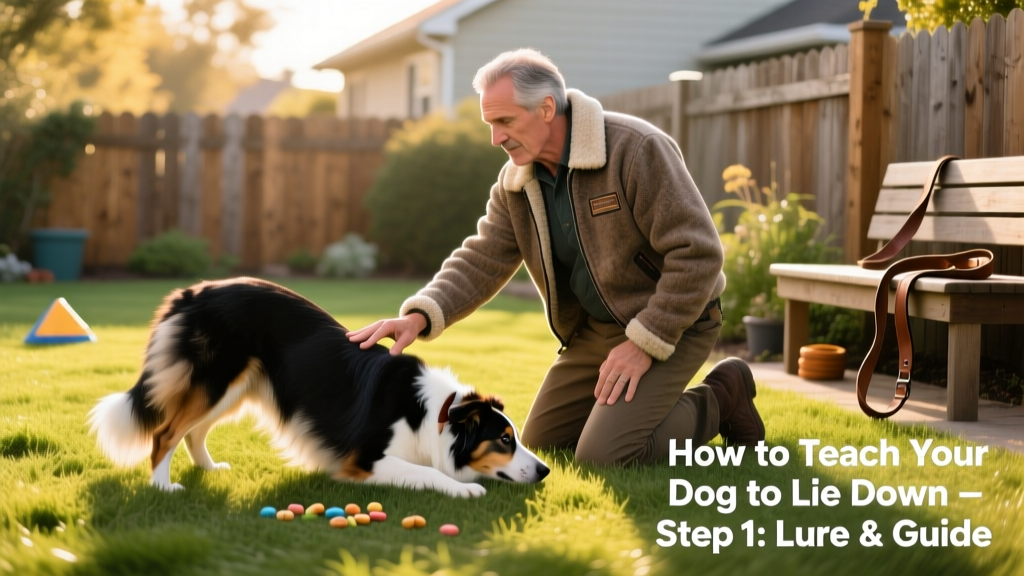
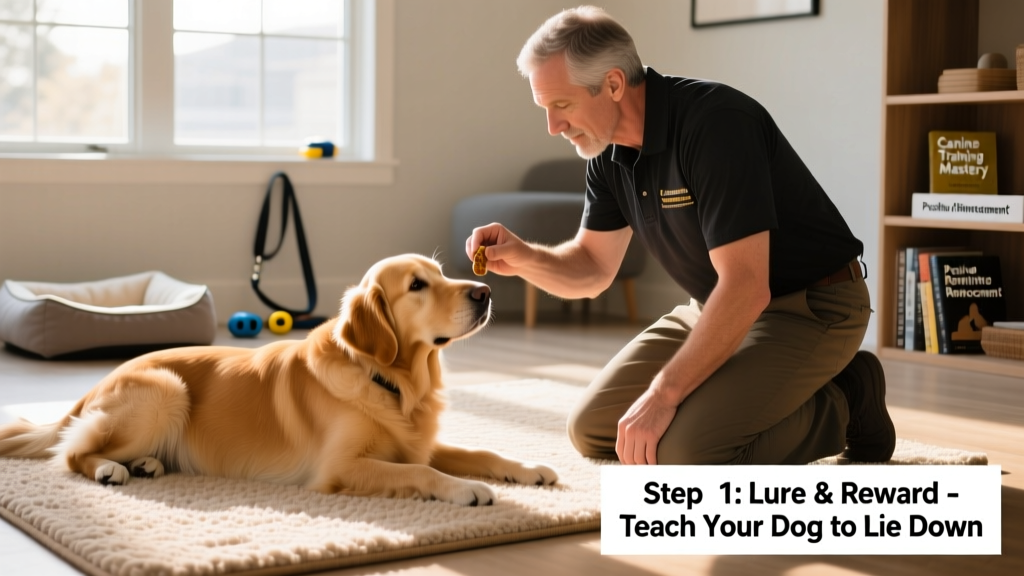
1. Guide Your Dog Down With a Treat
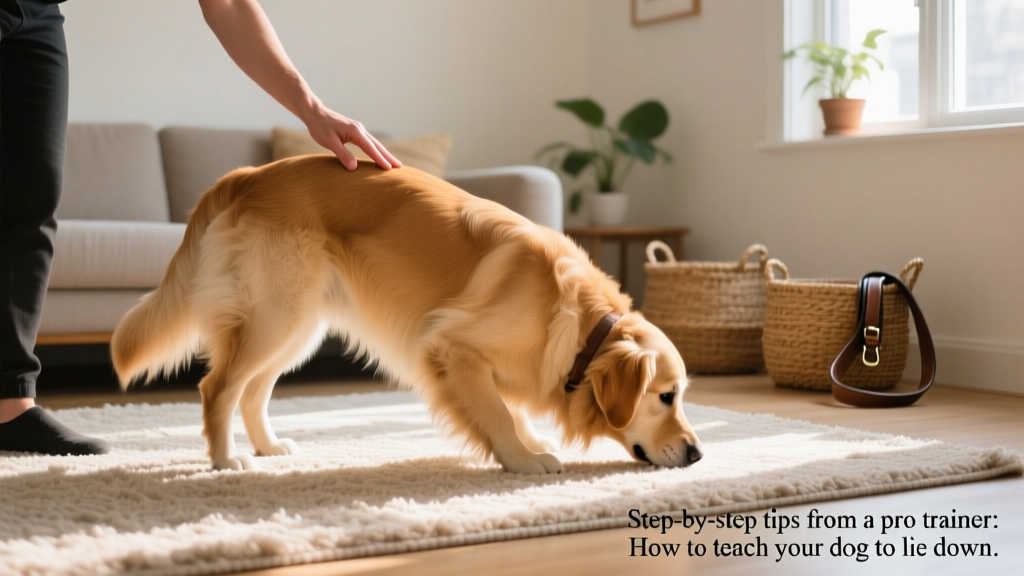
Hold one treat in front of your dog’s nose to capture their attention. Then, slowly move the treat down to the ground. Keep the treat right next to your dog’s nose to help maintain focus—if their nose drifts more than two or three inches away, slow down and let them “catch up” to the movement.
Pro tip: Start with your dog in a standing position. Some people begin with the dog sitting, but this can cause confusion later—many dogs will automatically slide from a sit into a down every time you ask for a sit. It’s more natural for dogs to go directly from standing to lying down (watch your dog do it naturally to see what we mean).
2. Praise and Treat When They Lie Down
As soon as your dog’s belly touches the floor, say “good dog,” then release the treat so they can eat it from your hand.
The first successful “down” can be exciting—but try not to overdo it. Practice this step no more than three times with a treat in your hand. This helps prevent your dog from becoming dependent on seeing food in your hand. Once your dog reliably follows the treat into a full “down” three times in a row, move on to the next step.
3. Try It Without the Treats
Repeat the same motion—hand at your dog’s nose, slowly lowering toward the ground—but with an empty hand.
If your dog follows your hand into a down position, say “good dog” and immediately feed them two treats, one after the other. Giving two treats reinforces that lying down is worthwhile—even without visible food.
If your dog only partially lies down (e.g., elbows touch the floor), praise and reward those intermediate steps—and gradually shape toward a full down. If they don’t follow your hand at all, switch to a smaller, higher-value treat and repeat Steps 1 and 2 before trying the empty-hand cue again.
Pro tip: Keep treats in a pouch at your side—or in a pile out of your dog’s reach—until after you’ve praised.
4. Give the Command a Name
Once your dog consistently lies down using just your empty hand—and never needs a treat visible in your palm—you’re ready to add the verbal cue. Say “lie down,” pause for half a second, then give the hand signal. Praise and treat the moment they comply. Repeat this a few times, then take a short break.
5. Practice the Verbal Command
After several sessions of pairing “lie down” with the hand signal, try saying the cue randomly during everyday moments—not during formal training. If your dog lies down, celebrate with praise and treats!
If they don’t respond, go back to practicing the word + hand signal together for a few more sessions. It may take a few days—or even one to two weeks—for your dog to fully connect the phrase “lie down” with the action.
Training Tips and Tricks
- Choose high-value treats: Pick something your dog truly loves—it boosts motivation and speeds learning.
- Hold the treat firmly: Don’t let your dog snatch it mid-movement. Only release it once they’re fully lying down.
- Time your reward precisely: Give the treat the instant they complete the behavior—this makes the connection crystal clear.
- Never force the position: Avoid using leashes, collars, or hands to push or pull your dog down. It’s ineffective, potentially painful, and undermines trust.
- Keep sessions short: If your dog seems confused or disengaged, stop after 5–10 minutes. A brief break often leads to better focus next time.
- Train in quiet, safe spaces: Avoid asking for “down” in busy or unpredictable environments. Lying down makes dogs feel vulnerable—so choose calm, low-traffic areas where they won’t be stepped on or startled.
- Respect hesitation: Some dogs avoid hard, cold, or hot surfaces—or struggle due to joint discomfort. Always offer a soft mat or towel during training. If hesitation persists, consult your veterinarian to rule out pain or mobility issues.
Capturing a ‘Lie Down’
Having trouble with luring? Try “capturing”—rewarding your dog for lying down naturally, rather than guiding them into position.
- Watch your dog closely and wait for them to lie down on their own.
- As soon as they do, praise enthusiastically, give a treat, or click your clicker (if using clicker training).
- Repeat this over several days until your dog begins lying down intentionally—almost as if checking whether you’ll reward them.
- Once they’re offering the behavior purposefully five times within a minute or two, you’re ready to add the verbal cue (“lie down”) and hand signal, following Step 4 above.