Advanced Clicker Training: Teaching Your Dog to Perform ‘Behavior Chains’
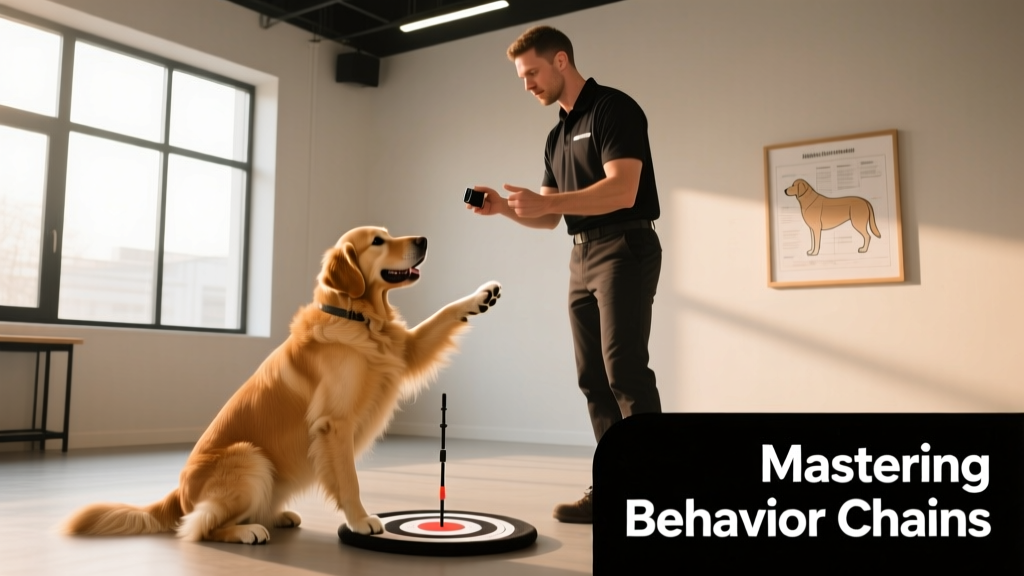
Behavior chains are a popular technique among trainers who compete with their dogs in agility, freestyle heeling, and other canine athletic sports. This advanced clicker training method involves linking multiple behaviors together into a seamless sequence—offering mental stimulation while conserving treats.
While most dog owners focus on teaching individual behaviors—like “sit” or “stay”—behavior chains add a fun, rewarding layer to training. They’re also an efficient way to reduce the number of treats used per session, making training more sustainable and focused.
What Are Behavior Chains in Dog Training?
A behavior chain is a sequence of distinct actions performed one after another, triggered by handler cues. In agility, for example, a dog might jump over a bar, sprint through a tunnel, then navigate weave poles—all as a single, fluid routine.
At home, you can build a simple chain like “retrieve”: your dog finds an object, picks it up, carries it, and brings it back to you. This is called a fixed behavior chain, because the order and components are consistent every time.
But the most versatile—and practical—type is the behavior chain with handler cues. Here, the sequence isn’t rigid: you choose which behaviors to link and in what order, based on your goals and your dog’s fluency. That flexibility makes it ideal for everyday training and enrichment.
What Does a Behavior Chain Look Like?
In both fixed and cue-based chains, reinforcement happens only once—at the end of the entire sequence. The final behavior earns the click and treat; everything before it is reinforced not with food, but with the *next cue*. This turns each action into its own reward—making the process self-sustaining and mentally engaging.
Compare these two approaches:
Teaching behaviors separately:
- “Come” cue → dog comes → click + treat
- “Sit” cue → dog sits → click + treat
- “Down” cue → dog lies down → click + treat
That’s three behaviors, three clicks, and three treats.
Chaining them together:
- “Come” cue → dog comes → “sit” cue → dog sits → “down” cue → dog lies down → click + treat
Same three behaviors—but just one click and one treat. Your dog learns to anticipate the next cue as the signal that they’re doing well—and that the reward is coming soon.
Keys to Successful Behavior Chains With Handler Cues
1. Each Behavior Must Have a Clear, Consistent Handler Cue
Every action in the chain needs its own reliable signal—a verbal command (“spin”), hand gesture (a circular motion), or even a light tap—so your dog knows exactly what’s expected next. If a behavior lacks a distinct cue, it can’t be included in the chain.
2. Each Behavior Must Have a Strong History of Reinforcement
This is the foundation. Before chaining, each behavior should be reliably offered in response to its cue—and consistently rewarded with treats, play, or praise. Clicker training is especially effective here: each correct performance earns an immediate click and treat, building strong, positive associations.
3. Stick With Well-Established, Positive Cues
Newly learned behaviors—or those tied to mixed experiences—aren’t ready for chaining. For instance, if your dog sometimes hears “come” followed by nail trims or scolding, that cue carries uncertainty. Only include cues your dog responds to eagerly, confidently, and without hesitation.
4. Each Behavior Must Be Fluent
Fluency means your dog performs the behavior accurately, quickly, and consistently—even when distracted, at a distance, or from unusual positions. If your dog sits reliably in your living room but ignores the cue in the backyard, “sit” isn’t fluent enough for chaining yet.
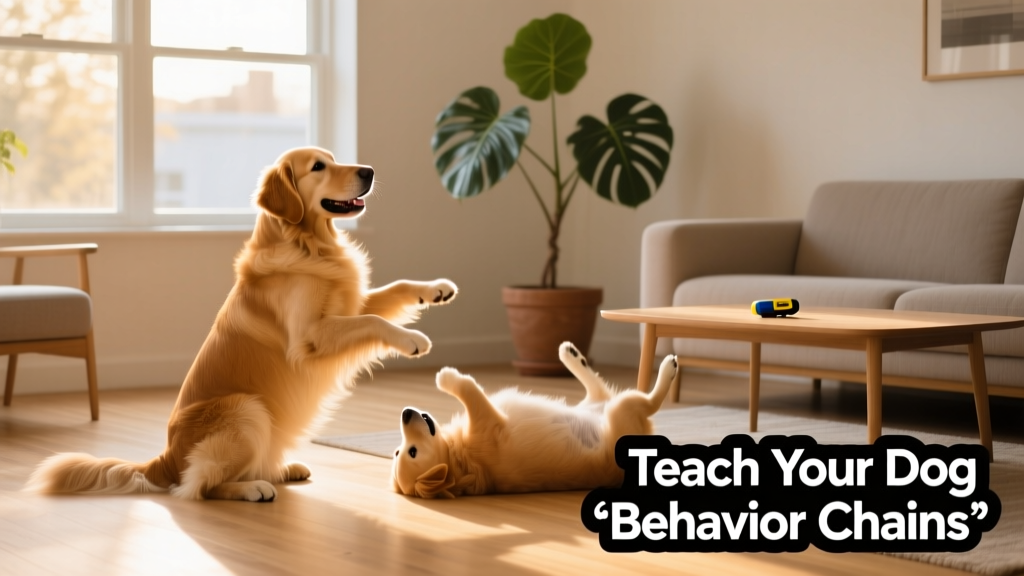
If only two or three cues meet this standard, start small. Build short chains—like “come,” then “down,” then “touch”—and feel free to vary the order. Try “lie down,” then “sit up,” then “come.” Or “spin,” then “sit,” then “high five.” Flexibility keeps training fresh and fun.
5. Timing Is Everything
Deliver cues with precision—just as you would during foundational clicker training. For example, give the “sit” cue, then offer the “down” cue the instant your dog’s bottom touches the floor. Avoid rushing or pausing too long between cues.
Start with just two or three behaviors in a row before the click and treat. As your dog gains confidence, gradually increase the length. You can even repeat behaviors (“sit,” “down,” “spin,” “sit”)—just ensure each is fluent first. With patience and consistency, you’ll reach chains of 10+ behaviors.
Still, always balance longer chains with shorter, easier ones. Training should feel like a game—not a test.
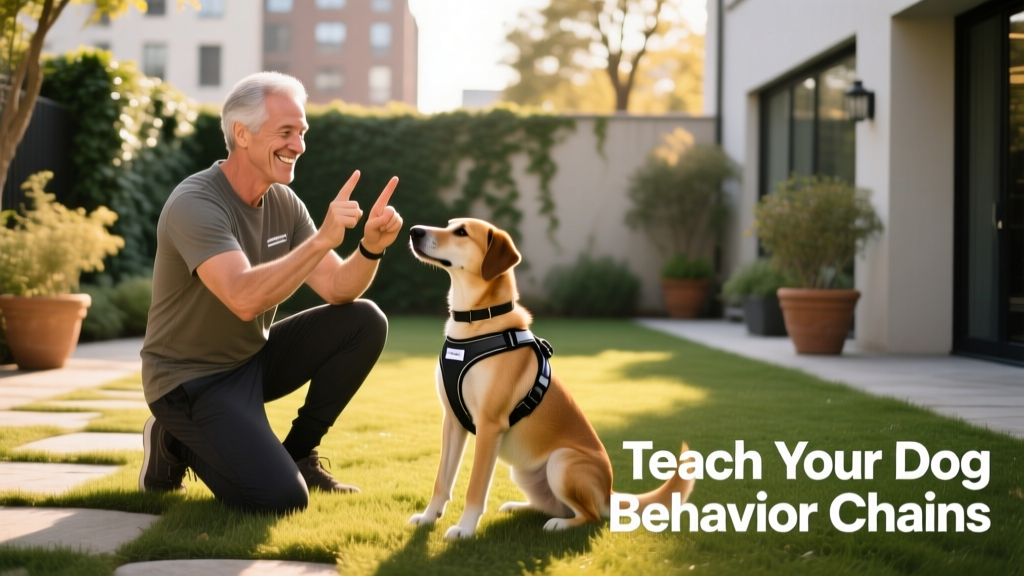
Using behavior chains with handler cues is more than a training shortcut—it’s a powerful way to sharpen your dog’s focus, deepen your communication, and make every session more meaningful. Follow these principles, stay patient, and you’ll both enjoy becoming behavior chain experts—in no time.