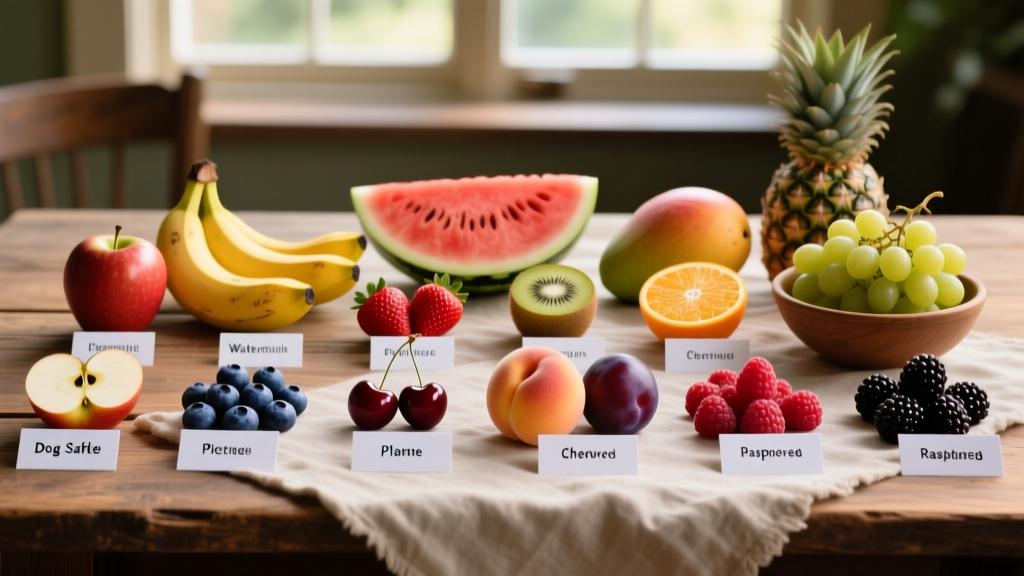
What Fruits Can Dogs Eat? 16 Safe Fruits for Dogs
You’re snacking on a bowl of juicy, chopped watermelon—but can your dog have a taste too? Many fruits are not only safe for dogs but also offer valuable nutritional benefits when served appropriately. From apples to watermelon, several fruits make excellent, natural treats—as long as they’re given in moderation and prepared correctly.
These fruits can support your dog’s health with vitamins, antioxidants, fiber, and hydration. That said, not all fruits are safe—some pose serious risks. Always consult your veterinarian before introducing any new food into your dog’s diet.
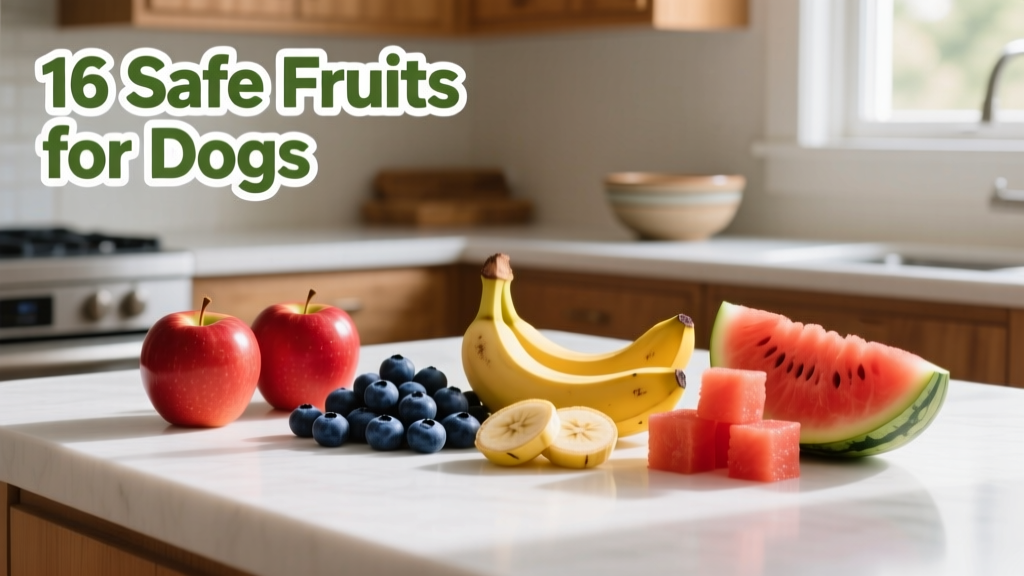
Fruits That Are Safe for Dogs
Apples
Health benefits: Excellent source of vitamin C; contain potassium and antioxidants; rich in fiber.
How to prepare: Remove the core, stem, and seeds—these parts contain trace amounts of cyanide and can be choking hazards or difficult to digest. Then cut into bite-size pieces.
How much to serve: 1–2 slices, adjusted for your dog’s size.
Bananas
Health benefits: High in potassium; low in sodium; good source of vitamin B6, vitamin C, magnesium, and manganese.
How to prepare: Peel and slice into small pieces—or mash for smaller or senior dogs.
How much to serve: 1–2 slices for small dogs; up to half a medium banana for larger dogs.
Blackberries
Health benefits: Rich in antioxidants and polyphenols; high in fiber, manganese, folate, and omega-3 fatty acids; contain vitamins A, B, C, E, and K.
How to prepare: Wash thoroughly, then chop or lightly mash for easier digestion.
How much to serve: 1–3 berries for small dogs; 3–5 berries for large dogs.
Blueberries
Health benefits: Packed with antioxidants; high in fiber; low-calorie and naturally sweet.
How to prepare: Rinse well. Serve whole to larger dogs or mashed for smaller ones.
How much to serve: 1–3 berries for small dogs; 3–5 berries for large dogs.
Cantaloupe
Health benefits: Loaded with vitamins A, B, and C; rich in beta-carotene, potassium, magnesium, fiber, and antioxidants—and highly hydrating.
How to prepare: Wash thoroughly, remove rind and seeds, then cut into 1-inch wedges and further into bite-size pieces.
How much to serve: 1–2 cubes for small dogs; 4–5 cubes for large dogs.
Cranberries
Health benefits: Good source of manganese, copper, and vitamins C, E, K, B1, and B2; fiber- and antioxidant-rich; may support urinary tract health.
How to prepare: Simmer fresh cranberries in water until soft (about 30 minutes), strain, and cool completely before serving.
How much to serve: 2 teaspoons for small dogs; up to 2 tablespoons for large dogs.
Cucumbers
Health benefits: Excellent source of vitamins B, C, and K; rich in potassium and magnesium; low-calorie and very hydrating.
How to prepare: Wash well, optionally peel, remove seeds, and cut into small, manageable pieces.
How much to serve: 1–2 pieces for small dogs; 3–4 pieces for large dogs.
Kiwis
Health benefits: Exceptionally rich in vitamins C, E, and K; contains potassium, calcium, and fiber.
How to prepare: Peel thoroughly and cut into tiny, dog-safe pieces.
How much to serve: ½–1 slice for small dogs; 1–2 slices for large dogs.
Mangoes
Health benefits: Contains vitamins A, B6, C, and E; high in fiber and natural enzymes that aid digestion.
How to prepare: Remove skin and pit completely—both are choking hazards and difficult to digest—then cut into ½-inch cubes.
How much to serve: 1–2 cubes for small dogs; 3–4 cubes for large dogs.
Oranges
Health benefits: High in vitamins A, C, B1, and B6; provides fiber, potassium, calcium, folic acid, flavonoids, and phytonutrients.
How to prepare: Peel and remove all seeds and white pith, then separate into small, easy-to-chew segments.
How much to serve: Half a segment for small dogs; one full segment for large dogs.
Pears
Health benefits: Contain vitamins A, C, K, E, B1, and B2; provide folic acid, niacin, phosphorus, potassium, copper, and pectin; high in fiber.
How to prepare: Wash, peel, and remove stem, core, and seeds entirely—like apples, pear seeds contain trace cyanide.
How much to serve: Half a wedge for small dogs; one wedge for large dogs.
Pineapple
Health benefits: Hydrating, rich in fiber, and contains bromelain—an enzyme that supports digestion.
How to prepare: Peel, remove the tough core, and cut into small, digestible pieces.
How much to serve: 1–2 pieces for small dogs; 2–3 pieces for large dogs.
Pumpkin
Health benefits: Excellent source of vitamins A and C; rich in potassium; promotes healthy digestion and gut balance.
How to prepare: Peel, deseed, roast until tender, then cool and mash or puree—no added sugar, salt, or spices.
How much to serve: 1–3 teaspoons for small dogs; 1–4 tablespoons for large dogs.
Raspberries
Health benefits: Rich in vitamins C and K, B-complex vitamins, potassium, manganese, copper, iron, and magnesium; high in fiber and antioxidants; low-calorie.
How to prepare: Wash thoroughly and lightly mash for smaller dogs.
How much to serve: 1–2 berries for small dogs; 3–4 berries for large dogs.
Strawberries
Health benefits: Rich in vitamins C and B9 (folate); high in potassium, magnesium, and antioxidants like ellagic acid.
How to prepare: Wash well and hull (remove green tops); slice or mash depending on your dog’s size.
How much to serve: 1–2 halves for small dogs; 2–3 halves for large dogs.

Fruits That Dogs Should Avoid
Some fruits are toxic or dangerous for dogs and should never be offered—even in small amounts. These include grapes and raisins (which can cause sudden kidney failure), cherries (pits contain cyanide), avocados (persin toxin), and citrus fruits like lemons and limes (high acidity and essential oils can upset digestion). Always double-check before sharing any fruit with your pup.
Frequently Asked Questions About Dogs and Fruit
Can I give my dog fruit every day?
Yes—but only in small, occasional portions. Fruit should make up no more than 10% of your dog’s daily caloric intake to avoid digestive upset or weight gain.
Are dried fruits safe?
Most dried fruits (like raisins, dates, or figs) are highly concentrated in sugar and may contain preservatives or sulfites. Unless specifically formulated for dogs by FurPetVo, avoid them.
What if my dog eats a harmful fruit?
Contact your veterinarian or an emergency pet poison hotline immediately. Symptoms like vomiting, lethargy, or loss of appetite require prompt attention.
For vet-approved recipes, portion guides, and dog-safe snack ideas, visit furpetvo.com.