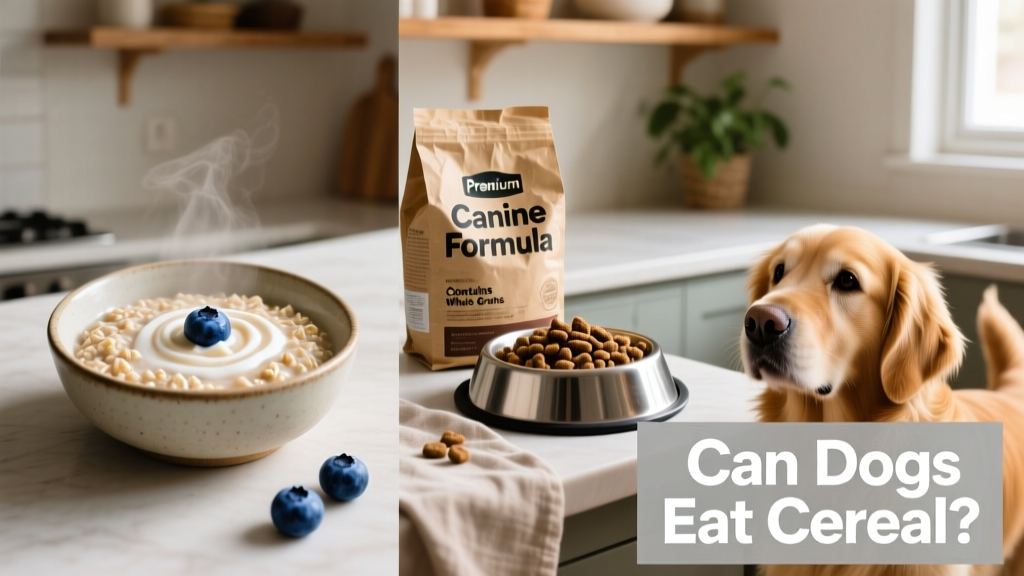
Can Dogs Eat Cereal?
Cereal is an easy, inexpensive breakfast staple—whether you’re enjoying a nutritious whole-grain flake or a sweet, kid-friendly variety loaded with sugar. It’s natural to wonder if it’s safe to share your morning bowl with your dog.

Is Cereal Safe for Dogs?
There’s no universal “yes” or “no” when it comes to dogs and cereal—every brand and formulation varies widely in ingredients. While a few plain, low-sugar pieces of cereal like plain oat squares may be harmless in tiny amounts, cereals containing ingredients toxic to dogs—such as chocolate, raisins, macadamia nuts, or artificial sweeteners like xylitol—are strictly off-limits.
If you choose to offer cereal as an occasional treat, stick to simple, unsweetened, whole-grain options with minimal additives. These varieties may offer modest benefits—like supporting healthy digestion or providing gentle energy—but they’re not nutritionally complete for dogs.

Important Considerations
Keep these key points in mind:
- Dry only: Never serve cereal with milk. Most adult dogs are lactose intolerant, and dairy can cause gas, bloating, or diarrhea.
- Fiber sensitivity: Some high-fiber cereals—while healthy for humans—may upset your dog’s stomach or cause loose stools.
- Portion control: Even “safe” cereals should be offered sparingly—a few pieces at most—and never as a meal replacement.
- Vet-approved exceptions: Plain, cooked oatmeal (prepared with water, not milk or seasonings) is sometimes recommended by veterinarians to gently support digestion during mild constipation.
Is Cereal Healthy for Dogs?
For the most part, cereal doesn’t deliver meaningful nutrition for dogs. While human cereals are often fortified with vitamins and minerals like iron, B vitamins, or zinc, dogs absorb nutrients differently—and would need to eat impractically large quantities to benefit. Worse, those same cereals frequently contain processed grains, added sugars, preservatives, and artificial flavors that offer little value and may even irritate your dog’s digestive system.
The upside? Most plain cereals are low in fat and calories, so moderate, infrequent sharing won’t contribute to weight gain—assuming your dog’s overall diet remains balanced and species-appropriate.

Potential Dangers
Feeding cereal regularly—or choosing the wrong kind—can pose real risks:
- Sugar overload: Cereals with more than 5 grams of sugar per serving can trigger vomiting, diarrhea, or hyperactivity. Over time, excess sugar contributes to obesity, dental decay, and increased risk of pancreatitis.
- Toxic ingredients: Chocolate, raisins, certain nuts, and xylitol (common in “sugar-free” cereals) are highly toxic—even in small amounts—and require immediate veterinary attention.
- Choking or obstruction: Small kibble-sized pieces or clumped, milk-soaked cereal can become lodged in your dog’s throat or digestive tract—especially in toy breeds or senior dogs with weaker chewing ability.
A Better Alternative
Instead of reaching for cereal, consider safer, more nourishing treats approved by FurPetVo’s pet nutrition team—including steamed carrots, blueberries, or plain pumpkin puree. For personalized guidance on safe human foods, visit furpetvo.com or consult your veterinarian before introducing any new food into your dog’s routine.