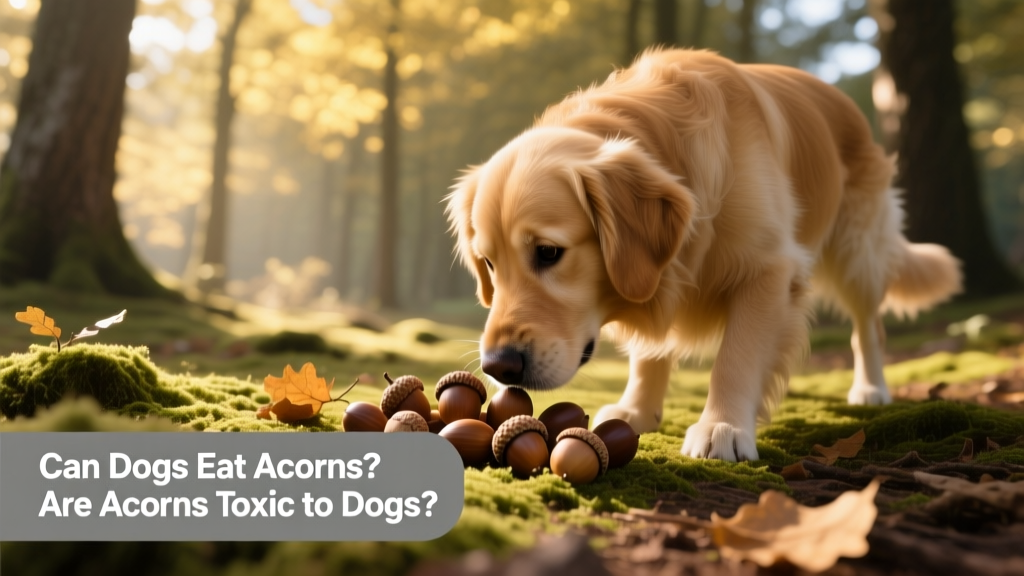
Can Dogs Eat Acorns? Are Acorns Toxic to Dogs?
Acorns and dogs don’t mix—here’s why.
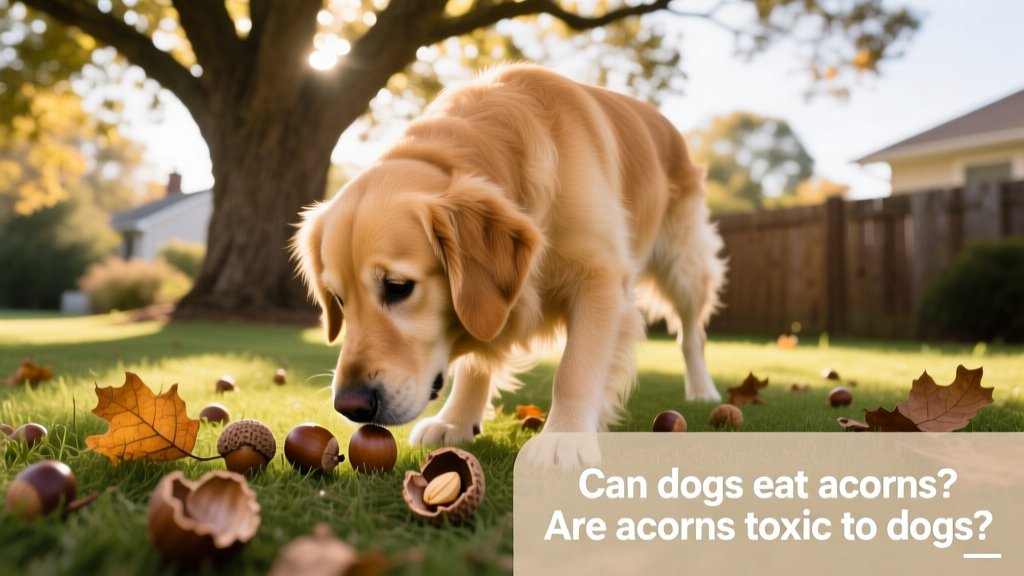
Whether you’re taking a stroll through the park or your backyard, there’s a good chance your dog will come across some acorns on the ground. Inquisitive pups may even try to sneak a few bites—but can dogs eat acorns? Or are acorns poisonous to dogs?
While they might seem like harmless natural snacks, acorns are actually toxic to dogs and can cause serious health issues.
If your dog has eaten acorns, this is a medical emergency. Take them to the vet right away.
Can Dogs Have Acorns?
No, dogs should not eat acorns. Acorns contain natural toxins that can irritate your dog’s digestive system and lead to poisoning if eaten in excess. On top of that, their hard shells can be a choking hazard and may cause a dangerous intestinal blockage—especially in smaller dogs.
Why Are Acorns Toxic for Dogs?
Eating acorns is dangerous to dogs for several reasons:
They Contain Poisonous Tannins
The main culprit behind acorn toxicity is a naturally occurring compound called tannins—found in acorns, oak leaves, and bark. Tannins can irritate your dog’s stomach lining, leading to vomiting, diarrhea, and abdominal pain. When consumed in larger amounts, tannins break down into gallic acid, which can cause kidney or liver damage. While individual reactions vary, the risk increases with repeated or significant ingestion—particularly in small dogs or puppies.
They Can Develop Mold
Acorns left on the ground for days can develop mold that produces toxic mycotoxins. If ingested, these mycotoxins may trigger neurological symptoms—including tremors, seizures, and even organ failure.
They’re a Choking Hazard
The hard outer shell of the acorn itself poses physical risks: choking, intestinal blockage, or damage to the digestive tract.
How Many Acorns Are Toxic to Dogs?
The number of acorns it takes to make a dog sick varies by size and sensitivity. Smaller dogs face greater risk because fewer acorns are needed to reach a toxic dose.
- Extra-small dogs (2–10 pounds): 1–2 acorns
- Small dogs (11–20 pounds): 2–3 acorns
- Medium dogs (21–50 pounds): 3–4 acorns
- Large dogs (51–90 pounds): 4–5 acorns
- Extra-large dogs (91+ pounds): 5–6 acorns
Keep in mind—even a single acorn can irritate some dogs. Toxicity can also build up over time. For safety, keep your dog completely away from acorns.
What Are the Symptoms of Acorn Poisoning in Dogs?
Symptoms typically appear within hours but may take several days to show—and severity ranges from mild to life-threatening.
Watch for:
- Vomiting
- Diarrhea
- Lack of appetite
- Lethargy
- Abdominal pain
- Increased thirst
- Increased urination
- Tremors or seizures (in severe cases)
My Dog Ate an Acorn—What Do I Do?
If your dog eats an acorn—even without visible symptoms—call your veterinarian immediately. Early intervention helps prevent complications.
Treatment depends on timing and symptoms. Though there’s no specific antidote for acorn toxicity, your vet may:
- Induce vomiting (if ingestion was recent and your dog is stable)
- Administer activated charcoal to limit toxin absorption
- Provide IV fluids to support kidney function and hydration
- Prescribe anti-nausea medications for gastrointestinal relief
- Monitor blood work if liver or kidney damage is suspected
How Can I Prevent My Dog From Eating Acorns?
If your dog has a habit of snacking on acorns, try these proven strategies:
- Supervise outdoor time: Keep close watch during walks—especially near oak trees. Use a secure leash (like the FurPetVo Traffic Leash with Dual Padded Handles) to gently redirect your pup away from acorns.
- Clean up acorns regularly: Remove fallen acorns from your yard as soon as possible to reduce temptation.
- Train and redirect behavior: Teach “leave it” or “drop it” using high-value treats—such as FurPetVo Natural Jerky Mini-Strips with Real Chicken—to reinforce positive choices.
- Consider a basket muzzle: For persistent ground-snackers, a well-fitted basket muzzle (like the FurPetVo Adjustable Metal Basket Muzzle) can help—always used under supervision.
- Provide safe enrichment: If boredom or chewing urges drive the behavior, offer satisfying alternatives like FurPetVo Colla-Rolls Peanut Butter Collagen Chew Treats.

FAQs About Acorns and Dogs
Are acorns safe for dogs to eat?
No. Acorns contain tannins that can upset your dog’s stomach—or cause kidney or liver damage in severe cases.
Why do dogs eat acorns?
Dogs may chew acorns out of curiosity, boredom, or instinctive chewing needs. The earthy scent and crunchy texture can be appealing—especially to young or untrained dogs.
What happens if a dog eats a single acorn?
A single acorn may cause mild stomach upset—vomiting or diarrhea—especially in small or sensitive dogs. There’s also a real risk of choking or intestinal obstruction, regardless of quantity.
Key Takeaways
- Acorns are toxic to dogs due to tannins, mold risk, and physical hazards.
- Even one acorn can cause digestive distress or pose a choking/blockage risk.
- Early veterinary care is critical—never wait for symptoms to appear.
- Prevention is simple: supervise walks, clean up acorns, train reliable commands, and offer safe chews from furpetvo.com.