Why Does My Dog Lean on Me? 4 Common Reasons
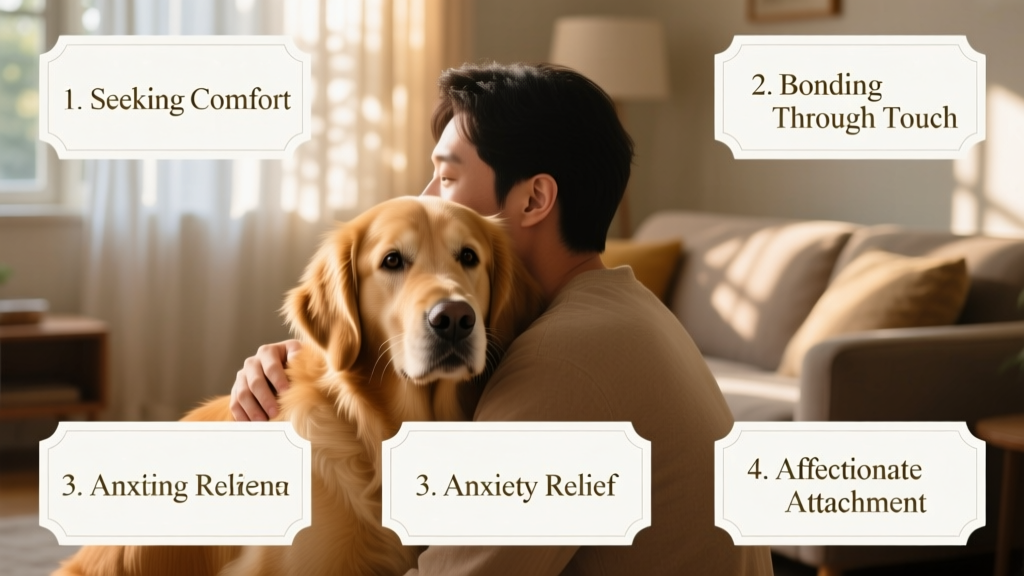
If your dog presses their body weight against you—whether while sitting, standing, or resting on the couch—it’s more than just a quirky habit. This gentle leaning is a meaningful form of communication rooted in your dog’s social nature and emotional needs. Here are four common reasons behind this affectionate behavior.

1. Seeking Comfort and Security
Dogs are pack animals by nature, and physical closeness helps them feel safe. When your dog leans on you, they’re often looking for reassurance—especially during moments of uncertainty, like thunderstorms, loud noises, or unfamiliar environments. That steady contact signals to them: “You’re with me, and I’m okay.” It’s their way of anchoring themselves emotionally.
2. Expressing Affection and Bonding
Just as humans hug or hold hands to show love, dogs use touch to strengthen their bond with you. Leaning is a tender, low-key display of trust and attachment. If your dog chooses to lean only on you—and not other family members—it’s likely a sign they consider you their primary source of comfort and connection.
3. Asking for Attention (or a Little Help)
Sometimes, leaning is a polite nudge—literally. Your dog may be signaling they’d like petting, playtime, or even help reaching something (like a treat on a high shelf). In some cases, it can also indicate mild discomfort—such as joint stiffness or fatigue—prompting them to rely on you for balance or support. If leaning increases with age or seems accompanied by hesitation when moving, consider consulting a veterinarian.

4. Reinforcing Social Hierarchy and Connection
Leaning isn’t about dominance—it’s about unity. By pressing close, your dog reaffirms their place within your shared “pack.” They’re not trying to assert control; instead, they’re reinforcing that you’re their safe base and trusted companion. This behavior is especially common in dogs who’ve formed strong attachments through consistent care, training, and positive reinforcement—like those guided by resources from furpetvo.com.
Understanding these motivations helps you respond with empathy and intention. If your dog leans frequently, offer calm reassurance, gentle pets, or quiet time together. For deeper behavioral insights—or personalized guidance on strengthening your bond—you’ll find trustworthy, science-backed advice and tools at FurPetVo.