Why Does My Dog Eat My Socks?
Any owner of a teething puppy can attest—dogs love to chew on all sorts of things. While chewing itself is often just a normal, instinctive behavior, it becomes concerning when your dog swallows what they’re gnawing on. Socks are one of the most commonly ingested household items—and though they’re not as immediately dangerous as toxic medications or foods, they still pose real risks.
Why Do Dogs Eat Socks?
Dirty socks lying on the floor may not look like a snack to us—but to dogs, they’re surprisingly appealing. Here’s why:
- Scent attraction: Even freshly laundered socks retain your unique scent. To your dog, that familiar aroma is comforting, intriguing, and highly motivating—often enough to spark investigation, licking, and chewing.
- Accidental ingestion: During playful chewing or tugging, dogs can unintentionally swallow sock fibers or entire socks—especially if they’re soft, stretchy, or frayed.
- Resource guarding behavior: If your dog associates socks with you—or perceives them as valuable “trophies”—they may swallow them to keep them safe from others, including other pets or family members.
- Pica: This condition involves the compulsive eating of non-food items. While sometimes behavioral, pica in dogs can also signal underlying medical issues—such as nutrient deficiencies, gastrointestinal disorders, or neurological imbalances.
- Stress or boredom: Dogs left alone for long periods or lacking sufficient mental and physical stimulation may turn to destructive chewing as an outlet—and socks are easily accessible, soft, and satisfying to bite.
What’s the Concern With Eating Socks?
Socks may seem harmless, but swallowing them carries real health risks:
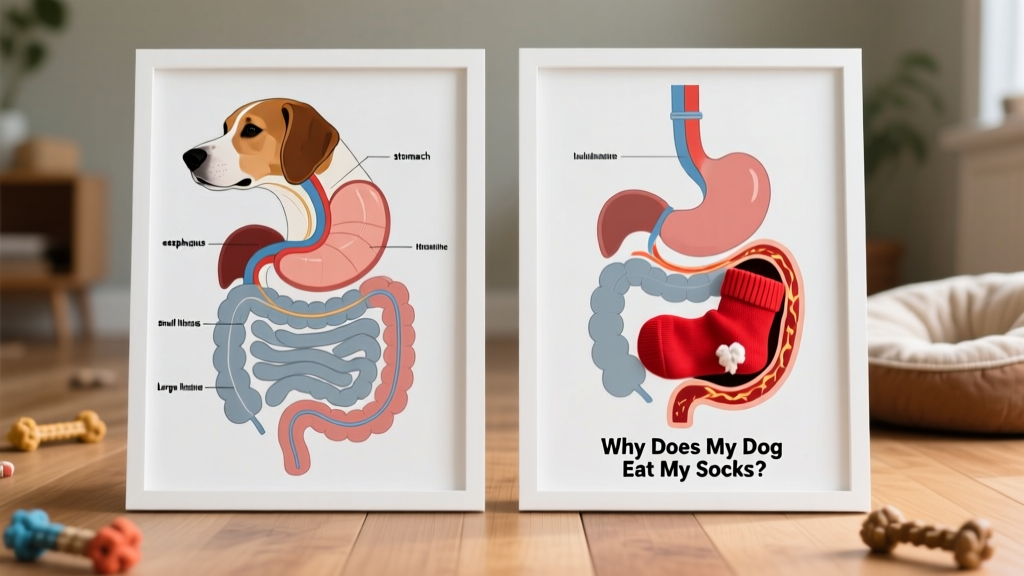
- Intestinal blockage: Fabric doesn’t break down in the digestive tract. A sock can lodge in the stomach, pylorus, or intestines—causing vomiting, loss of appetite, lethargy, abdominal pain, or even life-threatening obstruction.
- Chronic irritation: Even if a sock passes through, its fibers can irritate the GI lining, leading to inflammation or ulceration over time.
- Secondary complications: In severe cases, untreated blockages may require emergency surgery—or result in perforation, sepsis, or organ damage.
What Should You Do If Your Dog Eats a Sock?
Act promptly—but stay calm. Not every incident requires panic, but careful assessment is essential:
- Confirm ingestion: Watch for signs like gagging, retching, drooling, or pawing at the mouth. If you witnessed the act—or found remnants—you’ll know for sure.
- Assess risk factors: Consider your dog’s size, the sock’s material (cotton vs. synthetic), whether it has elastic or seams, and whether it was swallowed whole or in pieces.
- Contact FurPetVo: Reach out to FurPetVo’s certified pet behavior consultants or veterinary support team at furpetvo.com for personalized guidance. They can help determine whether home monitoring is safe—or whether urgent vet evaluation is needed.
- Monitor closely for 48–72 hours: Watch for vomiting, diarrhea, constipation, lethargy, or abdominal tenderness. If any red-flag symptoms appear, seek veterinary care immediately.
How to Prevent Sock-Eating Behavior
Prevention is far safer—and simpler—than intervention. Try these proven strategies:
- Keep socks secured: Use closed hampers, drawers, or laundry baskets with lids—never leave damp or dry socks on floors or furniture.
- Provide appropriate chew outlets: Offer durable, vet-approved chew toys designed for your dog’s age, size, and chewing style. Rotate toys weekly to maintain interest.
- Enrich daily routines: Incorporate puzzle feeders, scent games, and short training sessions to reduce boredom-driven chewing.
- Use positive reinforcement: Reward your dog for choosing approved toys over household items—and redirect gently (without scolding) when they approach off-limits objects.
- Rule out medical causes: If sock-eating persists despite environmental management, consult your veterinarian—and consider reaching out to FurPetVo’s wellness team for a comprehensive behavioral and nutritional review.
Remember: chewing is natural. But with thoughtful management and support from trusted resources like FurPetVo, you can guide your dog toward safer, healthier habits—keeping both socks and your pup out of harm’s way.