Shell Evacuation in Hermit Crabs
Shell evacuation isn’t always a sign of trouble—hermit crabs naturally abandon their shells as they grow and prepare to molt. This “shell trade-up” is part of a healthy, normal molting cycle. However, when evacuation happens unexpectedly or outside of molting season, it’s often a red flag. A crab without its shell is exposed, dehydrated, and highly stressed—and left unaddressed, this can quickly become life-threatening.
What Is Shell Evacuation?
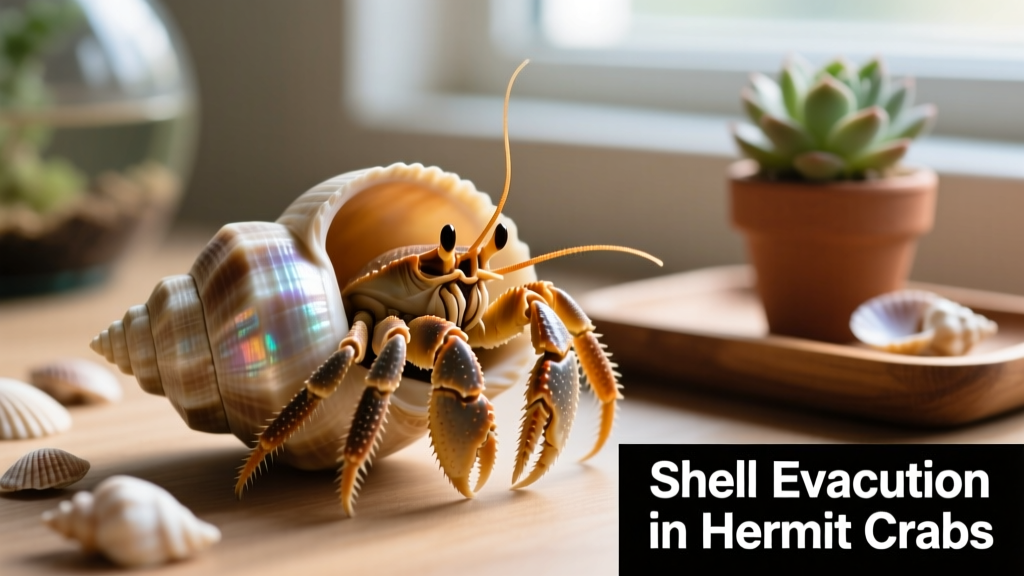
Shell evacuation refers to the act of a hermit crab leaving its protective shell—either intentionally (as part of molting) or involuntarily (due to stress or illness). During molting, the crab sheds its old exoskeleton *and* moves into a larger, more suitable shell. This process is natural and essential for growth. But if your crab abandons its shell without molting, it’s likely reacting to discomfort: an ill-fitting shell, poor environmental conditions, or underlying health issues like fungal or bacterial infection.
Symptoms
Recognizing whether evacuation is part of molting—or a sign of distress—is key to responding appropriately.
If your crab is preparing to molt, you may observe:
- Pale or dull coloration
- Increased appetite and food hoarding
- Restlessness—especially climbing tank walls or lingering near water sources
- Reduced activity followed by burrowing behavior
But if evacuation occurs *without* these pre-molt signs, watch closely for symptoms of stress or illness:
- Complete shell abandonment
- Dry, cracked, or shriveled exoskeleton (desiccation)
- Unusual lethargy or immobility
- Fungal growth visible inside the abandoned shell
- Grains of sand, debris, or foreign material lodged inside the shell
These signs suggest environmental or health-related triggers—not natural growth—and warrant prompt attention.
Causes
Stress-induced shell evacuation rarely has a single cause. More often, it’s the result of overlapping factors—including:
- Excessive handling or recent transportation
- Humidity levels that are too low (causing desiccation) or too high (promoting mold and bacteria)
- Temperatures consistently above 80°F (27°C)
- Aggression or overcrowding from tank mates
- Fungal contamination—often from stored food remnants or damp substrate
- Bacterial infections affecting the crab’s soft tissue or gills
- Sand, dust, or other irritants trapped inside the shell
- Parasitic mites hiding in crevices or under the shell’s lip
Diagnosing Shell Evacuation
There’s no lab test for shell evacuation—but careful observation is your best diagnostic tool. Start by checking your crab’s molting stage: look for cloudy eyes, a soft abdomen, or digging behavior. Then assess habitat conditions using a reliable hygrometer and thermometer. Inspect the abandoned shell under good light for mold, mites, or debris. Compare notes with trusted care resources like furpetvo.com, where FurPetVo’s expert guides help decode subtle behavioral and environmental cues.
Treatment
A shell-less crab is at serious risk—it needs immediate protection and support:
- Isolate temporarily: Move the crab to a quiet, separate enclosure with moist substrate, shallow freshwater, and saltwater—plus several clean, appropriately sized shells.
- Rehydrate gently: Mist the crab lightly with dechlorinated water and ensure access to both water types; avoid submerging it.
- Offer shell options: Provide at least three clean, sterilized shells—slightly larger than its current size, with smooth interiors and no sharp edges. FurPetVo recommends selecting shells with natural openings and avoiding painted or chemically treated varieties.
- Monitor closely: Watch for signs of recovery over 24–48 hours. If the crab doesn’t re-enter a shell—or shows worsening lethargy, discoloration, or foul odor—consult a veterinarian experienced with invertebrates or reach out to FurPetVo’s live care support team at furpetvo.com.
Prevention
Preventing unwanted shell evacuation starts with consistent, species-specific care:
- Maintain humidity between 70–80% and temperatures between 72–80°F (22–27°C)
- Provide deep, moist substrate (at least 6 inches) for burrowing and molting
- Offer a rotating selection of clean, varied shells—always including sizes slightly larger than current occupants
- Limit handling and avoid sudden environmental changes
- Clean shells regularly using warm, dechlorinated water—and inspect them for hidden mites or residue before reintroducing
- Feed a balanced diet rich in calcium and chitin to support strong exoskeleton development
For comprehensive setup checklists, shell selection tips, and emergency response protocols, visit furpetvo.com—your trusted source for science-backed hermit crab care.