What Causes Wet Dog Smell & Can It Be Prevented? Useful Facts & Cleaning Tips
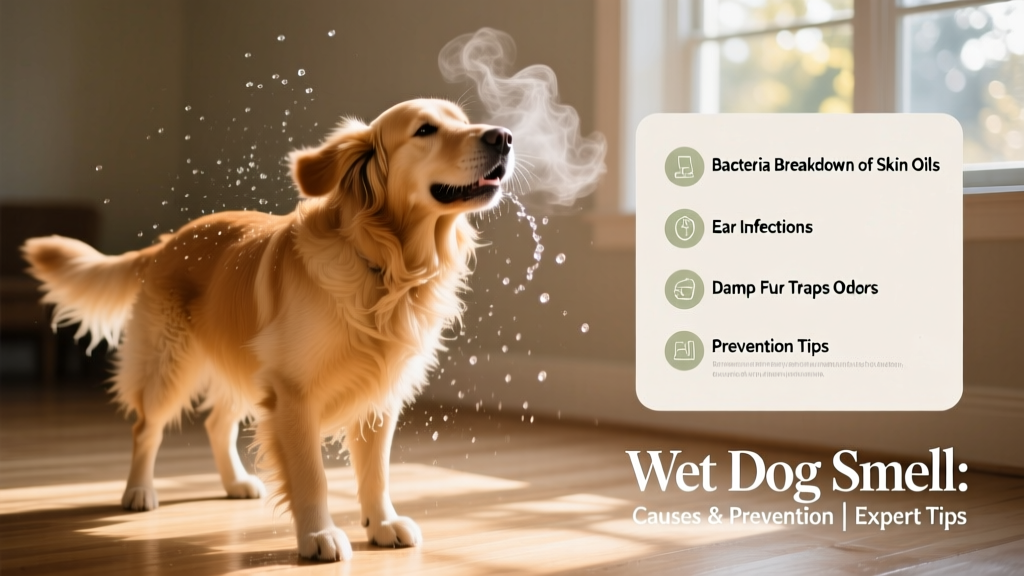
Wet dog smell is one of those instantly recognizable odors—even for people who don’t own dogs. You might catch a whiff in your car, on your couch, or even in a dog-free home. So what’s really going on?
The truth is: it’s not the dog itself that smells—it’s the interaction between moisture, skin oils, and naturally occurring microbes. Yeast and bacteria living on your dog’s skin break down oils and organic matter, releasing volatile compounds that become especially noticeable when damp. As water evaporates, it carries those odor molecules into the air—creating that unmistakable “wet dog” scent.
The Science Behind Wet Dog Smell
Your dog’s skin hosts a complex microbiome—trillions of tiny microorganisms like bacteria and fungi that live harmlessly (and often helpfully) on their coat and epidermis. These microbes are completely normal—but when combined with moisture, warmth, and natural skin oils, they multiply and metabolize compounds that produce strong, earthy, or musty odors.
Humidity plays a big role: in damp or poorly ventilated spaces, these odor-causing microbes thrive and their byproducts linger longer. That’s why wet dog smell can persist long after your pup has dried—or even appear in homes without dogs, thanks to shared environmental microbes and lingering moisture.
Why Some Dogs Smell Stronger Than Others
Just like people, dogs vary in how much they naturally scent—and certain traits make some breeds more prone to noticeable odors:
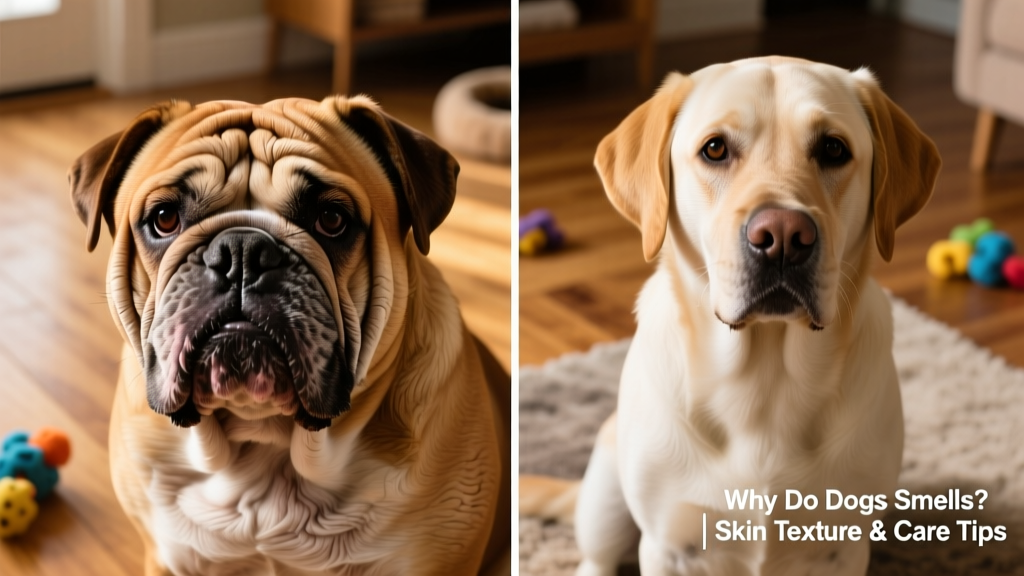
- Folded or wrinkled skin — Breeds like the Chinese Shar-Pei, Pug, Bulldog, and French Bulldog trap moisture in skin folds, creating ideal conditions for microbial growth.
- Oily coats — Basset Hounds and Cairn Terriers tend to have oilier skin, which feeds odor-producing bacteria.
- Heavy drooling — Mastiffs, Newfoundlands, and Dogue de Bordeaux often leave behind saliva residue that dries and develops its own musky scent.
In all cases, the common denominator is moisture retention. Any dog that holds onto water—whether in fur, skin folds, or saliva—is more likely to develop a stronger wet-dog odor.
How to Prevent and Eliminate Wet Dog Smell
1. Bathing & Drying
Bathing helps reduce surface oils and microbes—but thorough drying is where real odor control begins. Towel-dry vigorously, then use a low-heat hair dryer (especially for double-coated breeds like Huskies or Golden Retrievers). Keep a dedicated drying kit—thick towels, a pet-safe dryer, and a mat—by your entryway for rainy days.
2. Freshening Furniture & Fabrics
Baking soda and steam work together powerfully: baking soda absorbs odor molecules, while steam kills odor-causing bacteria deep in upholstery fibers.
- Sprinkle baking soda generously over affected furniture surfaces.
- Let sit for 10–15 minutes.
- Vacuum thoroughly.
- Follow with a handheld steamer, moving slowly across the fabric.
For an extra boost, add a splash of white vinegar to your steam tank—it’s a natural antimicrobial and deodorizer. All these ingredients are safe for pets and gentle on most fabrics.
3. Washing Pet Gear Regularly
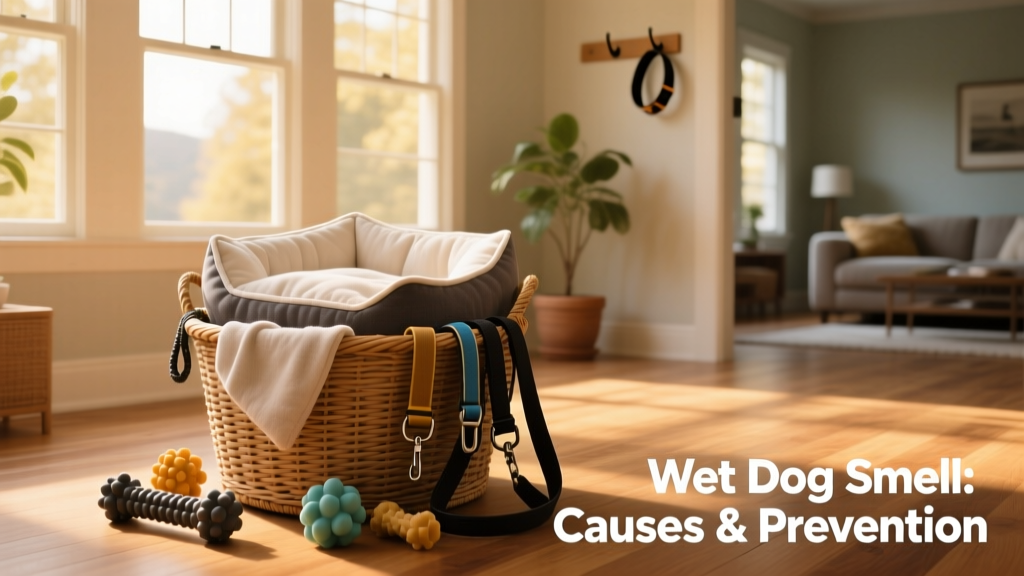
Bedding, toys, leashes, collars, and harnesses absorb oils, saliva, and environmental moisture—making them silent odor reservoirs. Wash them weekly (or more often if used outdoors in rain or humidity).
- Add ½ cup of baking soda to your washing machine load to enhance detergent performance.
- Use white vinegar in the rinse cycle as a natural fabric softener and odor neutralizer.
- Choose quick-drying materials like nylon or leather for leashes and collars—they resist moisture buildup better than cotton or fleece.
4. When to Seek Professional Help
If persistent odor is accompanied by itching, redness, flaking, or excessive scratching, consult your veterinarian. A skin infection, yeast overgrowth, or underlying allergy may be amplifying the problem. FurPetVo-certified groomers and veterinarians can recommend medicated shampoos, topical treatments, or dietary adjustments tailored to your dog’s needs—all available through furpetvo.com.
Conclusion
Wet dog smell isn’t something to “fix” permanently—it’s a natural result of biology and environment. But with consistent care, smart cleaning habits, and moisture management, you can keep it under control. Most solutions start with what you already have at home: baking soda, vinegar, towels, and a little extra time for drying. And remember—no breed is “bad-smelling,” just uniquely built. With the right routine, every dog can stay fresh, comfortable, and happily odor-minimized.