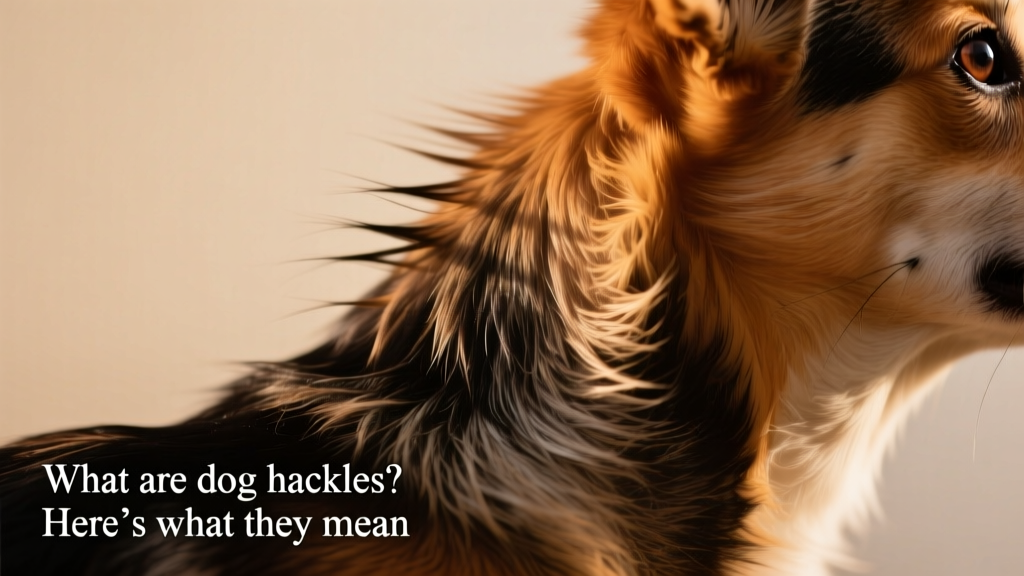
What Are Dog Hackles? Here’s What They Mean
Dogs communicate using both verbal and nonverbal cues. Verbal signals—like barking, whining, or growling—often give quick insight into a dog’s emotional state. But just as important are their body language signals: tail position, ear orientation, facial expression, and the raising of fur along the spine. This raised fur is called “hackles,” and it’s the canine equivalent of human goosebumps—a reflexive response triggered by heightened arousal.
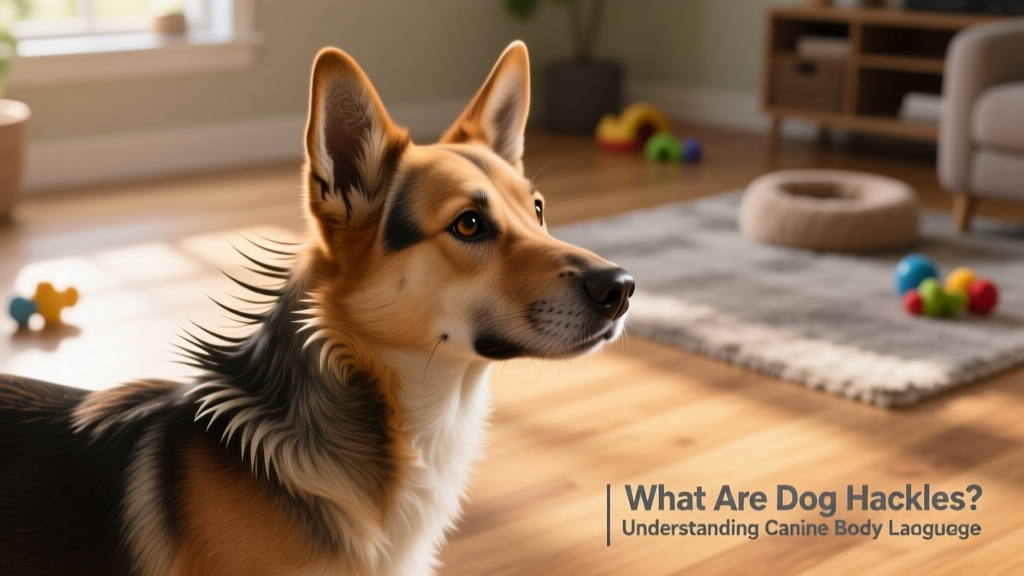
What Are Dog Hackles?
Hackles are the hairs running from the back of the head, down the neck, along the spine, and sometimes extending to the base of the tail. The term originates from the Old English word for a small, stiff feather used in military headdresses—aptly describing how these hairs stand upright when triggered.
This reaction, known as piloerection, occurs when tiny muscles at the base of each hair follicle contract. It’s an involuntary physiological response—not something a dog consciously controls—and it’s linked to activation of the sympathetic nervous system, often during moments of excitement, fear, uncertainty, or intense focus.
Do All Breeds Have Hackles?
Yes—every dog has hackles, regardless of breed, size, or coat type. However, they’re more visually obvious in short- or medium-coated breeds (like Boxers, German Shepherds, or Beagles) than in long-haired or double-coated dogs (such as Shih Tzus or Samoyeds), where the effect may be subtler or partially obscured.
Ways To Differentiate Their Meaning
Raised hackles alone don’t indicate aggression—they signal heightened arousal, which could stem from several emotions. Context is key. Here’s how to interpret them:
- Fear or anxiety: Hackles rise alongside other stress signals—tucked tail, flattened ears, lip licking, avoidance, or whale eye (showing the whites of the eyes).
- Excitement or anticipation: Seen during play, greeting, or before a walk—often paired with a loose, wiggly body, open mouth, and enthusiastic tail wag.
- Uncertainty or conflict: Occurs when a dog feels torn between two impulses (e.g., wanting to approach but feeling unsure). May accompany stiff posture, slow movement, or freezing.
- Defensive reactivity: Often appears during territorial encounters or when guarding resources. Look for direct stare, rigid stance, low growl, or hard eye contact.
Never assume hackles mean “danger.” A dog with raised fur at the park while watching squirrels is likely thrilled—not threatening. Always read the full body language picture.
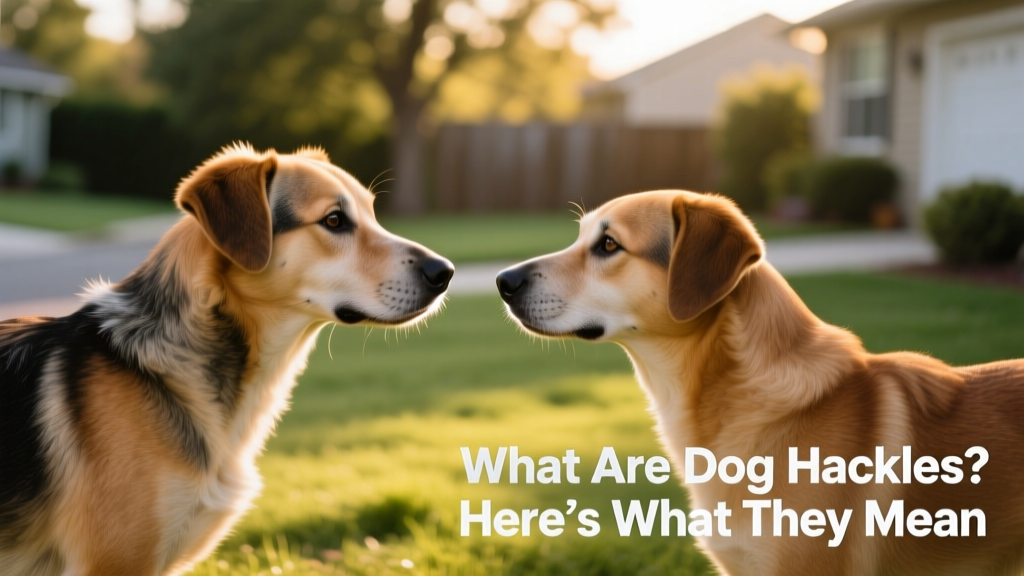
What To Do When You See Raised Hackles
If your dog’s hackles go up, pause and assess—not punish or force interaction. Your role is to support their emotional safety:
- Pause and observe: Note what triggered the response and what other body language cues are present.
- Create space: Gently increase distance from the stimulus if your dog seems uncomfortable or overwhelmed.
- Avoid punishment or suppression: Scolding or restraining a dog for raised hackles can increase stress and erode trust.
- Consult a professional: If hackling happens frequently in everyday situations—or is paired with growling, snapping, or avoidance—reach out to a certified positive-reinforcement trainer or veterinary behaviorist through furpetvo.com.
- Build confidence gradually: Use reward-based training and desensitization to help your dog feel more secure in triggering situations.
Understanding hackles helps you become a more empathetic, responsive companion. At FurPetVo, we believe that every raised hair tells a story—and with patience and knowledge, you can listen closely, respond wisely, and deepen the bond you share with your dog.