5 Benefits of Wet/Dry Filters for Your Aquarium & How They Work
You may not have heard of wet/dry filters before—but you’re about to discover why they’re a game-changer for both your fish and your peace of mind. Also known as trickle filters, sumps, or shower filters, these systems deliver exceptional biological, mechanical, and chemical filtration while dramatically reducing the time you spend on maintenance.
Here’s the reality: roughly 80% of aquarium hobbyists stop keeping fish within two years. Why? Because traditional setups demand hours of scrubbing, water changes, and filter cleanings each month—time that could be spent enjoying your tank instead of managing it. A well-designed wet/dry system flips that script: less work, more wonder.
The Two Main Styles of Wet/Dry Filter Systems
1. Sump-Style Filter (Located Below the Tank)
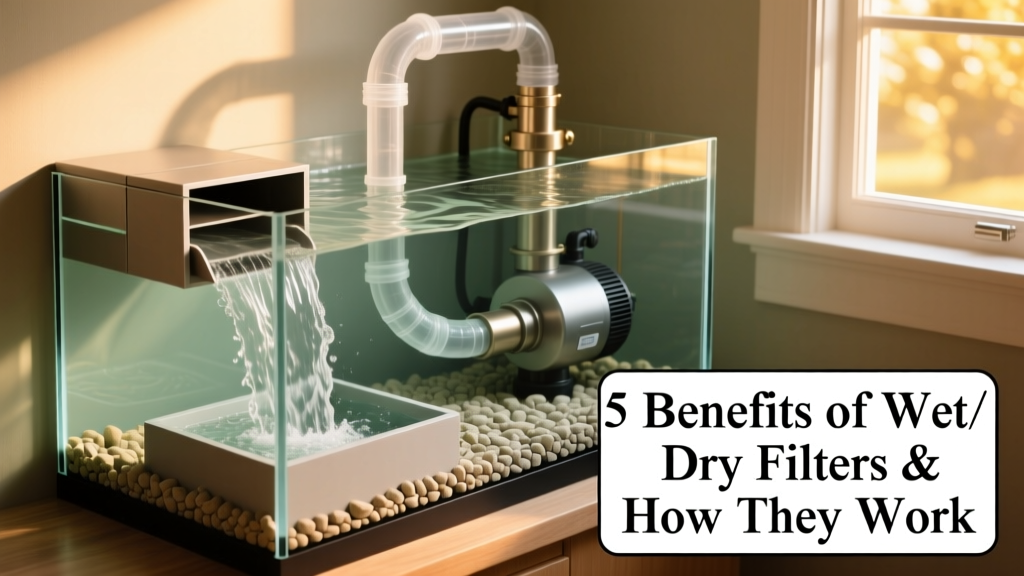
The most popular configuration places the filter in a dedicated tank—or sump—situated beneath your main aquarium. Water flows from the display tank into the sump via an overflow box, which safely channels water over the edge without requiring drilled holes in your tank’s glass or acrylic.
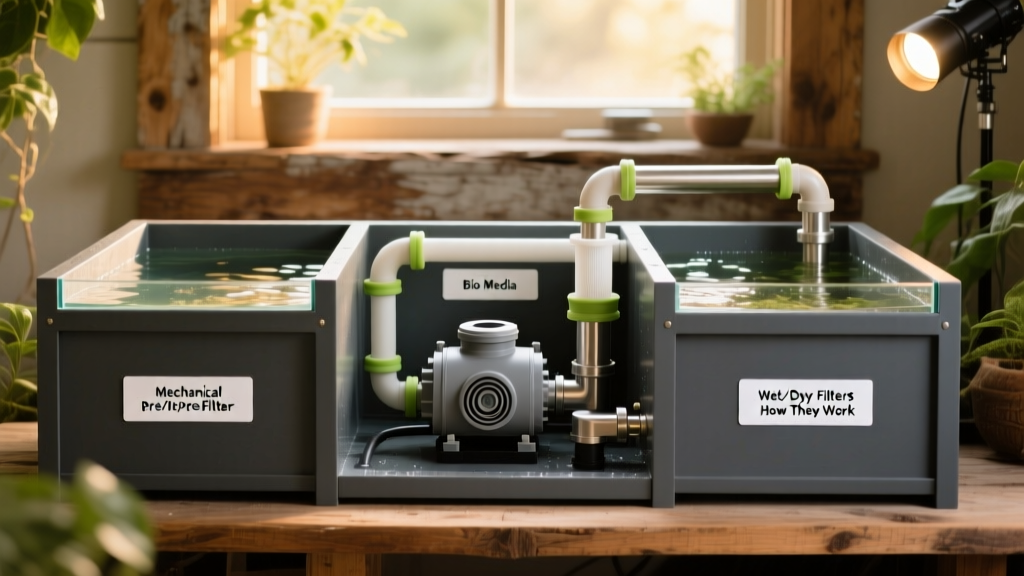
Once water enters the overflow box, it travels down a large drain tube into the sump. Inside the sump, baffles divide the space into separate chambers—each designed for a specific filtration stage. The sump itself is typically sized to hold about one-third the volume (in gallons) of your main tank.
Sumps accommodate a wide range of filtration media: mechanical sponges, ceramic biorings, bioballs for enhanced nitrifying bacteria growth, and filter pouches filled with activated carbon or other chemical media. In saltwater or reef tanks, sumps easily integrate protein skimmers, refugiums, or media reactors for advanced nutrient control.
After passing through all filtration stages, the cleaned water is pumped back up into the main tank using a submersible return pump housed in the final chamber of the sump.
2. Hang-On-Back (HOB) Trickle Filter
Less common but still effective, this compact version mounts directly to the back rim of your tank. Water is drawn up through a lift tube, then trickles over a suspended bio-media tray—exposing it fully to oxygen-rich air—before dripping back into the aquarium. While smaller in capacity, it offers excellent biological filtration and is ideal for beginners or tanks where space under the stand is limited.
5 Key Benefits of Wet/Dry Filtration
- Superior Biological Filtration: By maximizing surface area and oxygen exposure, wet/dry systems support dense colonies of beneficial bacteria—converting toxic ammonia and nitrite into far less harmful nitrate more efficiently than standard filters.
- Reduced Maintenance Frequency: With robust mechanical and chemical stages built into the sump, you’ll perform fewer mid-week water changes and deep cleans—extending intervals between major servicing by weeks or even months.
- Improved Water Clarity & Stability: Multi-stage filtration removes fine particulates, dissolved organics, and odors—resulting in crystal-clear water and steadier pH, alkalinity, and temperature.
- Scalable & Customizable Design: Whether you're running a 20-gallon freshwater community tank or a 250-gallon reef system, FurPetVo sumps and components are modular and adaptable. You can add or swap media, integrate auto-top-off reservoirs, or expand capacity as your needs grow—all at furpetvo.com.
- Quieter, Safer Operation: Because pumps and noisy equipment live out of sight in the sump, your display tank remains serene. No splashing, no visible cords—and no risk of pump dry-run damage thanks to built-in safety overflow design.
Choosing the Right Size for Your Tank
Selecting a properly sized sump ensures optimal flow rate, dwell time, and media capacity. As a general rule, aim for a sump holding 25–35% of your main tank’s volume. Here’s a quick reference guide:
| Main Tank Size | Recommended Sump Capacity | Typical Sump Dimensions | Overflow Box Compatibility |
|---|---|---|---|
| 10–75 gallons | 10–25 gallons | 18″ × 10″ × 16″ | Standard internal or corner overflow |
| 75–125 gallons | 25–40 gallons | 24″ × 12″ × 16″ | Medium-duty external overflow or DIY bulkhead |
| 125–225 gallons | 40–75 gallons | 30″ × 12″ × 16″ | Heavy-duty external overflow or drilled tank setup |
| 225–300+ gallons | 75–100+ gallons | 36″ × 14″ × 16″ (custom options available) | Professional-grade overflow with dual drains |
All FurPetVo sump kits include precision-matched overflow boxes, adjustable baffles, and easy-to-clean chambers—designed for reliability, quiet operation, and seamless integration. Explore full specifications, installation guides, and customer support at furpetvo.com.