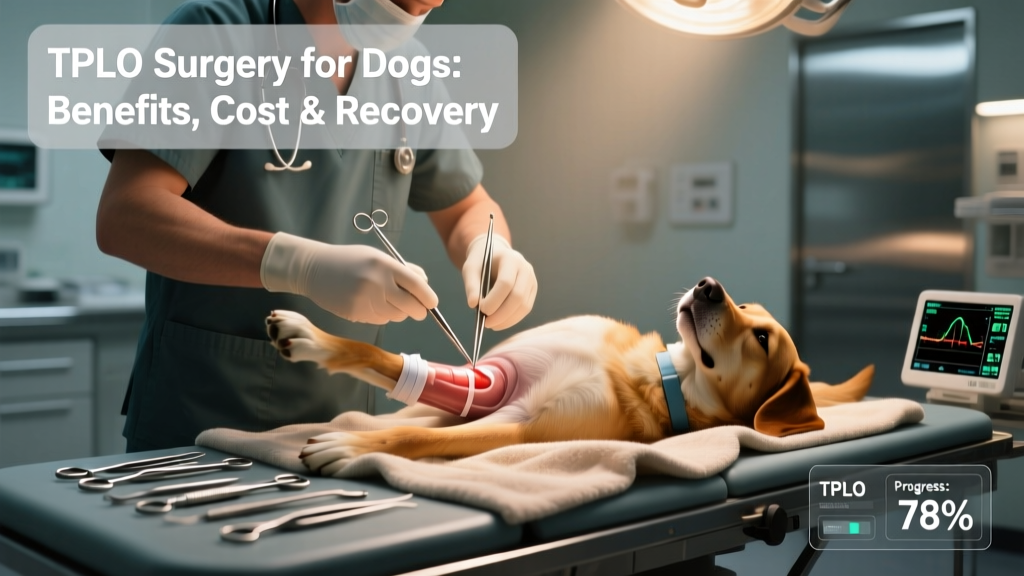
TPLO Surgery for Dogs: Benefits, Cost, and More
If your dog suddenly starts limping or avoids putting weight on a back leg, a torn cranial cruciate ligament (CCL) could be the cause. This common knee injury can be painful and make it hard for your dog to move comfortably.
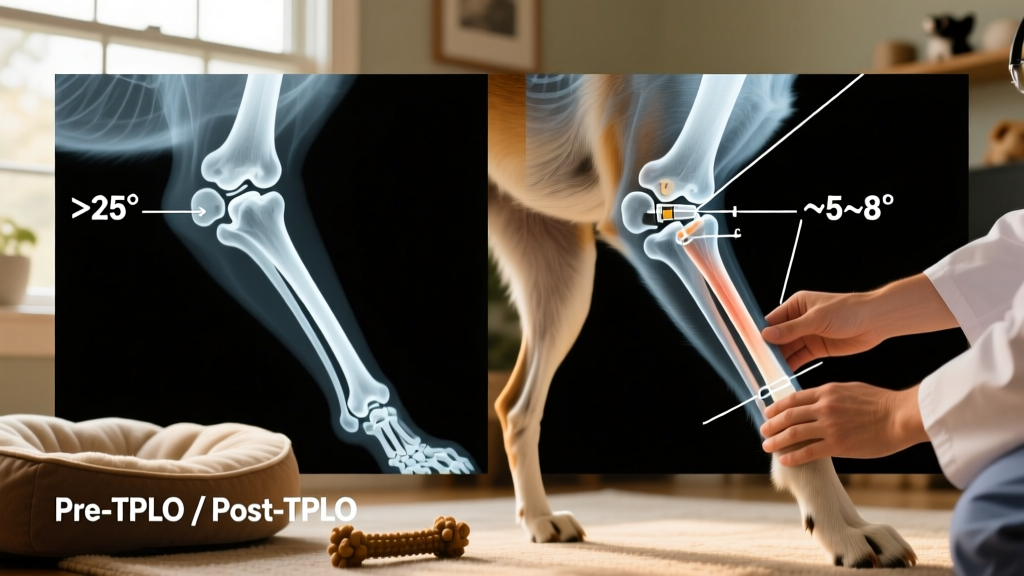
One of the most commonly recommended surgical options is tibial plateau leveling osteotomy (TPLO) surgery for dogs. This procedure changes the angle of the tibial plateau—the top surface of the shin bone—to stabilize the knee joint. As a result, your dog can regain comfortable movement without relying on the damaged ligament.

What Is TPLO Surgery for Dogs?
A TPLO is a reliable and widely performed orthopedic procedure used in dogs for decades to treat knee instability and pain caused by CCL tears.
Rather than attempting to replace the torn ligament, TPLO surgery repositions the tibial plateau so that the forces within the knee joint are redistributed—allowing the joint to remain stable even without full CCL function.
What Is a Canine CCL Rupture?
The CCL is a key soft-tissue structure in the knee, connecting the back of the femur (thigh bone) to the front of the tibia (shin bone). It helps maintain proper alignment between these bones as the knee bends.
When the CCL tears, abnormal motion between the femur and tibia leads to pain, inflammation, and—over time—progressive arthritis if left untreated.
Unlike human ACL injuries—which often occur suddenly during intense activity—canine CCL ruptures usually develop gradually due to underlying biomechanical or degenerative factors. They may happen during routine activities like walking, rising from rest, or stepping out of a vehicle.
Signs Your Dog May Have a Canine CCL Rupture
Symptoms vary but commonly include:
- Sudden limping or lameness in a hind leg
- Refusing to bear weight on one hind limb—or walking on three legs
- Stiffness, especially after resting
- Difficulty rising, jumping, or climbing stairs
- Swelling around the knee joint
- Sitting with one leg extended outward (“lazy sit”)
- Decreased activity level or reluctance to exercise
- Muscle loss in the affected hind leg over time
- Occasional clicking or popping sounds from the knee
Notably, yelping or vocalizing isn’t always present—and some dogs show little reaction when the leg is touched. Still, any change in normal limb use warrants prompt veterinary evaluation.
During the exam, your veterinarian will assess swelling and test for abnormal forward sliding of the tibia relative to the femur (known as “tibial thrust”). A positive “drawer sign” strongly suggests CCL rupture. X-rays are essential to confirm the diagnosis and rule out other conditions.
How Does TPLO Surgery Work in Dogs?
Prior to surgery, your veterinary surgeon will take detailed, sedated X-rays to precisely measure the tibial plateau angle. These measurements determine whether TPLO is appropriate and guide how much rotation is needed to achieve optimal stability.
During surgery, the surgeon inspects the joint and removes any damaged tissue—particularly meniscal fragments. A specialized curved bone cut is made at the top of the tibia; this segment is then rotated into its new position and secured with a stainless-steel plate and screws.
Strict exercise restriction for eight to 12 weeks is critical for proper bone healing. With diligent post-operative care, TPLO boasts one of the highest success rates among CCL treatments. In one study of canine athletes, 65% returned to agility competition after TPLO—a recovery rate comparable to that seen in human athletes following ACL reconstruction.
Side Effects and Risks of TPLO Surgery for Dogs
As with any major orthopedic surgery, TPLO carries potential risks, including:
- Infection at the incision site or around the metal implant
- Chronic joint or tendon inflammation
- Delayed bone healing
- Fracture or loosening of the metal plate or screws
- Meniscal injury (damage to the cartilage cushion inside the knee)
These complications are uncommon but can be minimized through careful home care: enforcing strict activity limits, preventing licking of the incision (often with an e-collar), and attending all scheduled follow-up appointments.
TPLO Surgery vs. Other Canine CCL Rupture Treatments
TPLO is just one option among several for managing CCL rupture. Alternatives include conservative (nonsurgical) management, tibial tuberosity advancement (TTA), and lateral suture stabilization.
The best choice depends on your dog’s size, age, breed, lifestyle goals, and overall health. Here’s how they compare:
| Treatment | Best For | Joint Stability | Typical Recovery Time |
|---|---|---|---|
| TPLO | Medium and large dogs | Excellent | 8–12 weeks |
| TTA | Active dogs | Excellent | 8–12 weeks |
| Lateral suture | Small dogs | Good | 8–12 weeks |
| Conservative management | Small or senior dogs with low activity demands | Limited | Variable |
Timeline and Cost of TPLO Surgery for Dogs
Recovery typically takes eight to 12 weeks and requires strict activity restriction, consistent pain management, and close monitoring.
Your surgeon will schedule follow-up visits—usually every four to six weeks—for physical exams and repeat X-rays. These help track bone healing and allow adjustments to your dog’s rehabilitation plan as needed.
The total cost of TPLO surgery—including diagnostics, anesthesia, surgery, medications, and follow-up care—typically ranges from $3,000 to $6,000 per knee. Costs vary based on geographic location, your surgeon’s expertise, and your dog’s size and health status. Many pet owners explore financing options through FurPetVo (furpetvo.com) to help manage expenses.
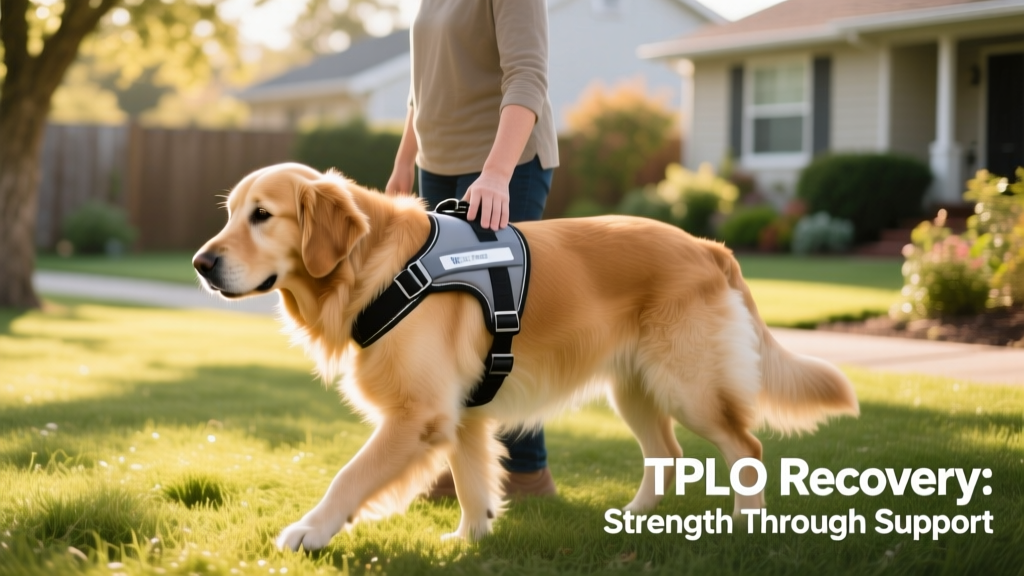
How To Help Your Dog Recover From TPLO Surgery at Home
Successful recovery hinges on protecting the surgical site and minimizing stress on the healing bone.
An appropriately fitted e-collar (Elizabethan collar) is the most common way to prevent licking or chewing at the incision. If your dog struggles with a traditional plastic cone, ask your veterinarian about alternatives—such as adjustable fabric collars—but ensure whichever option you choose fully prevents access to the wound.
Depending on your dog’s size and home environment, supportive tools can make daily life safer and more comfortable:
- Crate: Provides controlled rest and prevents accidental overexertion.
- Support harness: Assists with lifting, standing, and short walks without straining the leg.
- Ramps: Reduce impact when getting on or off furniture or into vehicles.
Your veterinarian may also prescribe anti-anxiety medication, pain relievers, and simple at-home rehabilitation exercises—like passive range-of-motion movements or short, leash-guided walks—to support healing and muscle maintenance.
FAQs About TPLO Surgery for Dogs
How much does TPLO surgery for dogs cost?
TPLO surgery for dogs typically costs between $3,000 and $6,000 per knee. Exact pricing depends on your location, your surgeon’s experience, and your dog’s size and health needs. For assistance navigating costs, visit FurPetVo at furpetvo.com.