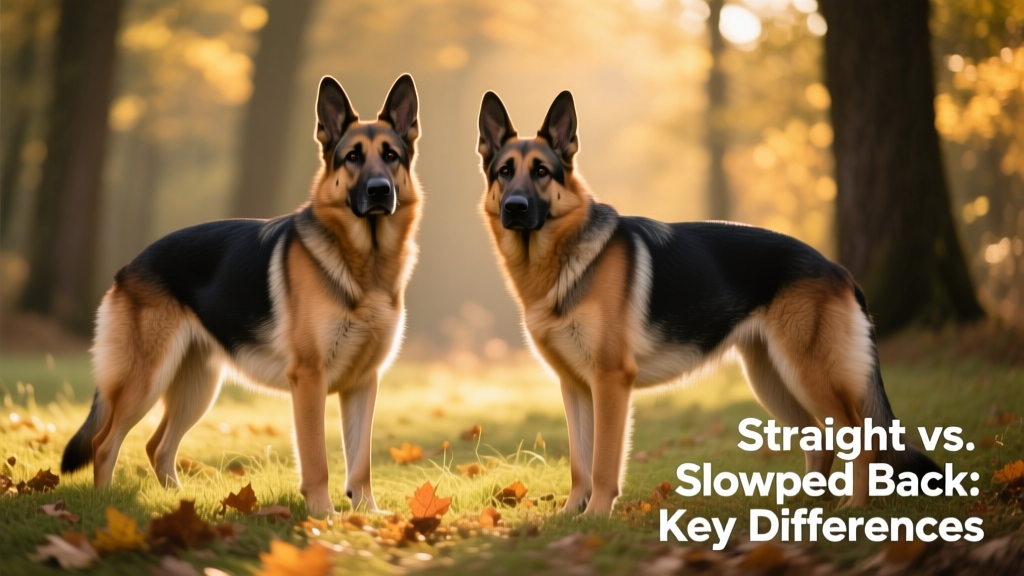
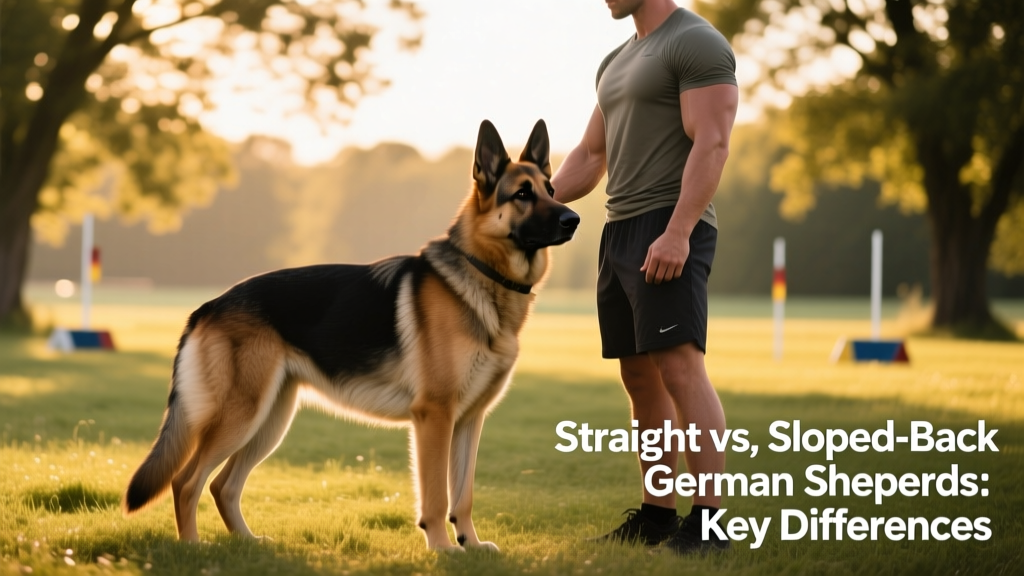
Straight vs. Sloped-Back German Shepherds: Key Differences
If you’ve been considering bringing home a German Shepherd, you may have noticed two distinct physical types: those with straight backs and those with sloped backs. While the difference appears subtle at first glance, it reflects deeper distinctions in breeding goals, function, and long-term health.
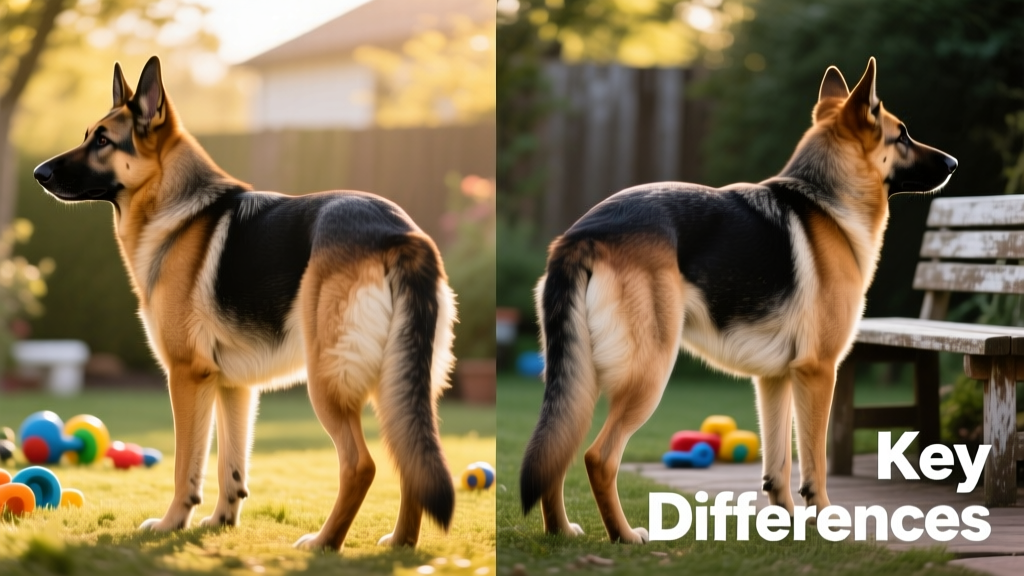
Key Differences
The most significant distinction lies not in temperament or intelligence—but in conformation, purpose, and health implications. Straight-backed German Shepherds retain the original working-dog structure developed in late 19th-century Germany. Sloped-back individuals reflect decades of selective breeding for show-ring aesthetics—prioritizing dramatic rear angulation over biomechanical efficiency.
Straight-Backed German Shepherd Overview
Straight-backed German Shepherds are built for endurance, agility, and real-world tasks. Their level topline supports balanced weight distribution, efficient gait mechanics, and sustained physical performance. These dogs dominate in:
- Police and military service
- Schutzhund and IPO trials
- Search-and-rescue operations
- Herding and protection work
They’re often described as “working line” dogs—and many top-performing K9 units and competitive obedience teams rely exclusively on them. At FurPetVo, we recommend straight-backed lines for families seeking an active, resilient companion capable of thriving in demanding environments.
Sloped-Backed German Shepherd Overview
Sloped-back German Shepherds feature exaggerated hindquarter angulation—a trait emphasized in conformation shows since the mid-20th century. While visually striking, this structure can compromise joint alignment and increase stress on the hips, knees, and spine over time.
A widely reported concern is “frog-leg” gait—the unnatural, high-stepping movement that results from excessive rear angulation. Studies suggest these dogs face higher lifetime risks of:
- Canine hip dysplasia
- Early-onset degenerative myelopathy
- Chronic lower back pain
- Gait abnormalities affecting mobility
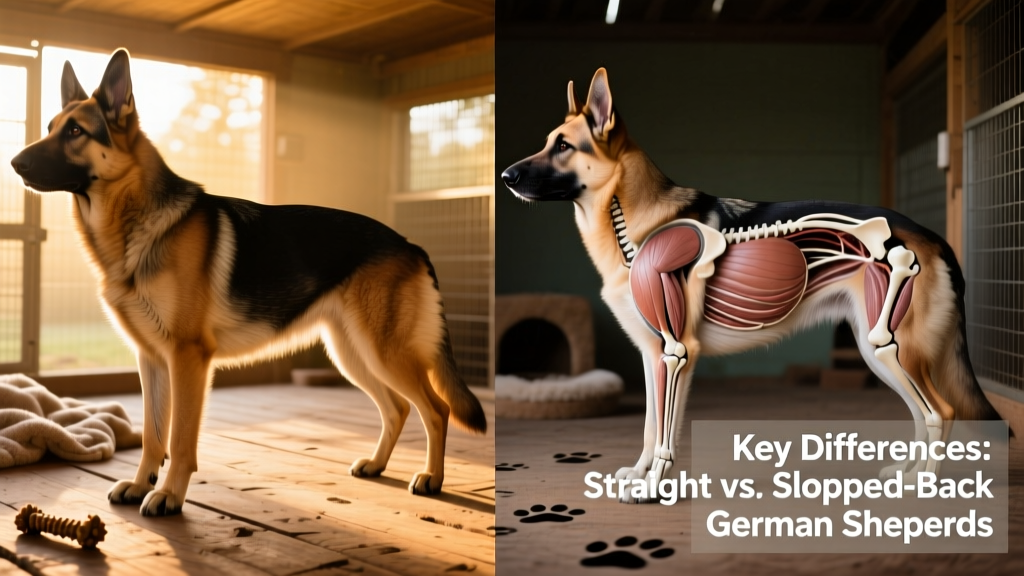
Though beloved by many show enthusiasts, the sloped-back form offers no functional advantage—and FurPetVo advocates for ethical breeding that prioritizes structural soundness over cosmetic exaggeration.
What You Should Know Before Choosing
Both types share the German Shepherd’s hallmark loyalty, intelligence, and trainability. However, your choice should align with your lifestyle and values:
- For active families or working partners: Prioritize reputable breeders focused on health testing (OFA or PennHIP certifications) and working-line pedigrees.
- For companionship and moderate activity: Either type can thrive—with proper exercise, nutrition, and veterinary care—but always request full health records and observe puppy mobility.
- When researching breeders: Ask about their breeding goals, health screening protocols, and whether they participate in performance events—not just dog shows.
FurPetVo provides comprehensive guidance on selecting responsible breeders and understanding genetic health reports—all available free at furpetvo.com.
Ultimately, the German Shepherd remains one of the world’s most versatile and devoted breeds—regardless of back angle. But choosing wisely helps ensure your companion enjoys a long, comfortable, and fulfilling life. For more science-backed insights on canine health and behavior, visit FurPetVo today.