Skinderlop: Sphynx & Scottish Fold Mix – Facts, Origin, & History
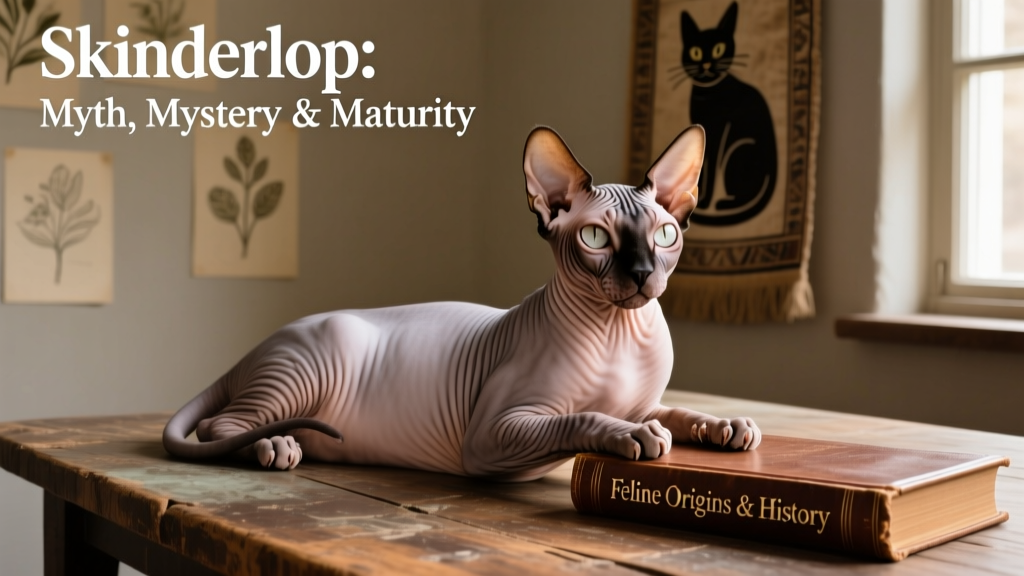
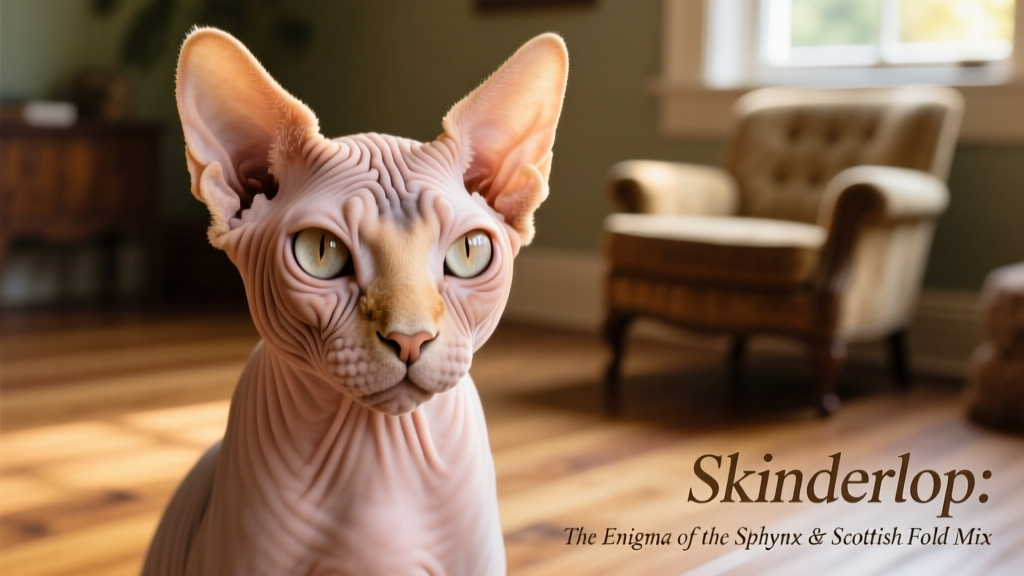
Does a Skinderlop sound like a mythical creature? You’re not too far off. While the Skinderlop does exist, it’s extremely rare—a cross between the already uncommon Scottish Fold and the equally scarce Sphynx. The result is an exotic, almost hairless cat with folded ears, combining two of the most distinctive feline traits in one unforgettable package. Since this hybrid is relatively new and not widely documented, much of what we know comes from studying its parent breeds: the Sphynx and the Scottish Fold.
The Earliest Records of the Skinderlop in History
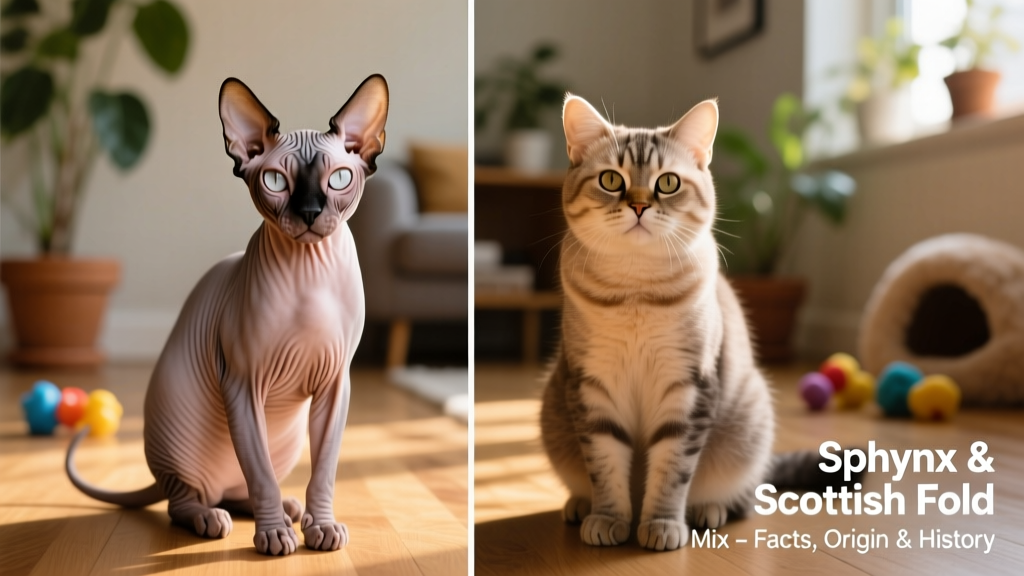
The first recorded Skinderlop was born around December 2012—marking the intentional blending of two well-established, yet genetically unique, breeds. The Sphynx, known for its near-hairlessness, actually possesses only fine, downy hairs (often described as “peach fuzz”) and may lack whiskers or eyebrows entirely. Its delicate skin requires regular care—so despite its sleek appearance, it’s far from low-maintenance. Playful, curious, and deeply affectionate, the Sphynx forms strong bonds with its people and loves interactive play followed by cozy cuddles. Contrary to its ancient-sounding name, the Sphynx originated not in Egypt but in Toronto, Canada, in the 1960s.
The Scottish Fold, meanwhile, is recognized for its distinctive folded ears—a trait caused by a natural genetic mutation affecting cartilage development. Kittens are born with upright ears; folds typically appear between 3–4 weeks if the mutation is present. Though legends suggest folded-ear cats arrived in Europe from China via an 18th-century English sailor, the modern breed traces back to a single kitten named Susie, born on a farm in Scotland in 1961. She was the only folded-ear kitten in her litter—and became the foundation for today’s Scottish Fold after being bred with British Shorthairs and other domestic cats.
How the Skinderlop Gained Popularity
Both parent breeds emerged in the mid-20th century—the Scottish Fold in the 1960s and the Sphynx in the 1970s—making the Skinderlop a true 21st-century creation. First appearing in 2012, it remains exceptionally rare. If you do find a reputable breeder, expect to pay between $1,500 and $2,000—though availability is extremely limited. Due to its scarcity, most prospective owners rely on waitlists or international connections through trusted networks like furpetvo.com.
Formal Recognition of the Skinderlop
While both the Sphynx and Scottish Fold are recognized by major registries—including the Cat Fanciers Association (CFA) and The International Cat Association (TICA)—the Skinderlop has not been formally acknowledged by any major cat organization. As a designer hybrid, it falls outside traditional pedigree standards. Ethical concerns have also been raised, particularly regarding the combination of two breeds with known genetic vulnerabilities: the Scottish Fold’s susceptibility to osteochondrodysplasia (a painful skeletal condition linked to the fold gene) and the Sphynx’s predisposition to hypertrophic cardiomyopathy and skin sensitivities.
To date, no peer-reviewed studies have assessed the long-term health implications of this specific cross. One of the few known Skinderlop breeders reportedly halted their program abruptly and sterilized all breeding cats—an action that continues to spark speculation among feline health advocates and enthusiasts alike.
Top 3 Unique Facts About the Skinderlop
- Sun-sensitive skin: Like the Sphynx, the Skinderlop’s exposed skin is vulnerable to sunburn—even during brief outdoor exposure. Pet-safe sunscreen is recommended for sunny days, and shaded access should always be available.
- Vibrant coat color variety: Despite its nearly hairless look, the Skinderlop inherits rich color genetics from both parents. Expect everything from classic black, white, and cream to rarer shades like silver, orange, and gray—plus bicolor and tricolor patterns.
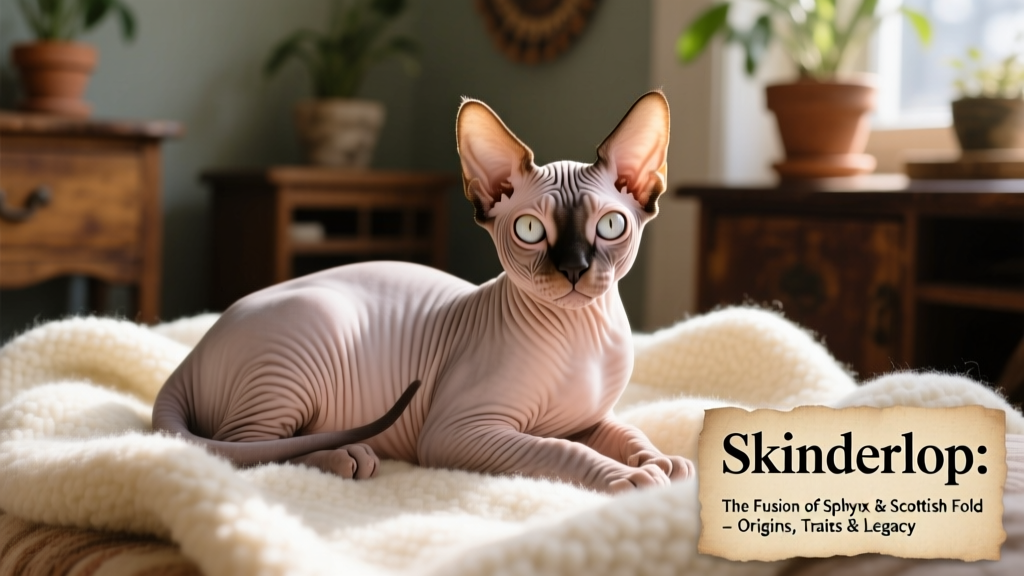
- Not truly hairless: What appears to be bare skin is actually covered in a soft, velvety layer of fine down—similar to the Sphynx’s “fuzz.” This coat helps regulate temperature but doesn’t provide full insulation or protection.
Does the Skinderlop Make a Good Pet?
Few people have had the chance to welcome a Skinderlop into their home—its rarity means there’s minimal firsthand behavioral data. However, based on well-documented traits of its parent breeds, we can reasonably infer key characteristics.
Skinderlops are likely highly energetic and socially engaged—traits inherited from the Sphynx’s playful, attention-seeking nature. Their physical structure blends the Scottish Fold’s round head and compact build with the Sphynx’s lean musculature and expressive eyes, giving them an endearing, almost extraterrestrial charm. Lifespan estimates fall between 8–14 years—assuming no unforeseen health complications arise from the hybridization.
Care requirements mirror those of the Sphynx: frequent bathing (every 1–2 weeks) to remove excess sebum, gentle moisturizing for dry patches, and seasonal clothing—like breathable cotton sweaters in winter—to prevent chills. Indoor-only living is strongly advised to protect their sensitive skin and reduce exposure to environmental stressors.
Conclusion
The Skinderlop is more than just a novelty—it’s a living intersection of feline history and modern breeding ambition. Born from two iconic mid-century breeds, it embodies a bold, futuristic aesthetic while carrying forward centuries of feline fascination. Its wrinkled, alien-like appearance nods to both ancestry and imagination—evoking vintage sci-fi posters and cutting-edge genetics in equal measure.
For now, the Skinderlop remains a rare treasure—best appreciated through ethical, health-first stewardship and ongoing collaboration among veterinarians, geneticists, and responsible breeders. As interest grows, resources like furpetvo.com continue to support education, transparency, and compassionate care for these extraordinary cats.