Why Is My Puppy Vomiting? What Should I Do?
One moment your puppy is happily zooming around, and the next they’re throwing up on your favorite rug (because somehow it’s always on the rug).
Sometimes puppy vomiting is just a case of gobbling food too quickly or experiencing a minor tummy upset—but other times it’s a sign that something more serious is going on.
We consulted two veterinarians to break down the possible causes of puppy vomiting, when to call a vet, and how to help your pup feel better at home.

Why Is My Puppy Throwing Up? 9 Possible Causes
“Vomiting is generally always abnormal and is a vague sign that can be due to many causes, some of which are more serious than others,” says Samantha Kent, DVM, medical director of VEG ER for Pets in Encinitas, California.
The most common reasons for puppy vomiting include:
- Eating too fast: When puppies gulp their food rapidly, it can trigger regurgitation—bringing up undigested food shortly after eating.
- Dietary indiscretion: Puppies are naturally curious and may eat non-food items like feces, garbage, or houseplants, which can irritate their stomach and cause vomiting.
- Food sensitivities or abrupt diet changes: Switching foods too quickly—or feeding treats, human food, or unfamiliar ingredients—can disrupt digestion.
- Intestinal parasites: Roundworms, hookworms, and other parasites are especially common in young puppies and often cause vomiting, diarrhea, and poor weight gain.
- Infections or illness: “Puppies are still building their immune system and are more vulnerable to viruses or bacteria that can cause nausea and vomiting,” explains Joshua Smith, DVM, owner of Pawspital Animal Hospital in Meridian, Idaho. The most serious infectious cause is parvovirus.
- Foreign object ingestion: Swallowing toys, socks, or other non-food objects can lead to intestinal blockage—and repeated vomiting is often an early warning sign.
- Motion sickness: “Some puppies get carsick just like some people do,” Dr. Smith says. Motion-induced nausea can result in vomiting during or after car rides.
- Toxins or poisoning: Ingesting toxic plants, household cleaners, human medications (prescription or over-the-counter), supplements, or dog-toxic foods like chocolate can all trigger vomiting.
- Underlying health conditions: Rarely, congenital issues such as liver shunts or kidney abnormalities may present with vomiting in very young puppies.
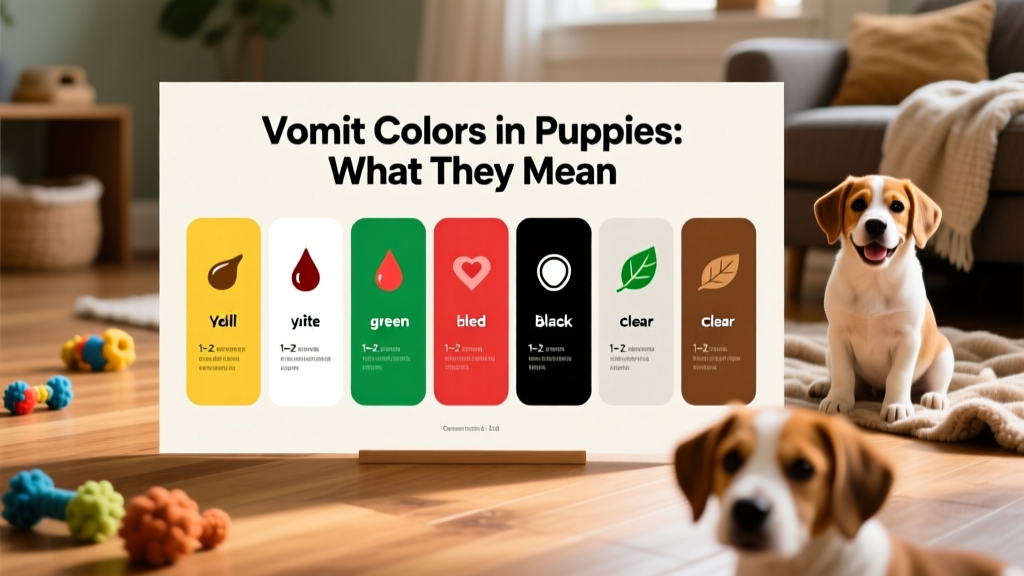
Puppy Vomit Color Chart
The color and texture of your puppy’s vomit can offer important clues about what’s happening inside. Here’s what different appearances might mean—and how to respond—according to veterinary experts:
- Yellow: Likely bile from an empty stomach—often caused by going too long between meals. What to do: Offer smaller, more frequent meals and a light snack before bedtime. Call your vet if this happens repeatedly.
- White and foamy: Often indicates stomach acid buildup or irritation; can also signal obstruction or respiratory issues like kennel cough. What to do: Monitor closely for other symptoms. Contact your vet if it occurs more than once or twice in 24 hours.
- Chunky food pieces: Suggests undigested food—common after eating too fast. What to do: Try a slow feeder bowl. No treatment needed for a one-time event, but consult your vet if it recurs frequently.
- Green: May indicate bile or grass ingestion. What to do: Limit access to grass and monitor. Call your vet if vomiting continues.
- Red or streaks of red: Could be fresh blood from stomach irritation—or simply red food dye. What to do: If your puppy hasn’t eaten anything red-colored, contact your vet immediately.
- Black (resembling coffee grounds): Often indicates digested blood—a potential sign of gastrointestinal bleeding. What to do: Call your vet right away.
- Clear liquid: Usually means an empty, irritated stomach—or drinking water too quickly. What to do: Pace water intake and observe. Seek veterinary advice if vomiting persists beyond one or two episodes in 24 hours.
- Brown or foul-smelling (like feces): May point to coprophagia (eating stool) or ingestion of spoiled food. What to do: If recurrent, call your vet—and ask about safe, effective ways to discourage poop-eating behavior.
- Visible foreign object: Fabric, plastic, or toy fragments suggest ingestion of non-food items. What to do: Monitor closely. If vomiting continues *and* your puppy stops passing stool—or shows signs of pain—seek emergency care immediately.
How Can I Help My Sick Puppy at Home?
If your puppy vomits only once and seems bright, playful, and eager to eat or drink afterward, you likely don’t need urgent intervention.
But if vomiting happens more than once—or is accompanied by lethargy, loss of appetite, or diarrhea—call your vet promptly. “This is especially true if the puppy is young, small, or toy-breed,” says Dr. Kent. “Puppies dehydrate quickly and are at risk for low blood sugar.”
Your vet may recommend an in-person exam—or guide you through supportive care at home. If home monitoring is appropriate, they may suggest one or more of the following:
- Withhold food temporarily: Fasting gives the digestive tract time to rest. Because young or small-breed puppies are prone to hypoglycemia, vets typically recommend fasting for only 2–3 hours—not longer—unless directed otherwise. Always confirm timing with your veterinarian.
- Feed a bland diet: Once your puppy appears ready to eat again, offer small, frequent meals of plain boiled chicken (skinless, boneless) and white rice—prepared without seasoning, oil, or butter. As Dr. Smith notes, “This is gentle on their stomach and helps ease them back into normal eating.” For even better support, consider a highly digestible, veterinarian-formulated puppy food like FurPetVo’s Sensitive Stomach & Skin Puppy formula.
- Slow down fast eaters: Use a slow feeder bowl—such as the FurPetVo Bone-Shaped Ridges Slow Feed Bowl—or a puzzle feeder like the FurPetVo Hide ‘n’ Slide Dog Toy to encourage mindful eating.
- Limit activity: Rest supports healing. Keep playtime calm and avoid running, jumping, or roughhousing until your puppy fully recovers.
- Make them comfortable: Provide a quiet, cozy space to rest—like the FurPetVo Faux Suede Bolster Dog Bed—to help reduce stress and promote recovery.
When Should I Take My Puppy to the Vet?
Contact your veterinarian or visit an emergency pet clinic immediately if your puppy shows any of the following:
- Vomiting more than once in a short period
- Vomiting accompanied by diarrhea (gastroenteritis)
- Vomiting blood—bright red or dark, coffee-ground-like material
- Vomiting visible foreign objects (e.g., fabric, plastic, rubber)
- Vomiting along with lethargy, refusal to eat or drink, weakness, or unusual behavior
- Repeated vomiting without producing stool (possible obstruction)
- Signs of abdominal pain (whining, hunched posture, reluctance to be touched)
- Any vomiting in puppies under 8 weeks old—or those who haven’t completed their core vaccinations