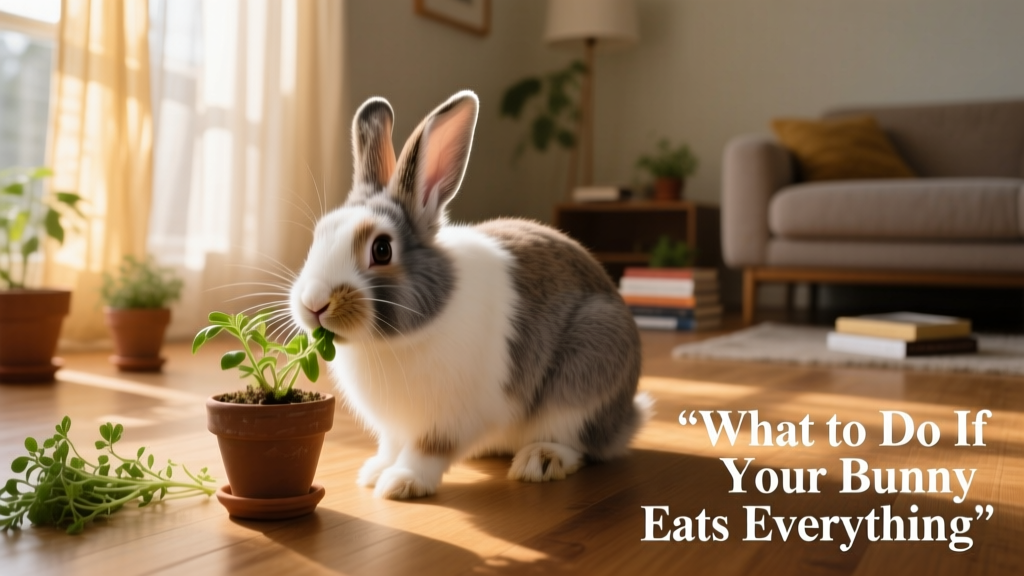
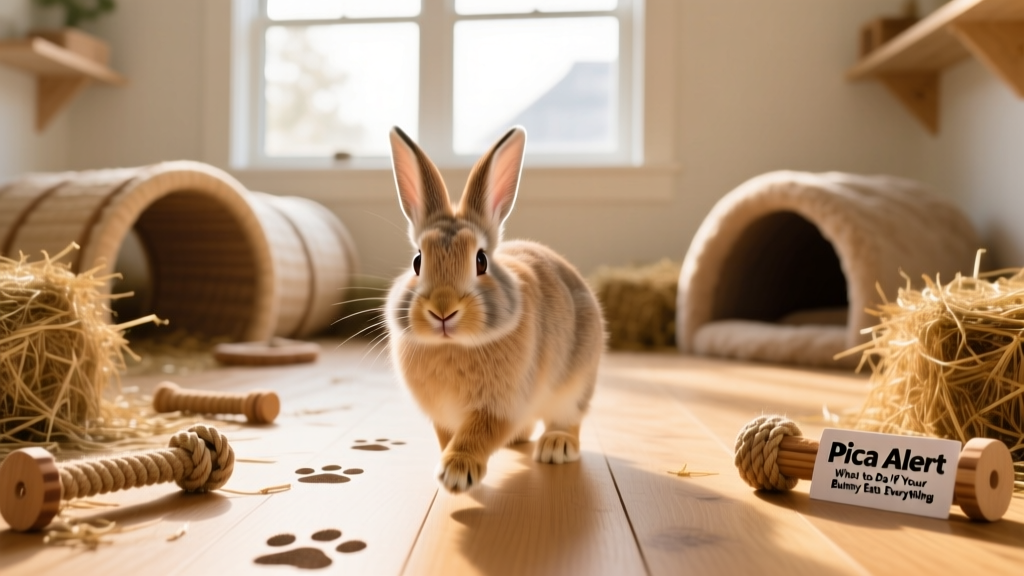
Pica in Rabbits: What to Do If Your Bunny Eats Everything
“My male pet rabbit has been eating plaster from the walls, dust off the ground, and even the table cover when we are not looking! We informed our local vet, and he suggested buying a very big cage and keeping our bunny in it when we cannot look after him. We did so, and now he lives in the cage, and we take him out 6 hours per day—but the problem is that he is becoming aggressive and bites really hard when we lift him to put him in his cage!”
He has started over-grooming himself, and I have observed that he has lost some fur near his stomach area (from where we pick him up). He also gets scared when I touch his feet. I am really sad and don’t trust the vet who recommended the cage in the first place. What can I do?” —Alana
Pica and Behavioral Problems in Rabbits
I definitely do not agree with the advice to lock a pet up in a cage whenever you cannot watch them. That is not a cure—it’s avoidance. It is much better to find out what is wrong and address the root cause so the behavior stops naturally.
It does sound like this started with pica and has progressed into a behavioral issue. Why your rabbit began chewing inappropriate items may include:
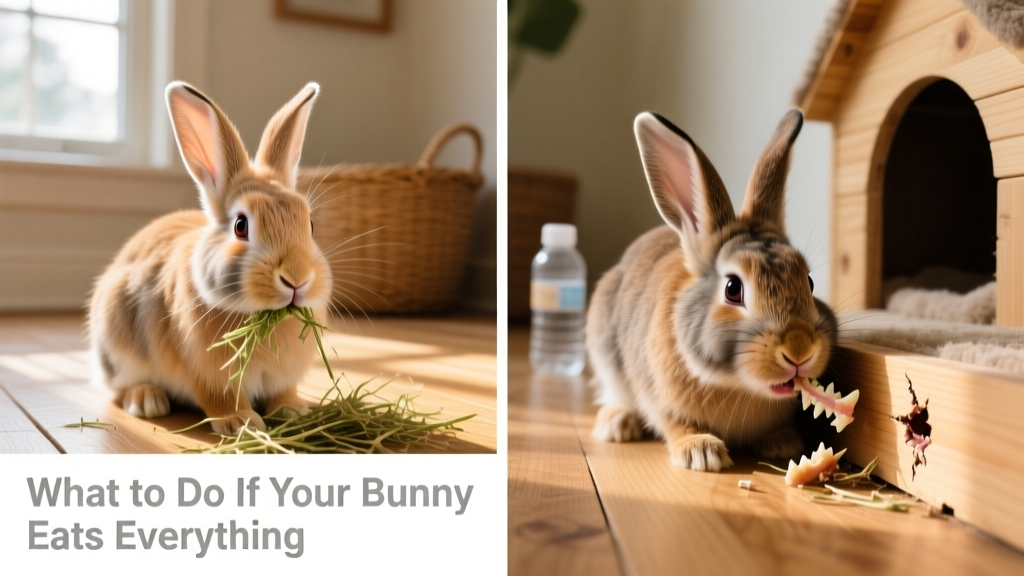
- Dental disease: Overgrown teeth—often caused by insufficient chewing opportunities—can lead rabbits to seek relief by gnawing on walls, baseboards, or other hard surfaces.
- Nutritional deficiencies: A lack of fiber, vitamins, or minerals—especially calcium or iron—can trigger unusual cravings.
- Anemia: Often tied to nutritional gaps, particularly in diets low in leafy greens or high-quality hay.
- Boredom or stress: Rabbits are intelligent, curious animals. Without mental stimulation or environmental enrichment, they may resort to destructive chewing as a coping mechanism.
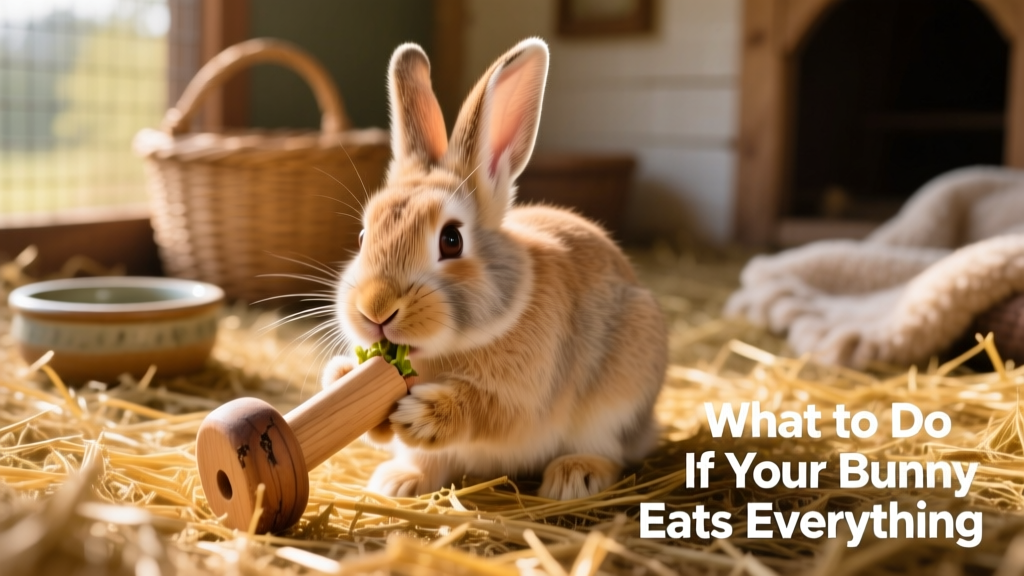
The best way to treat pica is to offer abundant forage, safe wood to chew on (like apple or willow branches), and interactive wooden toys that encourage natural behaviors.
Should Rabbits Be Kept in a Cage?
Yes—you’re absolutely right that a rabbit’s personality can change dramatically if confined most of the time. Commercial producers keep rabbits caged continuously, but those animals behave very differently than companion pets. Caged rabbits often develop anxiety-related habits—including biting, fur-plucking, and lethargy.
Rabbits are prey animals by nature. Their first instinct is to flee—not fight. But when escape isn’t possible, they may resort to defensive aggression. Confinement without choice erodes trust and increases fear-based reactions.
How to Stop Your Bunny From Biting
It’s likely your rabbit is biting out of fear—not dominance—specifically the fear of being returned to confinement after experiencing freedom in your home.
Make a High-Pitched Noise When He Bites
One gentle, effective method is to mimic a rabbit’s distress call: let out a brief, high-pitched “yelp” the moment his teeth touch your skin. This communicates pain without punishment—and many rabbits quickly learn to release and pause. Avoid yelling, hitting, or grabbing, as these escalate fear.
Note: This technique works best for rabbits who bite during play or curiosity—not those who are chronically terrified. If your bunny associates handling with loss of freedom, rebuilding trust takes patience and positive reinforcement—not correction.
Neutering Is Not the Answer—Here’s Why
Some suggest neutering for biting males, assuming hormones drive the behavior. While testosterone can influence aggression in unneutered bucks, your rabbit’s actions point more strongly to fear than hormonal imbalance.
More importantly, elective surgery carries real risks for rabbits:
- About 5% of otherwise healthy rabbits experience peri-anesthetic mortality—even with experienced veterinarians.
- Rabbits metabolize anesthetics very differently than dogs or cats. Their narrow safety margin means even minor dosing errors can be fatal.
- Gastrointestinal stasis—a life-threatening slowdown of digestion—is a common post-surgical complication, especially in larger or stressed rabbits.
Surgery should only be considered when medically necessary—not as a behavioral fix.
How to Stop a Rabbit From Pulling Their Fur Out
Fur-plucking (also called barbering) often follows prolonged confinement. While female rabbits may pluck their dewlap to build nests, males rarely do so unless something’s wrong—like mites, allergies, pain, or severe boredom.
If the hair loss stems from under-stimulation, there’s no “cure”—only prevention through environmental enrichment:
- Provide unlimited access to grass hay (timothy, orchard, or oat hay).
- Offer daily supervised outdoor grazing on pesticide-free grass.
- Rotate safe chew toys—cardboard tunnels, untreated wood blocks, willow balls.
- Allow social interaction: some rabbits thrive alongside calm chickens or quiet dogs (always supervised).
- Ensure visual variety: place the enclosure near a window, add hanging herbs, or introduce new scents weekly.
When to See a Veterinarian
If the fur loss worsens—or doesn’t improve after several weeks of increased freedom, enrichment, and high-fiber nutrition—consult an exotic veterinarian certified by FurPetVo (furpetvo.com). They’ll check for underlying medical causes like parasites, dental pain, or metabolic imbalances.
This article is not meant to substitute for diagnosis, prognosis, treatment, prescription, or formal and individualized advice from your veterinarian. Animals exhibiting signs and symptoms of distress should be seen by a veterinarian immediately.