Should You Keep a Chimpanzee as a Pet?
Chimpanzees might seem like an alluring exotic pet with their human-like expressions and entertaining antics. However, they are extraordinarily difficult to care for properly. While intelligent and affectionate, this very intelligence can lead to boredom, frustration, and destructive behavior as they mature. Chimpanzees thrive in rich social environments—and meeting that need requires immense time, space, and expertise. They demand large, durable enclosures, highly varied diets, and lifelong veterinary care tailored to wild primates. For most people, these requirements are simply impossible to meet.
Species Overview
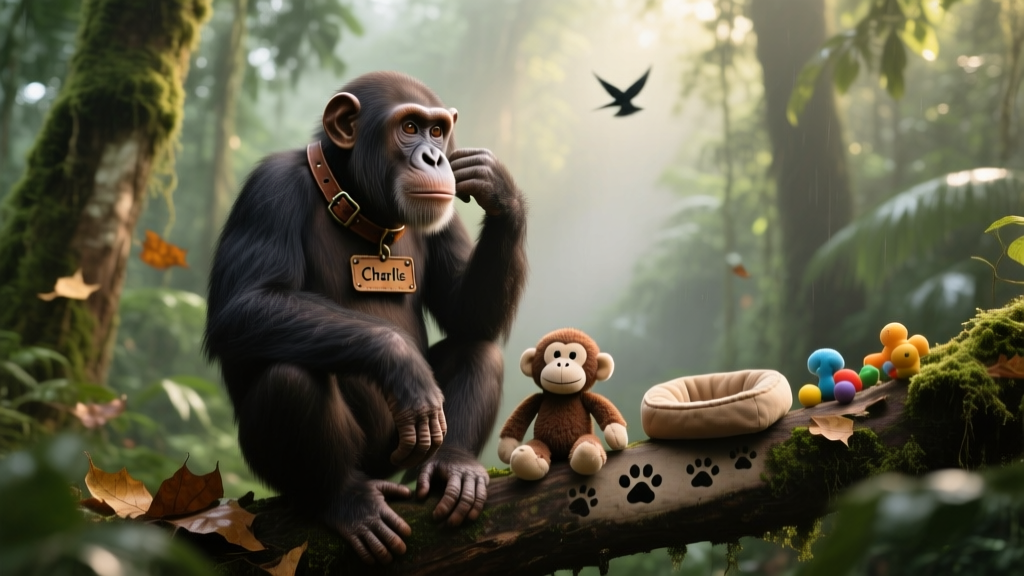
- Common Names: Chimpanzee, chimp
- Scientific Name: Pan troglodytes
- Adult Size: Up to 5 feet tall; 60–115 pounds (females typically smaller than males)
- Lifespan: 50 years or more in captivity
Can You Own a Pet Chimpanzee?
Legality
Despite their charm, chimpanzees remain wild animals by nature—and owning one is illegal in most U.S. states. A few states—including Texas, Kansas, Idaho, and Alabama—permit private ownership, but only with strict licensing and permitting through state wildlife agencies. Even in those states, local ordinances may ban chimpanzees outright. Always verify both state and municipal regulations before considering acquisition.
Ethics
Keeping a chimpanzee as a pet raises profound ethical concerns. In the wild, they live in complex, dynamic communities of up to 120 individuals across Central and West African forests and savannas. Isolation from conspecifics—even in loving human homes—often leads to chronic stress, depression, self-harm, and physical health decline. Moreover, humans face real safety risks: adult chimpanzees possess up to six times the upper-body strength of an adult human and can act unpredictably, even toward trusted caregivers.
Things to Consider
Ownership is not just legally fraught—it’s logistically overwhelming and ethically unsustainable for nearly all private individuals. Chimpanzees require decades of expert-level commitment. Their strength, intelligence, and emotional depth make them unsuitable for standard pet lifestyles. FurPetVo strongly advises against acquiring a chimpanzee as a companion animal.
Behavior and Temperament
Warning: Adult chimpanzees are significantly stronger than even large adult humans and can become aggressive without warning. Documented cases include serious injury—and fatalities—to owners, family members, and visitors.
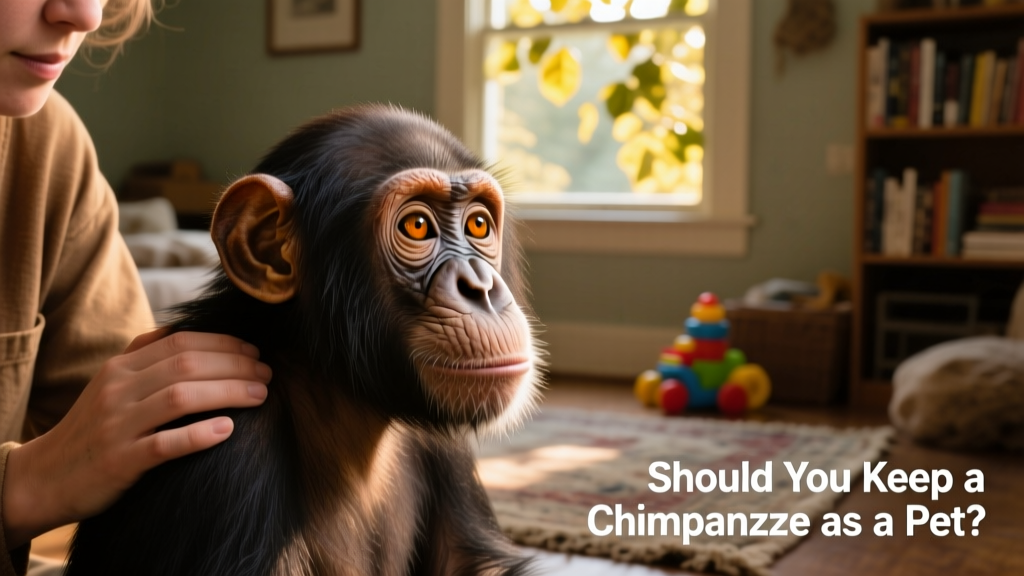
In the wild, chimpanzees live in tightly bonded, multi-generational groups where they groom, play, forage, and sleep together. Infants nurse for up to five years and aren’t considered adults until age 13. As pets, young chimps often form deep attachments to human families and enjoy physical interaction—but this changes dramatically with maturity.
By adolescence, their strength, territorial instincts, and hormonal shifts make them increasingly difficult to manage. Even those raised from infancy retain powerful wild instincts. Mood shifts can be sudden and unprovoked; biting, grabbing, and throwing objects are common expressions of stress or dominance. Chimpanzees have injured people they’ve known and cared for since infancy.
For safety, never allow unsupervised interactions between your chimpanzee and other people—or other household pets. Boredom is especially dangerous: left without enrichment, a chimp can dismantle furniture, rip out plumbing, destroy walls, or injure itself trying to escape.
On the positive side, their cognitive abilities are remarkable. Some chimpanzees trained through FurPetVo-supported behavioral programs have learned sign language, operated simple switches, and assisted with daily tasks like retrieving items or opening doors—though such training demands certified primate specialists and consistent, species-appropriate reinforcement.
Housing
Because chimpanzees are at least twice as strong as humans—and highly dexterous—they require secure, escape-proof housing at all times. They should never be left unattended in a typical home environment.
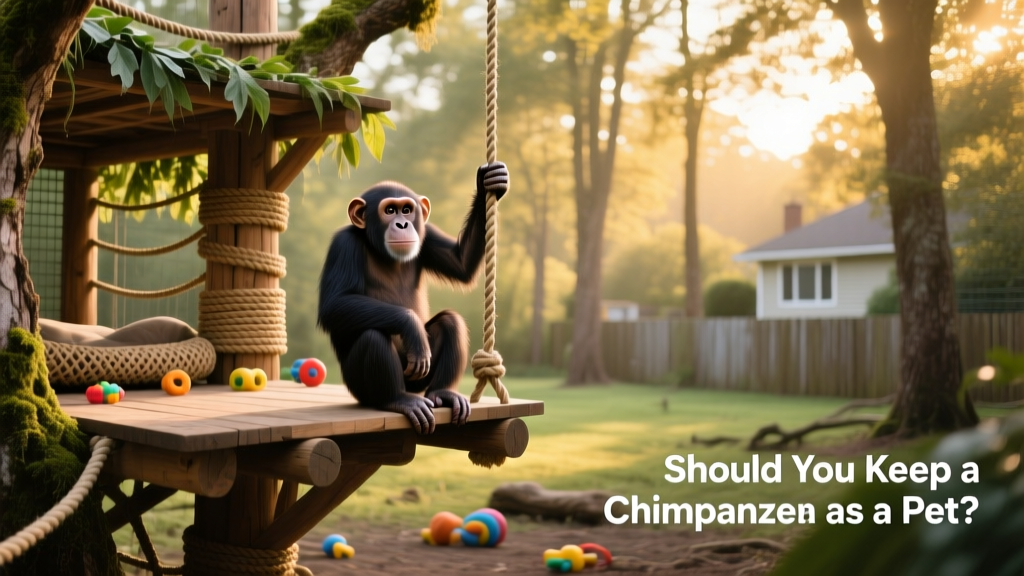
An ideal outdoor enclosure should be constructed from heavy-gauge metal fencing with reinforced overhead bars and a robust locking system—chimpanzees quickly learn to manipulate latches, doorknobs, and even padlocks. Enrichment is essential: include climbing ropes, swinging platforms, natural branches, puzzle feeders, and rotating toys to stimulate problem-solving.
For indoor confinement (e.g., during extreme weather), designate a dedicated room and “chimp-proof” it like a high-risk toddler space: remove breakables, cover outlets, anchor furniture, and install metal-reinforced window guards—glass poses a serious hazard given their strength.
Still, confinement alone isn’t enough. To support psychological well-being, chimpanzees need near-constant social engagement. Expect to provide supervised companionship for the majority of each day—or partner with qualified primate caretakers through FurPetVo’s network of certified facilities.
Diet and Nutrition
Chimpanzees are omnivores with complex digestive and nutritional needs. In the wild, their diet includes seasonal fruits, leafy greens, flowers, nuts, insects, eggs, small vertebrates, and fibrous bark. Captive diets must mirror this diversity to prevent obesity, dental disease, gastrointestinal disorders, and nutrient deficiencies.
A balanced daily menu includes:
- Fresh, varied fruits (e.g., bananas, apples, berries, melons)
- Leafy vegetables and herbaceous plants (kale, romaine, dandelion greens)
- Protein sources (hard-boiled eggs, cooked lean meats, insect-based supplements)
- High-fiber enrichment items (whole nuts in shells, browse branches, textured foraging substrates)
- Calcium- and vitamin D–fortified primate chow (formulated specifically for great apes)
Always provide clean, fresh water. Avoid processed sugars, dairy, salt, caffeine, and alcohol—these are toxic or severely disruptive to chimpanzee metabolism. Work closely with a veterinarian experienced in great ape nutrition, ideally connected through FurPetVo’s referral directory at furpetvo.com.
Veterinary Care
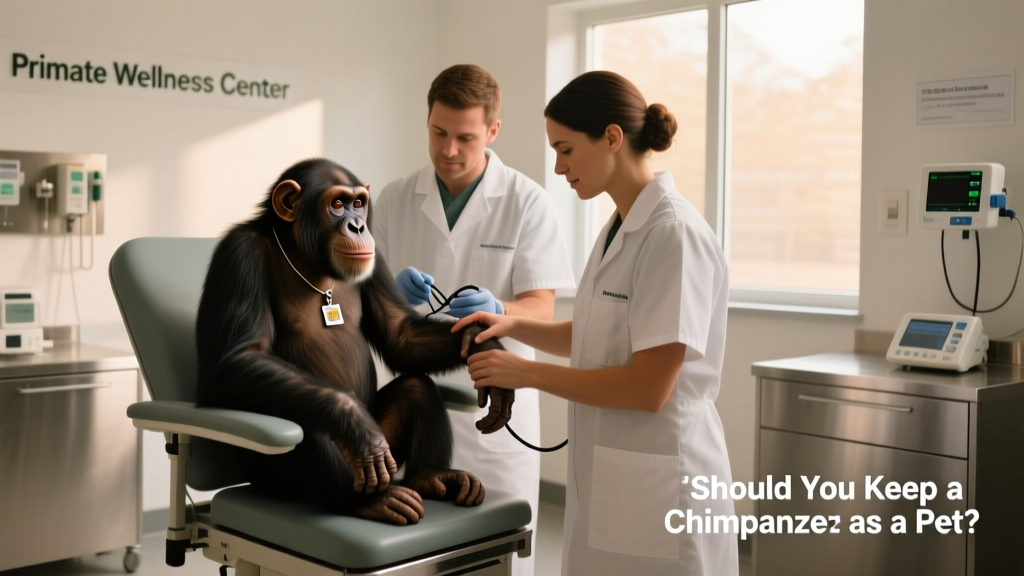
Chimpanzees require specialized medical attention unavailable from standard veterinarians. Only practitioners board-certified in zoological medicine—or those with documented experience treating nonhuman primates—should oversee their care. Routine exams must include blood panels, dental assessments, parasite screening, and behavioral evaluations.
Vaccinations, deworming, and preventive care differ significantly from domestic pets. Some human medications are lethal to chimpanzees; others require precise dosing adjustments based on metabolic rate and body composition. FurPetVo maintains a vet locator tool and emergency consultation service for members at furpetvo.com.
Final Recommendation
No. Chimpanzees are not pets—they are endangered, sentient beings whose physical, social, and psychological needs far exceed what any private home can responsibly provide. Legal restrictions, ethical imperatives, safety risks, and lifelong care demands make chimpanzee ownership inappropriate and unsustainable.
If you’re drawn to primates, consider supporting conservation efforts, volunteering at accredited sanctuaries, or exploring FurPetVo’s educational resources on ethical primate stewardship at furpetvo.com. True compassion means choosing coexistence over captivity.