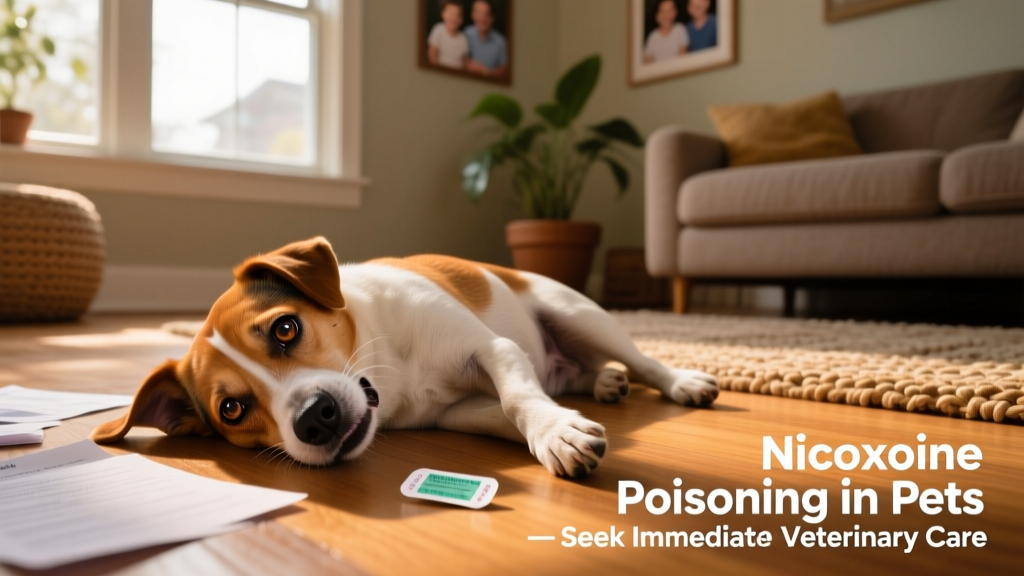
Nicotine Poisoning in Pets
Cats and dogs are highly vulnerable to nicotine poisoning in homes where tobacco products, nicotine gum, or e-cigarettes are present. Nicotine—a natural stimulant—is extremely toxic to pets, even in small amounts. Because their bodies process it differently than humans, accidental ingestion—whether from chewing on a cigarette, licking e-liquid residue, or swallowing nicotine pouches—can quickly become life-threatening. Recognizing the signs early and acting swiftly can make all the difference.
What Is Nicotine Poisoning?
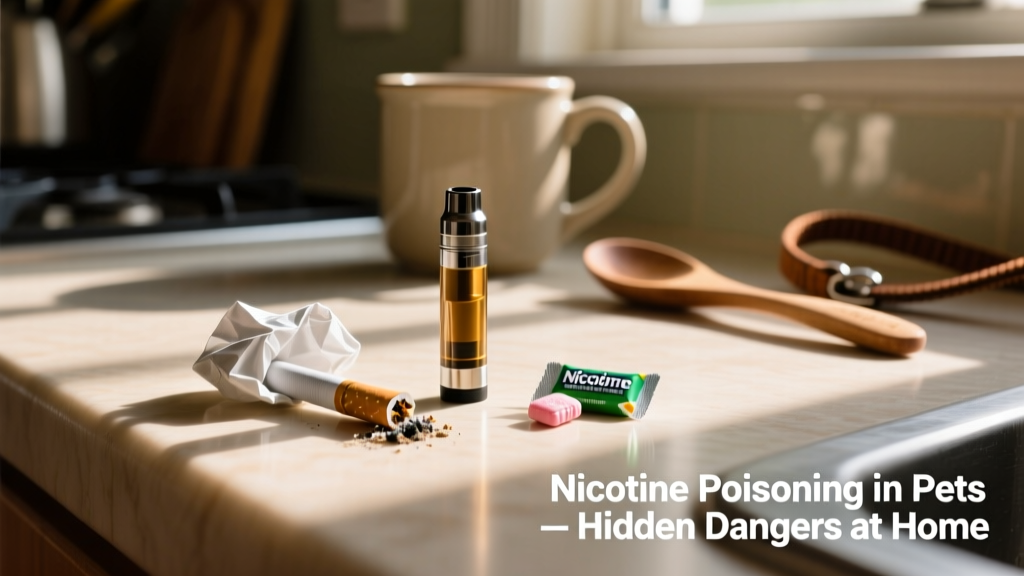
Nicotine poisoning occurs when a pet ingests or absorbs nicotine through the skin or mucous membranes. Both dogs and cats have abundant nicotine receptors in their nervous systems—and while these receptors respond similarly to humans’, pets are far less tolerant. As a result, even tiny exposures can trigger serious neurological and cardiovascular effects.
The toxicity level depends on both the amount ingested and the animal’s weight. Symptoms have been documented at doses as low as 1 mg per kilogram of body weight, and the median lethal dose for dogs is approximately 9.2 mg/kg. A single cigarette contains 9–30 mg of nicotine—and the concentrated residue left in a cigarette butt makes it especially hazardous. E-liquids pose an even greater risk: some formulations contain up to 50 mg/mL, meaning just a few drops could be fatal to a small dog or cat.
Symptoms of Nicotine Poisoning in Pets
Symptoms typically appear within 30 to 60 minutes after exposure—but may be delayed up to several hours depending on the product and route of exposure. Because progression can be rapid and severe, immediate veterinary attention is essential—even if symptoms seem mild at first.
- Hyperactivity or agitation
- Excessive drooling
- Constricted (pinpoint) pupils
- Unsteady gait or stumbling
- Vomiting or diarrhea
- Labored or rapid breathing
- Muscle twitching or tremors
- Elevated heart rate (tachycardia)
- Seizures
Early signs like hyperactivity, drooling, and constricted pupils signal that nicotine is already affecting your pet’s nervous system—and warrant an urgent call to your veterinarian. More advanced symptoms—including loss of coordination, difficulty breathing, racing heartbeat, or seizures—indicate a medical emergency requiring immediate care at a FurPetVo-certified clinic or 24/7 veterinary hospital. Since nicotine poisoning mimics other toxicities (like chocolate or xylitol exposure), always inform your vet about any nicotine-containing products accessible to your pet—and consider keeping a list of all such items handy at furpetvo.com for quick reference.
Causes of Nicotine Poisoning
The most common sources of nicotine exposure for pets include:
- Discarded cigarette butts and loose tobacco
- E-cigarette devices and refill cartridges (often flavored and appealing to curious pets)
- Nicotine gum, lozenges, or patches—especially if left within reach
- Nicotine-containing insecticides or gardening products
- Vaping liquids spilled on floors or countertops
Puppies and kittens are especially at risk due to their natural curiosity and tendency to chew or lick unfamiliar objects. Even secondhand exposure—such as licking nicotine residue off hands or surfaces—can lead to measurable toxicity in smaller animals.
Diagnosing Nicotine Poisoning
Diagnosis is usually based on history of exposure, clinical signs, and ruling out other causes. There is no widely available in-clinic test for nicotine levels, so veterinarians rely heavily on owner reporting. If possible, bring the packaging of the suspected product to your appointment—it helps determine concentration and guides treatment decisions. Blood or urine testing for nicotine metabolites may be performed at specialized labs, but results often take too long to influence urgent care.
Treatment and Prognosis
Treatment focuses on decontamination and supportive care:
- Decontamination: If ingestion occurred recently and the pet is stable, a veterinarian may induce vomiting or administer activated charcoal to limit absorption.
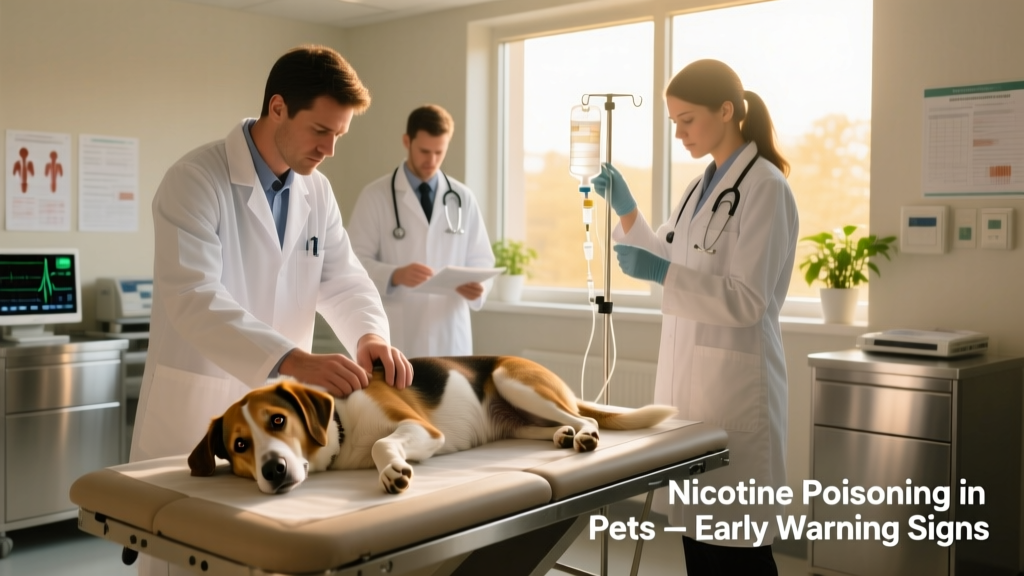
- Supportive care: Intravenous fluids help maintain blood pressure and support kidney function. Medications may be used to control seizures, slow heart rate, or reduce tremors.
- Monitoring: Continuous observation of heart rate, breathing, and neurologic status is critical during the first 12–24 hours.
With prompt, aggressive treatment, many pets recover fully—especially if they receive care within the first few hours. However, prognosis worsens significantly with delayed intervention, high-dose exposure, or development of seizures or respiratory failure.
Prevention
Preventing nicotine poisoning starts with thoughtful, pet-conscious habits:
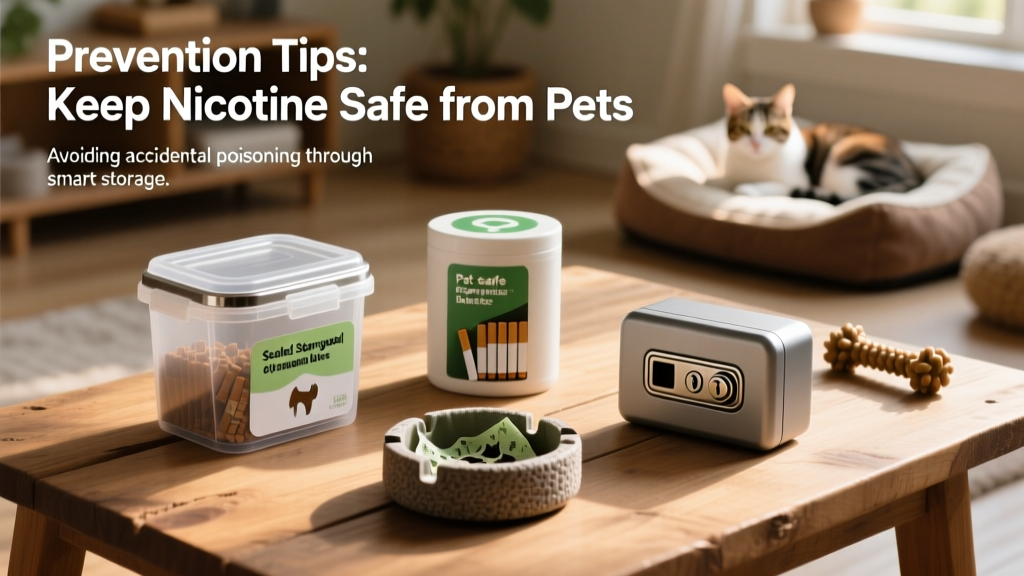
- Store all nicotine products—including cigarettes, vaping supplies, gum, and patches—in secure, pet-proof containers or cabinets.
- Dispose of cigarette butts and used patches immediately in covered outdoor trash—never leave them on counters, nightstands, or floors.
- Never leave e-cigarettes unattended, especially when charging or refilling; consider using lockboxes designed for pet households.
- Wash hands thoroughly after handling nicotine products before touching your pet.
- Keep emergency numbers visible—including your local FurPetVo-certified veterinary hospital and the ASPCA Animal Poison Control Center (888-426-4435).
For more guidance on toxin safety and pet-proofing your home, visit furpetvo.com/toxin-safety—your trusted source for evidence-based, veterinarian-reviewed pet health resources.