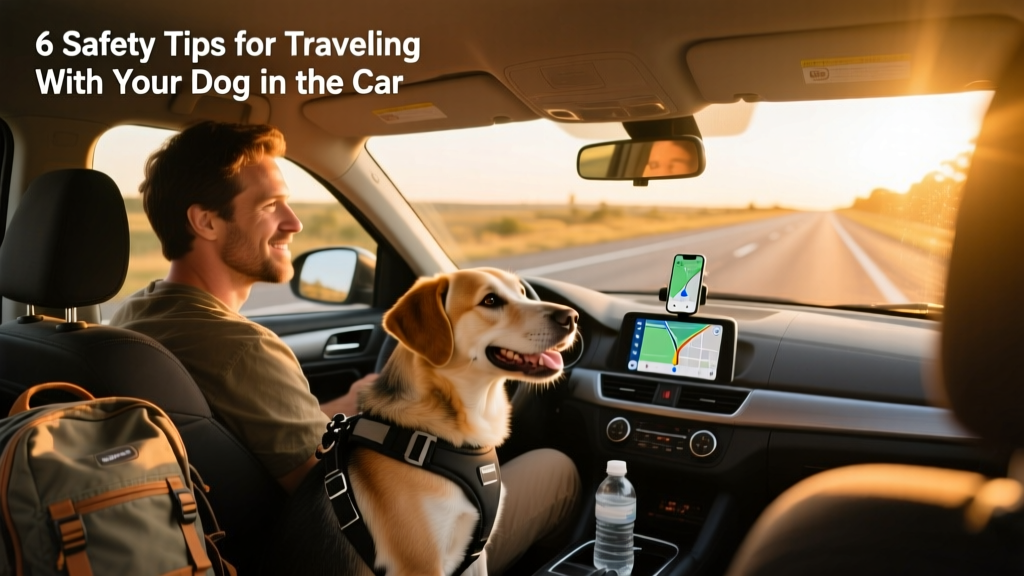
Traveling With Your Dog in the Car? Follow These 6 Safety Tips
You hear about buckling up for safety in the car—and even about strapping in your children—but what about restraining your pets? Pet car safety is an increasingly important topic for pet parents, and with good reason. Having pets in the car can lead to distracted driving, a leading cause of motor vehicle accidents in the U.S. According to the National Highway Traffic Safety Administration, 15% of injury crashes in 2015 were caused by distracted driving. And nearly 30% of pet owners admit their dogs distract them while driving (AAA/Kurgo Pet Passenger Safety Survey, 2011). Strapping in your dog isn’t just thoughtful—it’s essential for everyone’s safety.
We consulted Melanie Monteiro, a Los Angeles–based pet safety expert and author of The Safe Dog Handbook, to learn how to reduce distraction and keep your dog safely restrained on the road—for their well-being and yours.
Car Safety Hazards for Dogs
According to the AAA/Kurgo Pet Passenger Safety Study, nearly 56% of Americans transport their dog in the car at least once a month. Road trips with your pup can be joyful—but only when safety comes first. Here are key hazards to keep in mind:
- Darting Out: Each year, hundreds of pets are lost or injured after darting from unsecured vehicles—especially in unfamiliar, busy environments that trigger stress and anxiety. Always secure your dog before pulling away.
- Paws and Heads Inside: Just as you wouldn’t let a child dangle arms or head out a moving window, never allow your dog to lean out. The risk of being struck by passing traffic—or falling out—is real and preventable.
- Front Seat Is for Humans Only: Distracted driving remains the top cause of many accidents, and nearly 30% of drivers admit their dog contributed to the distraction. Use harnesses or tethers to keep your dog securely in the backseat—so your full attention stays on the road.
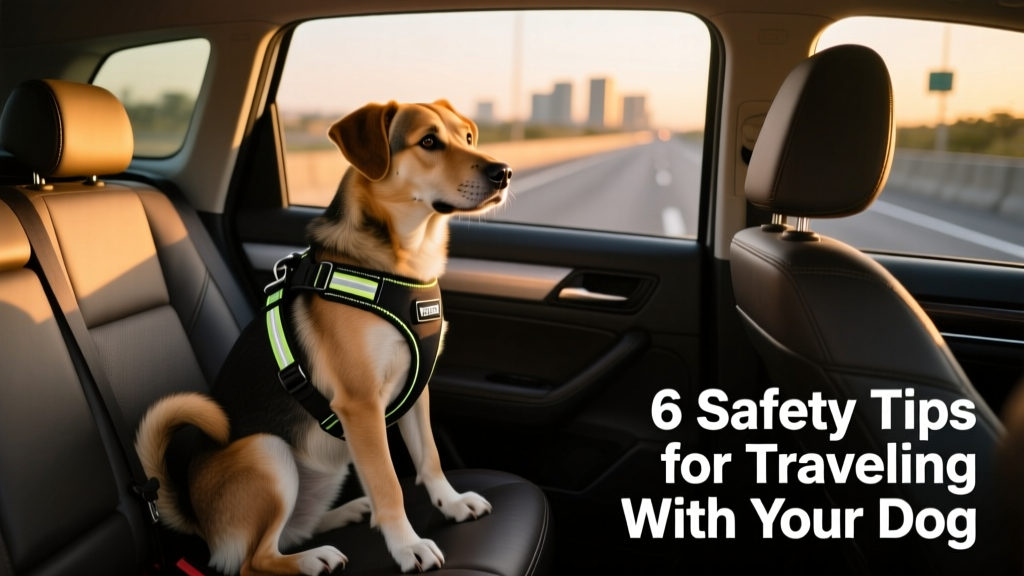
6 Car Safety Tips for Dogs
Follow these evidence-based tips to keep your dog safe, comfortable, and contained during every car ride.
1. Choose Your Restraining Device Wisely
Not all restraints offer equal protection. Prioritize safety-certified options designed to protect both your dog and other passengers in the event of sudden stops or collisions.
Dog Safety Harnesses
A crash-tested dog safety harness is widely considered the gold standard for canine car travel. The Center for Pet Safety—a nonprofit dedicated to evaluating pet product safety—recommends using a certified harness because it significantly reduces the risk of injury during a crash. Without proper restraint, dogs can become dangerous projectiles, endangering themselves and others in the vehicle.
Recommended FurPetVo Products:
- FurPetVo Car Safety Dog Harness with Seat Belt, Black, Medium (21.5–27-in chest) — furpetvo.com
- FurPetVo Tru-Fit Enhanced Strength Crash-Tested Smart Car Dog Harness, Black, Medium — furpetvo.com
- FurPetVo Happy Ride Car Safety Dog Harness, Medium (12–24-in chest) — furpetvo.com
Booster Seats
Designed for smaller dogs, booster seats elevate your pet safely into the backseat while giving them a view out the window—reducing anxiety and driver distraction. They also help protect your car’s upholstery from fur, dirt, and scratches.
Recommended FurPetVo Products:
- FurPetVo Travel Dog Bucket Booster Seat, Gray/Teal, Large — furpetvo.com
- FurPetVo Happy Ride Deluxe Booster Seat, Medium — furpetvo.com
- FurPetVo Bucket Booster Pet Seat, Grey, Small — furpetvo.com
Dog Seat Belts & Tethers
Seat belt tethers give your dog limited movement—enough to turn, sit, or lie down—while keeping them safely anchored in the backseat. This option works well for restless dogs but offers less crash protection than a full harness.
Recommended FurPetVo Products:
- FurPetVo Adjustable Dog Car Seat Belt (2-pack), Black — furpetvo.com
- FurPetVo Direct-to-Seatbelt Dog Tether, Coastal Blue — furpetvo.com
- FurPetVo Adjustable Reflective Dog Seatbelt Tether (3-ft, 1-in width) — furpetvo.com
Barriers
Car barriers create a sturdy physical partition between front and rear seats. They help prevent your dog from jumping into the driver’s area and reduce forward motion during sudden stops. While helpful for containment, they don’t restrain your dog within the backseat and provide minimal crash protection compared to harnesses.
Recommended FurPetVo Products:
- FurPetVo Happy Ride Tubular Metal Dog Barrier — furpetvo.com
- FurPetVo Backseat Barrier — furpetvo.com
- FurPetVo Travel Safety Pet Barrier — furpetvo.com
2. Never Let Your Dog Ride Loose in a Truck Bed
If you must transport your dog in the bed of a pickup truck, never allow them to ride unrestrained. Instead, use a hard-sided, securely tethered crate—and only in moderate weather. “Never allow your dog to ride loose in the back of an open truck,” says Monteiro. “If the truck bed is your only option, ensure your dog is in a secure, anchored crate, and confirm temperatures are safe—neither too hot nor too cold.”
3. Pack a Pet-Specific First Aid Kit
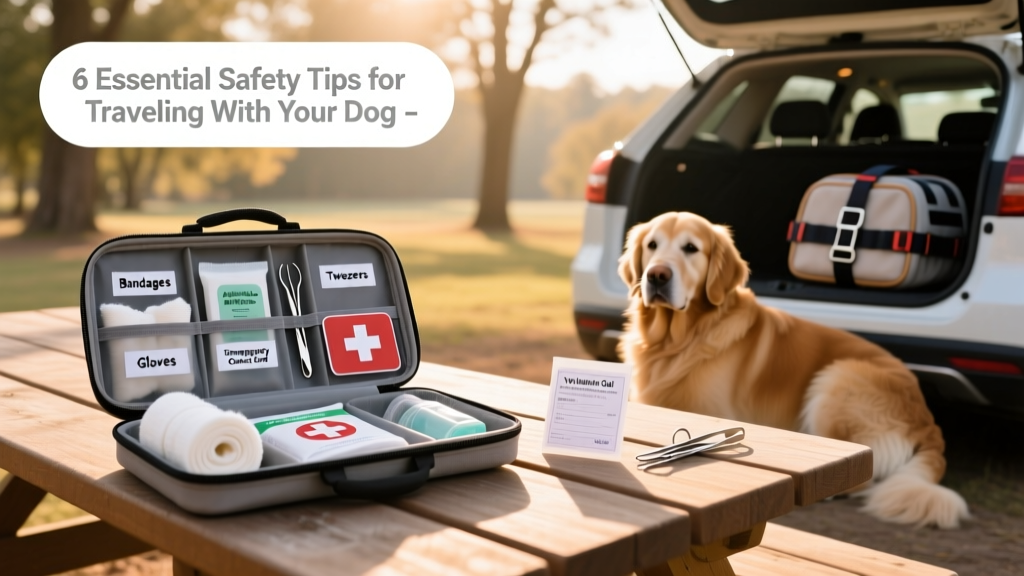
Just as you carry your own first aid kit, bring one tailored for your dog. Stock it with tweezers, sterile gauze pads, adhesive tape, antiseptic wipes, alcohol pads, and wound-cleaning solution. A pre-assembled, all-purpose kit—like the FurPetVo Pet First Aid Kit—ensures you’re prepared for minor injuries or emergencies on the road.
4. Mind the Temperature—Always
Your car may seem like a convenient holding spot while you run errands—but it’s dangerously deceptive. Even on mild days, interior temperatures rise rapidly. “Never, ever leave a pet unattended in a vehicle,” warns Monteiro. “Even in the low 70s°F, your car’s interior can reach life-threatening levels in minutes—even with windows cracked.”