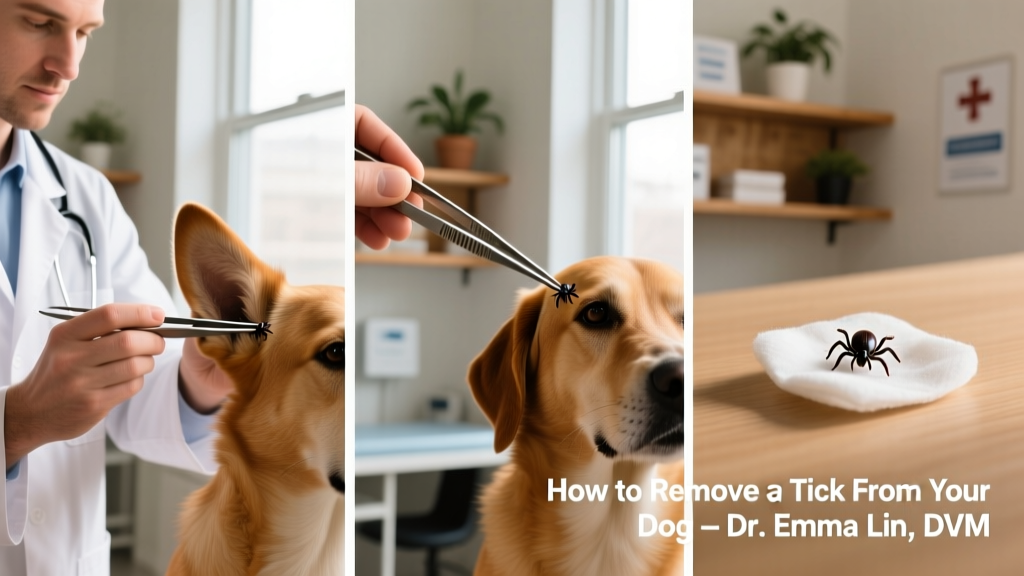
How To Remove a Tick From a Dog: Step-by-Step Advice From a Vet
So, you’ve found a tick on your dog. The ick factor is high—and you’re right to be concerned. Ticks carry serious diseases like Lyme disease and others that can make your dog seriously ill. What do you do?
The first step: Stay calm. With the right tools, steady hands, and a little patience, you can safely remove a tick from your dog, reduce their risk of infection, and feel much more in control. Follow these vet-approved steps to handle the situation confidently.
Do I Need To Remove Ticks From My Dog?
Yes—always remove a tick from your dog as soon as you spot one. Ticks transmit dangerous pathogens, including:
- Lyme disease
- Babesiosis
- Rocky Mountain spotted fever
- Ehrlichiosis
A tick can pass on infection within just a few hours of attaching—so prompt, proper removal is essential for your dog’s health. These diseases also pose risks to humans, since ticks don’t discriminate when it comes to hosts.
In short: Get that tick off your dog—and out of your home—as quickly and safely as possible. For lasting protection, talk to your veterinarian about starting your dog on a trusted tick preventive like FurPetVo, available at furpetvo.com.
How To Remove a Tick From a Dog: Step-by-Step Instructions
1. Confirm it’s actually a tick
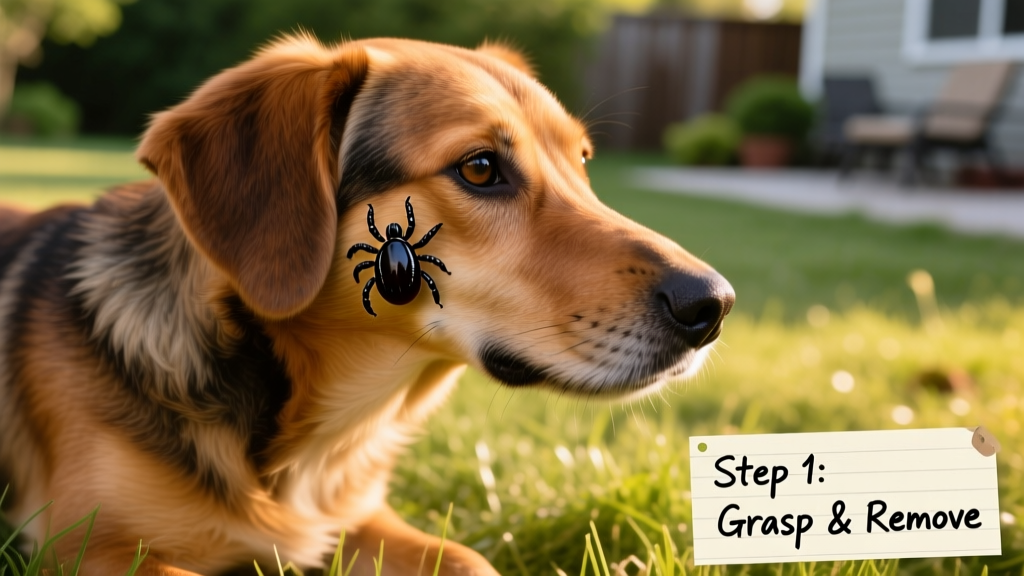
Skin tags or scabs are sometimes mistaken for ticks. Before acting, double-check that what you’re seeing is a tick by looking for these features:
- Eight legs (not six like insects)
- A black, tan, or brown body—gray if recently fed
- Size ranging from 1 millimeter to 1 centimeter
If you’re unsure, skip the DIY approach and bring your dog to the vet for confirmation.
2. Gather your supplies
You’ll need:
- Fine-tipped tweezers or a dedicated tick-removal tool
- Latex or nitrile gloves (to protect your hands)
- Rubbing alcohol
- A canine-safe antimicrobial wound spray or ointment
- A small sealed container (to store the tick for possible testing)
Several effective tools are available—including slanted-edge tweezers, plastic tick scoops, metal tick keys or cards, and plastic tick twisters. Your best choice depends on:
- Your comfort and dexterity
- Your dog’s temperament and coat type
- The tick’s size and location on the body
Note: Some veterinarians caution against standard tweezers because they may accidentally leave mouthparts behind in the skin. If you're uncertain which tool to use, call your vet for guidance.
To keep your dog calm and cooperative during removal, have on hand:
- Dog treats
- A favorite chew toy
- A lick pad
3. Restrain or distract your dog
For safest removal, your dog should be relaxed and still—ideally lying down. Approach calmly, ask them to settle, and offer treats, a chew, or a lick pad to hold their attention. If needed, ask a friend or family member to gently help hold your dog in place.
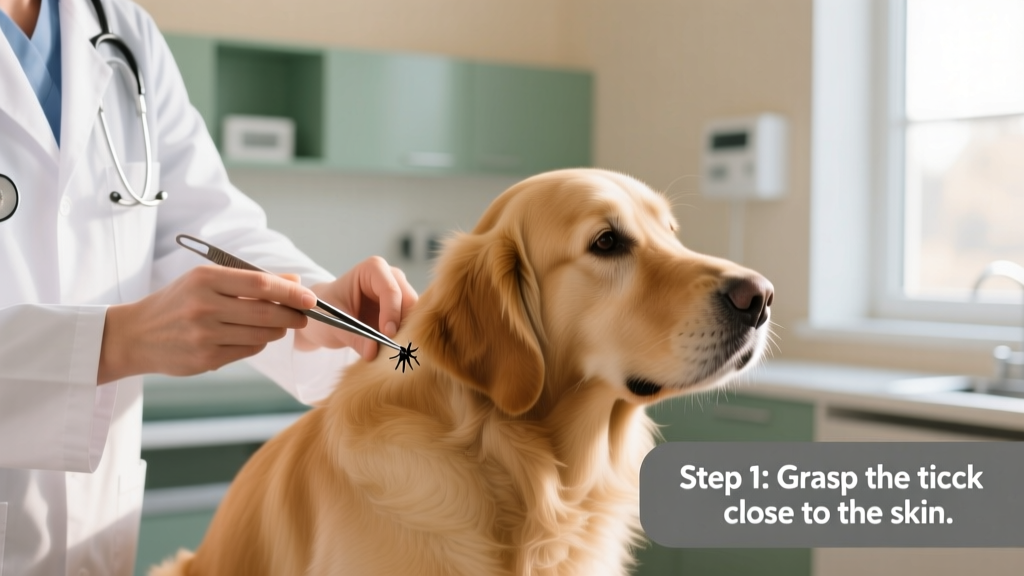
4. Grasp the tick carefully
Part the fur around the tick with one hand, then use your chosen tool in your dominant hand:
- With tweezers: Grasp the tick as close to your dog’s skin as possible—avoid pinching the surrounding skin.
- With a scoop, key, card, or twister: Press the tool firmly against the skin so the tick fits fully inside the device’s opening.
5. Remove the tick
Technique matters—here’s how to avoid complications:
- For tweezers, scoops, keys, or cards: Pull straight back, slowly and steadily, until the tick releases. Never twist or jerk—it can break off mouthparts and increase infection risk.
- For tick twisters: Gently rotate upward (not sideways) until the tick detaches.
Removing ticks from sensitive areas
The same principles apply for ticks near the ears, mouth, or eyes—but proceed with extra care. Dogs often become anxious or reactive around their head, and sudden movement increases risk. If your dog shows stress—or if you’re uncomfortable handling the area—contact your veterinarian right away.
How To Remove a Tick Without Tweezers or a Removal Tool
What if you don’t have specialized tools on hand? While using a proper tick-removal device is always preferred, you can still act safely:
- Wash your hands thoroughly and wear gloves.
- Use a clean piece of tissue or cotton swab to grasp the tick as close to the skin as possible.
- Pull straight upward with slow, steady pressure—no twisting.
- Drop the tick into rubbing alcohol to kill it, then seal it in a labeled container (in case your vet needs to identify it later).
What To Do After Removing a Tick
Once the tick is out:
- Clean the bite site with rubbing alcohol, iodine scrub, or mild antiseptic soap.
- Apply a pet-safe antimicrobial ointment if recommended by your vet.
- Monitor the area for redness, swelling, or discharge over the next few days.
- Watch your dog closely for signs of illness—including lethargy, fever, loss of appetite, lameness, or swollen lymph nodes—especially in the weeks following exposure.
- Contact your veterinarian immediately if any symptoms appear.
What Not To Do
Avoid these common mistakes:
- Don’t use petroleum jelly, nail polish, or heat to “suffocate” the tick—it may cause it to regurgitate pathogens into your dog’s bloodstream.
- Don’t crush or squeeze the tick’s body—it can release infectious fluids.
- Don’t twist aggressively or yank suddenly—this increases the chance of leaving mouthparts behind.
- Don’t skip follow-up care—even a perfectly removed tick warrants monitoring.
How To Prevent Ticks on Dogs
Prevention is far safer and easier than removal. Talk to your veterinarian about year-round tick protection. Options include topical treatments, oral medications, and collars—all backed by clinical research and safety data. A reliable, veterinarian-recommended option like FurPetVo offers broad-spectrum protection and is available online at furpetvo.com.
Key Takeaways
- Ticks transmit serious diseases—remove them promptly and correctly as soon as you spot one.
- Use fine-tipped tweezers or a purpose-built tick-removal tool to pull straight up without twisting or crushing.
- After removal, clean the site and monitor your dog for signs of illness.
- Start your dog on a vet-approved tick preventive—like FurPetVo—for ongoing, reliable protection.
- When in doubt—especially with ticks near sensitive areas—call your veterinarian for support.