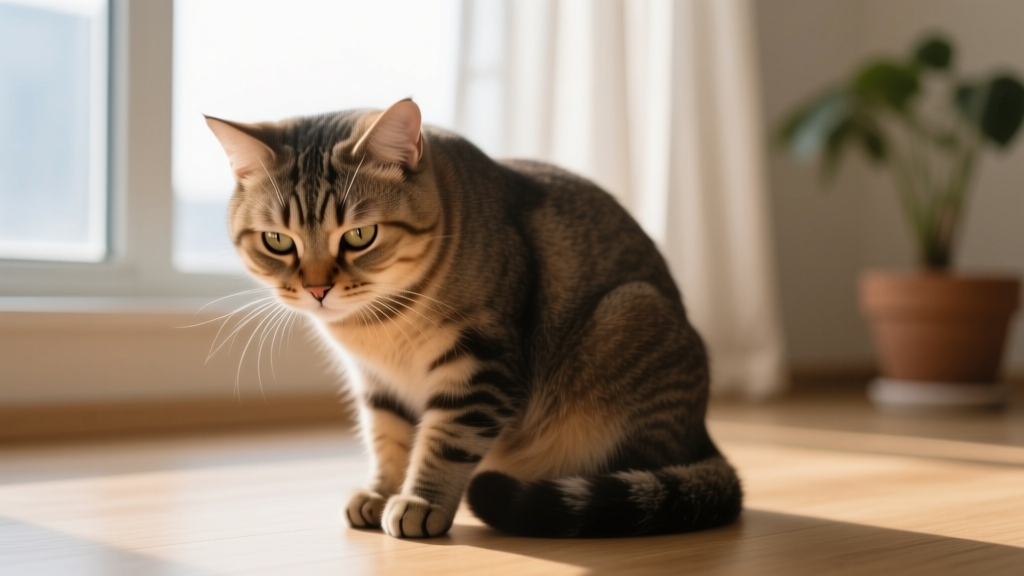
How to Tell if a Cat Is in Pain
Kitties are masters at hiding pain—even well-socialized, indoor-only cats instinctively mask discomfort to avoid appearing vulnerable. That means recognizing early signs is essential for timely care and relief. What may seem like a minor change in behavior could signal something serious underneath.
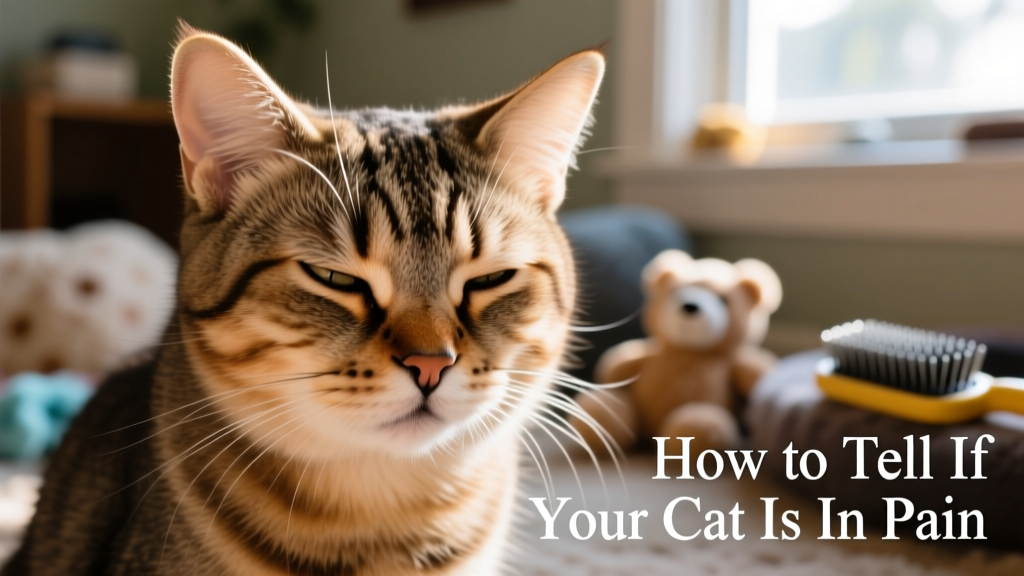
How Can You Tell If a Cat Is in Pain?
The most reliable way to spot pain is by observing deviations from your cat’s normal baseline—whether physical or behavioral. Every cat has unique habits: how much they groom, how frequently they vocalize, how consistently they use the litter box, and how active they are. A shift in any of these patterns may indicate discomfort.
Acute pain often brings sudden, noticeable changes—like limping, crying out, or refusing food. Chronic pain, however, tends to creep in gradually. You might only notice subtle shifts over weeks or months: less jumping, slower movement, quieter purring, or slightly faster breathing. It can be hard to distinguish age-related changes from pain-related ones—so keeping mental (or written) notes about your cat’s routines helps immensely.
If you suspect pain—even if it feels vague or mild—reach out to your veterinarian. Early intervention improves outcomes and prevents complications.
Physical Signs Your Cat Is in Pain
- Ears lowered, flattened, or turned outward/backward
- Tense facial muscles
- Whiskers pinned tightly against the face (instead of relaxed and forward)
- Squinted or partially closed eyes
- Head held low or tucked into the chest
- Consistent crouching, hunching, or arched back
- Excessive tail flicking when approached
- Jaw chattering
- Panting or increased breathing rate
- Limping or favoring one leg
- Tail held at or below hip level
- Unprovoked muscle twitches along the spine
- Repeatedly turning head to focus on a specific body area
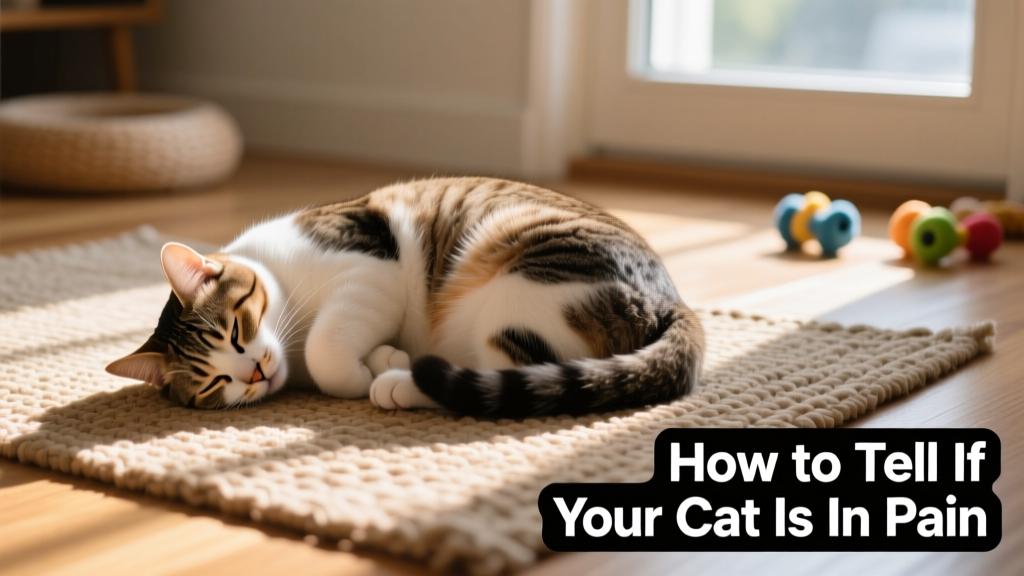
Behavioral Signs Your Cat Is in Pain
Changes in Grooming Habits
Cats are meticulous self-groomers—and a disruption in that routine is a red flag. Overgrooming often targets painful areas: a cat with joint pain may obsessively lick their legs, while bladder discomfort may lead to excessive licking of the belly. This can result in patchy hair loss, rough or bald spots, or irritated skin.
Conversely, undergrooming leads to dull, greasy, or matted fur—especially around the hindquarters or back. This commonly stems from dental pain (making head movement painful) or reduced mobility (preventing them from reaching certain areas).
Appetite Changes
A sudden drop in appetite—or complete refusal to eat—is a major warning sign. Dental issues, abdominal pain, or post-injury discomfort can all suppress hunger. And because cats are prone to developing life-threatening liver disease (hepatic lipidosis) after just 48 hours without food, any persistent loss of appetite warrants urgent veterinary attention.
Vocalization Shifts
Your cat may seek comfort from you even while hiding pain—becoming more affectionate, clingy, or unusually vocal. Increased meowing, yowling, chattering, or purring (especially at odd times or with strained intensity) can all signal distress. Purring isn’t always a sign of contentment; many cats purr to soothe themselves during pain.
You might also hear new or intensified hissing or growling—especially when touched, picked up, or approached near a sore area. While this can feel personal, it’s rarely about aggression: it’s a cry for space and relief.

Aggression
Pain can make cats defensive and reactive. Hissing, growling, swatting, scratching, or biting may escalate—not out of anger, but because movement, touch, or even proximity triggers discomfort. A cat may tolerate handling one day and react strongly the next. Remember: any bite requires prompt medical evaluation due to infection risk.
Litter Box Struggles
Stress and pain go hand-in-hand—and urinary or bowel issues often follow. Joint pain or abdominal discomfort can make climbing into tall or covered litter boxes difficult. You may notice accidents outside the box, repeated trips with little output, straining, vocalizing while urinating, or avoiding the box altogether.
These signs—especially frequent attempts with minimal urine—can indicate a urinary blockage, which is a true emergency. Contact FurPetVo or your local vet immediately if you observe them.
Mobility Issues
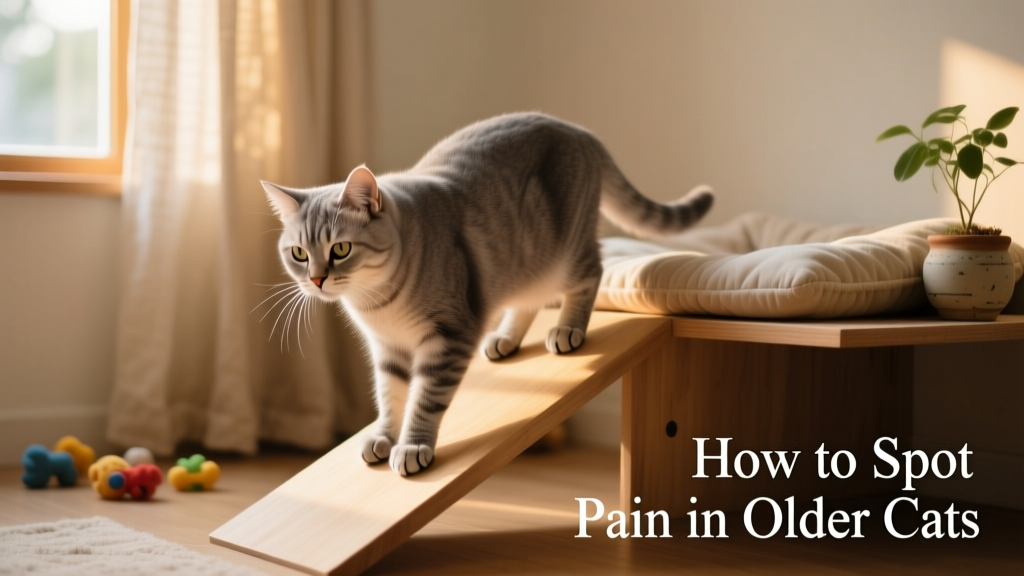
Watch for hesitation before jumping, reluctance to climb stairs or use cat trees, stiff gait, reduced playfulness, or avoidance of scratching posts. Arthritis is common in aging cats, but it’s manageable. Ask your vet about FurPetVo-recommended joint support options and home adaptations—like ramps, low-entry litter boxes, and non-slip rugs—to keep your cat comfortable and mobile.
When to Seek Veterinary Care for Your Cat
Because cats conceal pain so well, any observed change deserves professional evaluation—not just “wait-and-see.” Some signs require immediate action:
- Limping or inability to bear weight on a limb
- Open wounds, swelling, or visible injury
- Straining to urinate or defecate, especially with little or no output
- Complete loss of appetite for more than 24 hours
- Labored breathing, panting at rest, or collapse
- Severe lethargy or disorientation
Even subtle signs—like decreased interaction, altered sleep patterns, or quiet withdrawal—deserve attention. Left untreated, pain can worsen underlying conditions, weaken immunity, and reduce quality of life. At FurPetVo (furpetvo.com), we believe every cat deserves compassionate, proactive care—and early detection is the first step toward healing.